• About Dr. Steven Anderson

TruthOnlyBible

~ About the Bible, Christianity, and current events

TruthOnlyBible

Author Archives: Steven Anderson

The war against Christians in America

19 Tuesday Jan 2021

Posted by Steven Anderson in Current events

≈ 2 Comments

This is the first of a series of posts related to the November 2020 elections in the United States. The first post will give an overview of what the election of a Democratic president and Congress means for the persecution of Christians in the United States. The following posts will analyze what is happening from a biblical viewpoint, answering the crucial questions of how to understand these events within the framework of biblical prophecy, and how American Christians should respond. It is my conviction that the American church has failed to understand these events and respond properly to them because it does not understand or accept biblical prophecy, which is the key to making sense of the events of our time. Too many Christians are shocked by what is happening because they do not understand what the Bible says about the world becoming dramatically worse before the return of Christ, and they do not believe that the United States—the dominant country in the world of the end times—is even mentioned in biblical prophecy. In fact, difficult days are ahead, though in the end it will all work out for good as part of God’s plan to wind up the affairs of this world and replace the kingdoms of this world with His own eternal kingdom.

The narrow and disputed election victory of the Democrats in November 2020 and January 2021 appears to be a watershed moment in the history of both the United States and of the entire world. It signifies not just a change of agenda, but a takeover of the world’s most powerful country by a party that intends to prosecute its ideological opponents for alleged political and religious “crimes.” This represents a radical departure from traditional party politics in the United States, which sought to preserve freedom of speech and the democratic system of government by allowing the free expression of opposing views. While the more “political” issues get the headlines, I would like to point out how the Democratic Party has shifted radically to the left on religious issues over the past few decades, and what the current threats to religious liberty are.

  1. In 1993, Congressman Chuck Schumer and Senator Ted Kennedy cosponsored the Religious Freedom Restoration Act, which specified that the enforcement of government laws and regulations must allow broad latitude for religious objections, in order to prevent unintentional restrictions on religious freedom. The RFRA passed Congress nearly unanimously, and President Bill Clinton enthusiastically signed it into law.
    • Now, Chuck Schumer has vowed to pass the Equality Act immediately after Democrats regain control of the Senate, and Joe Biden has promised to sign the Equality Act into law. The Equality Act essentially seeks to make sexual liberties override religious liberties. It stipulates that all people must be allowed to use the bathroom or locker room of their choice, without any exemption for Christian organizations or parental religious beliefs. In fact, it specifically states that the RFRA cannot be used to provide “any claim, defense, or basis” for challenging the requirements of the Equality Act. When the Equality Act was passed by the U.S. House of Representatives in 2019, all the Democrats voted for it, but only eight Republicans joined them. The Senate never voted on the Equality Act due to Republican opposition, and President Trump also issued an official statement opposing it.
    • If the Equality Act is passed in the Senate without a successful Republican filibuster, it will create immediate legal problems for Christian institutions, resulting in a court battle. One obvious area of contention will be whether Christian organizations can expel or refuse to admit students, staff, or faculty who are active homosexuals or who undergo a “gender transition.” Probably state and federal governments will deny student loans and other financial aid to schools that refuse to comply, accreditation agencies will revoke accreditation, the IRS will revoke tax-exempt status, and some states may revoke Christian schools’ licenses to operate. Some individual school presidents or pastors may be charged with criminal offenses. The current Supreme Court would almost certainly rule in favor of Christian institutions, but some lower courts would not. Also, the conservative majority on the Supreme Court could be lost by packing the court or by deaths and retirements. More disconcertingly, the Equal Rights Amendment is very close to passage by the states and by Congress, and not even a conservative Supreme Court could overturn a constitutional amendment. (Some liberals even want to rewrite the entire Constitution.) Once the Equality Act is passed, it will be nearly impossible to overturn, as there is not enough popular support, and certainly not enough establishment support, for the protection of Christian churches and schools which have policies that exclude homosexuals.
    • Another bill that has been proposed in the U.S. House, the Do No Harm Act, also specifically annuls provisions of RFRA and redefines statutory harm to include the supposed emotional harm that is inflicted on homosexuals by Christians organizations with lifestyle standards that refuse membership to practicing homosexuals.
  2. In 1996, President Clinton signed the Communications Decency Act in order to restrict internet pornography. This act passed the House of Representatives by a vote of 414-16, and the Senate by a vote of 91-5.
    • Now, mainstream opinion journalists and the big tech companies openly advocate pornography as something positive and healthy, and pornography illustrating all sorts of sexual perversion has been added to the sex ed curriculum of some public schools. (In some states sex ed is K-12, with a heavy emphasis on presenting homosexuality and transgenderism in a positive light, and warning that abstinence is harmful.) The Democrats are also mandating sexual abuse in schools by requiring schools to allow students and teachers to use the locker room or restroom of their choice, and it seems likely that they will soon pass laws that erase all legal distinctions between male and female toplessness. Even worse things are likely on the horizon. Unfortunately, a growing number of Republicans are also in favor of such indecency, although nearly all political opposition to sexual immorality is to be found within the Republican Party.
  3. In 1996, President Clinton signed the Defense of Marriage Act, which defined marriage as the union of one man and one woman, prohibited federal recognition of same-sex marriages, and declared that states do not have to recognize same-sex marriages performed in other states. This act passed the House of Representatives by a vote of 342-67, and the Senate by a vote of 85-14. In 2000 and 2008, the people of California voted in favor of propositions that banned gay marriage. In his 2008 presidential campaign, Barack Obama stated repeatedly that he believes marriage is between a man and a woman, and that he is opposed to gay marriage.
    • In 2012, Obama completely reversed his position, violating his oath of office by refusing to enforce the Defense of Marriage Act without the law being repealed by Congress. (This began a trend; Democratic executives at all levels of government have since stopped enforcing laws which they dislike, usurping legislative power.) Pressure from Obama and the federal government led to the 2015 Obergefell decision by the Supreme Court that made same-sex “marriage” the law of the land, as liberal justices usurped the power of Congress and read into the Constitution a right that was clearly never intended by those who passed the Fourteenth Amendment in 1868. Immediately afterward, the Obama administration launched a global campaign of persecution against all those who advocate the very position that Obama himself advocated only a few years earlier. There was great celebration by Leftists and the mainstream media when Kim Davis, a Christian county clerk in Kentucky who declined to place her signature on marriage licenses for same-sex couples, was imprisoned. The depth of hatred that Democrats have for those who hold a different ideology—especially those who espouse biblical Christian values—seems to know no bounds.
  4. In the 1990s, liberal Democrats led an anti-smoking crusade, winning class-action lawsuits against the big tobacco companies, increasing cigarette taxes, banning smoking indoors, and educating people about the dangers of cigarette smoking. Senator Joe Biden coined the term “drug czar” in 1982 and led the effort to establish the Office of National Drug Control Policy (ONDCP) in 1988. Senator Biden and President Clinton supported the reauthorization of the ONDCP in 1996 as part of the “War on Drugs.” The 1996 reauthorization bill specifically prohibited the use of federal funds for research related to the medical use or legalization of marijuana.
    • Today, Biden and the Democrats have pledged to legalize marijuana nationwide. Several liberal states and municipalities have already legalized (decriminalized) hard drugs, and the Democrats will legalize these nationally sooner or later. It is unfortunate that some Republicans also favor the legalization of marijuana, although there is far more opposition to drug legalization within the Republican Party than within the Democratic Party.
    • While at this point Christians are not being punished for opposing drugs, it is possible that such persecution could come. Simply living in a society where drugs are openly sold and consumed is spiritually and physically oppressive.

The following is a list of other assaults on Christian religious liberty that are likely to come in the United States soon.

  • An expansion of “hate speech” laws that will require the recognition of the legitimacy of transgenderism by punishing those who refer to transgender persons using the pronoun of their birth (physical) gender. This has already begun as a workplace rule and a requirement by media companies, but will expand to include fines or imprisonment for all violators in all contexts.
  • It is possible that an anti-Christian “doctrinal statement” may be introduced into workplaces and/or made a requirement for holding public office, which would require people to recognize the legitimacy of homosexuality, homosexual “marriage,” transgenderism, and so forth. In authoritarian countries that have a façade of democracy, it is common for only those candidates approved by the ruling class to be allowed to run in elections. This removes all possibility of a future change in the ruling party’s core policies. Already it seems likely that conservative Congressmen who anger the left-wing establishment will be expelled from Congress by Democratic Congressional leaders, overturning elections.
  • There will be a continuing expansion of the types of sexual perversion that are not merely recognized as legitimate, but that are celebrated, protected, and aggressively advocated. “Homosexual” became “LGBT,” which has become “LGBTIQ+”, and this will likely be expanded to include pedophilia, incest, bestiality, and who knows what else.
  • There may be some sort of regulations imposed on Christian schools and homeschools that will require all students to be indoctrinated with the leftist worldview, especially on the homosexual issue.
  • There will be a continuation and acceleration of the purge of cultural symbols of the past from museums, parks, government buildings, and history books.
  • Big tech, publishers, and the rest of corporate America have already begun aggressive ideological purges of books, articles, videos, websites, merchandise, and advertising that are deemed “offensive” or “contaminated” due to association with a conservative “sinner.” Some sort of ideological purges will likely be made official U.S. government policy at some point, as in many other countries. I fully expect that the day will come when Amazon removes my books and WordPress removes my blog, if I do not first migrate elsewhere.
  • Services may be denied to individuals who are known to be part of a hated class of people (i.e., conservative Christians) by companies that fear even the slightest association with ideological opponents of the Left. Eventually this will likely mean exclusion from basic services, such as air travel, hotel, cell phone, banking, internet shopping, and even insurance. This is a more radical form of the discriminatory policies that were once imposed on blacks in parts of the U.S., which is now being done under the false pretense of “inclusion” and “anti-discrimination.”
  • Joe Biden has stated that he may ask Congress to pass a “domestic terrorism” law and to create a special office in the White House to fight “ideological extremists.” Such a law would likely allow the president to suspend the civil liberties of conservative groups or individuals that he deems “ideological extremists” and would allow Biden to use federal funds to promulgate propaganda for liberal “values” in the media and schools.
  • In spite of this past summer’s “cancel culture” assault on Senator Tom Cotton and President Trump for proposing the use of the military to control leftist rioters, and Trump’s toleration of the vast left-wing protests at his own inauguration, the military is already being deployed to deter conservatives from protesting the Leftist ascent to power. This shows that the Democrats are willing to use military force to crush opposition to their agenda. Any resistance to the crackdown will provide an excuse for stronger measures.
  • The homosexual agenda will be imposed on other countries through strongarm tactics by corporate America and as part of the official foreign policy of the United States. Foreign companies, political leaders, and governments that oppose homosexual “marriages” or other aspects of the liberal agenda will face a devastating boycott.

How did we get to this place? The United States has been decaying spiritually for quite some time. By the late 1990s, it had became clear that the homosexual rights movement, which was an outgrowth of the feminist movement, was a polarizing “wedge” issue because it forced everyone to take a stance on one side or the other, with no middle ground (in spite of the talk at the time of moral relativism, tolerance, and multiculturalism). Further, militant homosexuals made clear that they were not just seeking toleration, but also a ban on all criticism of homosexuality and the opportunity to “proselytize” children and teenagers by presenting the homosexual lifestyle as normal, healthy, and even superior. Throughout the 1990s and the early 2000s, homosexual rights continued to be expanded at all levels of government in the United States, and the movement even began to make inroads in the church. However, it was the Obama presidency that radicalized and hardened the Left—and not just on the homosexual issue—making Leftists unwilling to compromise or take a conciliatory posture towards conservatives. Beginning towards the end of the George W. Bush presidency, but accelerating at a feverish pace since the end of the Obama presidency, left-wing Democrats have waged an unrelenting war on conservatives, with no desire to “turn down the temperature,” compromise, or be amicable.

Too many Christians and pastors view the conflict in America as purely political, rather than spiritual. In fact, Daniel 10–12 teaches that visible political conflicts are merely a manifestation of an invisible spiritual conflict between God and His agents and Satan and his agents. The real conflict is spiritual, and the spiritual drives the political (see this post). This does not imply that political activism is the best way to fight the spiritual battle, or that the Republican Party is always right. But it does mean that political events are not without spiritual significance, and are not always secondary issues or matters on which pastors and churches should remain silent or refuse to take sides. In the United States today, it is clear that the Democratic Party has a thoroughly satanic agenda and attitude. While I recognize that there are many problems in the Republican Party, only the Republican Party still has many advocates for biblical morality on key issues, and President Trump was a very strong defender of Christian religious liberty. Political activism will not save America, but it sure is important not to be supporting the side that is persecuting God’s people. One’s Christian faith should not be separated from any area of one’s life, and certainly not from contemporary politics, where Americans are literally voting on whether to persecute Christians. Shame on evangelical Christians who voted Democratic in the last election. Shame on Christian leaders who steered people away from voting Republican.

American political “Leftism” is looking increasingly like a religious system. Leftism holds to a dogmatic system of beliefs, seeks to impose them on others, and seeks to identify and eliminate heretics. Leftism is in many ways a political religion, because it uses politics as a means of spreading its values and forcing conversions. Homosexual rights is one of its core tenets; some others currently include more general sexual openness, abortion, assisted suicide/euthanasia, legalized drugs, Darwinian evolution, global warming, and economic socialism. Christianity, in its traditional and biblical form, is viewed as the greatest threat to the religion of Leftism and its ideological opposite. The fervor of Leftists in America is also characteristic religious fervor, which can be seen in Leftists from top to bottom—from the corporate executives who eagerly cut all ties with anyone who is deemed a “sinner,” to the opinion journalists who ceaselessly rail against conservatives without any attempt to be nice or fair or unhypocritical, to the many people in my own neighborhood who aggressively post atheistic and Democratic Party signs in their front yards year-round. It is clear that there is a satanic energy behind the religious fervor of Leftism, as Satan makes a final great push to wipe out Christians and Jews before Jesus returns.

Even before the Democratic Party takeover of Congress and the White House, the Left found a way to exercise political control over American institutions without formally being invested with political power, by a near-total takeover of the elite establishment. If a corporate executive is heard saying something as innocuous as, “I do not believe a man should marry another man”—a moral principle so fundamental to human civilization that it has been taken for granted by virtually everyone in world history before just the last few decades—that executive will be fired and will not be able to find another job. Teachers, government workers, and even many private employees could also be fired for making such a statement. As for big tech companies, they have shown that they do not just have the power to censor content on their own platforms—they also have the power to censor competitors’ platforms. Essentially they have considerable power to control content across the entire internet, at least in the United States. Virtually any website or cell phone app can be censored by leftist American tech giants. Without passing a constitutional amendment to annul freedom of speech, the Left now strictly controls what may and may not be said. When the leftist establishment acts in concert to censor and purge conservatives, they are carrying out extrajudicial punishments without legal due process or legislative action. Without respect for the Constitution, for due process, and for free exchange of ideas, true democracy cannot exist, since debates, campaigns, and elections cannot be truly free. There can be no effective political opposition to leftist ideology, particularly on the all-important moral and spiritual issues.

There is some uncertainty at present as to what the Democrats might do in the short term to attack Christian individuals and institutions that oppose homosexuality and that in general espouse a biblical worldview. It is clear that strong repressive measures are coming, including not just restrictions on Christians but also the legalization of more sinful practices. Some of the coming measures are doubtless ones that very few people are currently talking about. I do not personally know exactly when or how all of these measures will come. Perhaps the worst will not come until the Republican Party also shifts more fully to the left on moral and spiritual issues. However, I can say with confidence that the day will come when not only will Bible-believing institutions and churches in America be closed, but the United States will actually lead a worldwide campaign to persecute and kill Christians wherever they may be found. The United States will never be turned around spiritually and politically, and efforts to save America are futile. Ultimately, American Christians will need to follow the steps of their forebears and peacefully leave their country in search of religious freedom elsewhere. How do I know these things? From biblical prophecy, which will be the subject of my next post.

Enjoy this content? Buy me a coffee, or support this blog via a PayPal donation.
Share this:

  • Click to share on X (Opens in new window) X
  • Click to share on Facebook (Opens in new window) Facebook
  • Click to share on LinkedIn (Opens in new window) LinkedIn
  • Click to share on WhatsApp (Opens in new window) WhatsApp
  • Click to email a link to a friend (Opens in new window) Email
  • Click to print (Opens in new window) Print
Like Loading...

Should churches comply with COVID-19 closure orders?

03 Monday Aug 2020

Posted by Steven Anderson in Current events, Practical theology

≈ 5 Comments

Tags

church and state, civil disobedience, persecution

John MacArthur has been one the best known and most respected pastors in American evangelicalism for many decades. Recently he has been in the news for defying an order by California governor Gavin Newsom that requires churches to temporarily refrain from holding normal services within their buildings in order to slow the spread of COVID-19. At the time of this post’s publication, MacArthur is currently being threatened with arrest and fines, and is garnering support in a polarized political environment from Franklin Graham and leading conservative political activists. Many Christians assume that MacArthur is being persecuted for his Christian faith. While Governor Newsom does have a long track record of hostility towards biblical Christianity, his order mandates a broad but temporary closure of establishments that also includes churches. In any case, Peter commanded Christians to submit to the very worst of all the Roman emperors—Nero (1 Pet 2:13-17)—so we must ask whether Pastor MacArthur has a legitimate biblical basis for defying Governor Newsom’s order.

In an article posted on the website of Grace Community Church, MacArthur argues from the Bible that the government does not have the right to ban churches from meeting for services, or to limit the number of people who can gather at one time, or to ban singing in church services. While some of MacArthur’s supporting arguments are problematic, I don’t know of any pastors who would disagree with the major points listed above, as applied in generic circumstances. However, the main article does not address the issue of the context in which the closure orders have been issued, which is the COVID-19 pandemic. An Addendum by the elders of Grace Community Church states, “It is, of course, legitimate for Christians to abstain from the assembly of saints temporarily in the face of illness or an imminent threat to public health.” However, they go on to assert, “the virus is nowhere near as dangerous as originally feared,” and it is this evaluation of the danger posed by COVID-19 that led the church to reopen. This is a reversal of the church’s earlier policy; in an article published on May 23, the church leadership wrote in response to a court ruling that kept churches in California closed, “the Ninth Circuit decision is sadly the law of the land in California, and we gladly submit to the sovereign purposes of God. . . . the elders of Grace Community Church desire to delay our reopening and leave it in the hands of God.”

First of all, it must be stated that MacArthur and the leadership of Grace Community Church are mistaken in their scientific and political evaluation of the COVID-19 pandemic, and they ought to know better. The overwhelming consensus of medical experts is that COVID-19 is a deadly disease, and wherever there have been outbreaks of COVID-19 the intensive care units of hospitals have quickly filled to capacity with critically ill patients—something that does not happen with influenza outbreaks. Patients who recover often do not recover fully—they can have long-term or even permanent damage from the disease, which affects the body differently than the flu. Further, COVID-19 is so contagious that even asymptomatic carriers who do not wear masks will spread it to virtually everyone who spends time in proximity to them. Contrary to the conspiracy theories, government leaders around the world would not shut down large sectors of their economies unless they were convinced it is absolutely necessary to do so. Further, churches meetings are being prohibited as part of a general ban on indoor gatherings for public health reasons; the government is not targeting churches for their religious beliefs. Very liberal governors have also closed bars, theaters, sports arenas, and gyms—establishments that they surely do not want to drive out of business. These closings are intended to be temporary, not recurring or permanent.

Is compliance with an order for churches to temporarily stop meeting because of a pandemic contrary to Scripture? Before addressing that question, it should be noted that the government order only prohibits large gatherings of people indoors. As Jonathan Leeman notes on the 9Marks blog, some other large churches have chosen to hold outdoor services, or even to split into dozens of house congregations until the pandemic is over. (See also this CT article.) Most churches are using technology to livestream preaching online and to hold interactive Sunday School classes or small group discipleship via a video conference tool such as Zoom or Skype. MacArthur’s presentation of the issue as an either/or choice between holding regular services inside the church building or not meeting at all presents a false dichotomy (“Christ or Caesar”). MacArthur has rejected the other options, not because he believes they are unbiblical as temporary measures to help contain a pandemic, but because he disagrees with the government’s assessment that large indoor gatherings pose a serious public health risk, calling it “lies and deception.” Apparently if MacArthur was convinced that COVID-19 is a deadly disease, he would have complied with the governor’s order to refrain from holding church services. Here MacArthur is usurping the prerogatives of the state, as it is the role of government officials to decide how deadly a disease is, and what measures should be taken to stop its spread; if every man could decide for himself what should be done, the result would be anarchy and a public health disaster. The government of course makes mistakes, but Christians are still called to obey the government as long as the government does not require Christians to act contrary to Scripture. In this case, the government is allowing for alternatives to meeting inside a church building. (It should be remembered that a church is people, not a building.) MacArthur’s congregation is also defying the government’s requirement to wear face masks indoors because, in MacArthur’s view, “they understand the reality” of the risk posed by COVID-19. This is simple rebellion against the government.

MacArthur argues that the state does not have authority over the church or family, but that these are three spheres of separate authority. However, the New Testament teaches that churches and families are to submit to the state (Rom 13:1-7; 1 Pet 2:13-17), except in those rare cases where the government commands believers to disobey God (Acts 5:29)—and even then, Christians are to follow Christ’s example of nonresistance (1 Pet 2:21-25). In reality, churches comply with government regulations and requirements all the time—building codes, occupancy codes, blight ordinances, and so forth. In addition, it is the job of the government to intervene when criminal activity or activity that adversely affects public health and safety is occurring within churches or families; thus, the government has some legitimate oversight of churches and families. I would argue that the government is within its biblical rights to temporarily order church buildings to close during a pandemic, or even to order “non-essential workers” to quarantine at home. Disputes over whether the government is acting within its constitutional rights should be resolved through legal processes, without civil disobedience.

MacArthur has stated that pastors who are keeping their church buildings closed are not “shepherding their people,” and that the pandemic will “reveal the true church,” in spite of the fact that his own church only recently reversed its closure policy. By “shepherding their people,” MacArthur is apparently referring to preaching to thousands of people in a giant auditorium, as he does on Sundays. However, it is hard to understand how people who watch MacArthur preach on live video are being fed any differently than those who are sitting in the auditorium. One could also argue that a small group or Sunday School class that meets via Zoom or Skype and actually interacts on a personal level is being shepherded in a way that a pastor preaching to thousands of people cannot do. Of course the New Testament directs churches to assemble in person, as there was no way to meet via video conferencing in the first century AD. Under normal circumstances, believers should assemble physically in the same place and meet face to face in order to do such things as corporate singing and communion, which are difficult or impossible to do remotely. However, often circumstances are not normal, and when technology is used well it can come close to replicating many aspects of in-person church. In addition, in other countries and cultures where churches face strong government persecution, Christians often gather in small house churches or even meet in secret locations in order to avoid arrest, and this is not unbiblical compromise.

It is ironic that the article on the Grace Community Church website lists one of the reasons for reopening as: “The unity and influence of the church has been threatened.” Yet the article also contains such polarizing affirmations as: “pastors who cede their Christ-delegated authority in the church to a civil ruler have abdicated their responsibility before their Lord” and “our prayer is that every faithful congregation will stand with us in obedience to our Lord.” The truth is that the pressure MacArthur is placing on other pastors and churches to reopen is likely to cause church splits, as congregations divide between those who believe that COVID-19 is a serious threat and those who think it isn’t. Some pastors are preaching that the Bible requires everyone to physically attend church every time there is a service, regardless of the risk, and that merely watching the service online is disobeying God. This sort of legalistic preaching is likely to kill many people physically, as well as causing great spiritual damage to congregations and to the church’s reputation.

Quarantines provide great opportunities for spiritual growth that are being missed by those who insist on business as usual. (See the excellent Quarantine Blessings video by Rick Griffith.) Many Americans ran out of patience after only a few weeks of staying at home and began to resume their normal activities as much as possible, ignoring the risks posed by COVID-19. However, being in quarantine is a great way to learn such virtues as patience and discipline, and to rest from one’s regular business while engaging in quieter activities. Pastors and churches would do well to take advantage of this change in circumstances to grow in new ways, rather than insisting on unbiblical defiance of government orders to temporarily stop meeting indoors.

Enjoy this content? Buy me a coffee, or support this blog via a PayPal donation.
Share this:

  • Click to share on X (Opens in new window) X
  • Click to share on Facebook (Opens in new window) Facebook
  • Click to share on LinkedIn (Opens in new window) LinkedIn
  • Click to share on WhatsApp (Opens in new window) WhatsApp
  • Click to email a link to a friend (Opens in new window) Email
  • Click to print (Opens in new window) Print
Like Loading...

Darío el medo: una solución a su identidad

21 Tuesday Jul 2020

Posted by Steven Anderson in Archaeology, Bible

≈ 6 Comments

Tags

Ciajares II, Ciaxares II, Jenofonte, libro de Daniel

[For English, click here]

Para un resumen de los puntos de vista sobre Darío el Medo, consultar el siguiente artículo: Las identificaciones de Darío el medo (español) | English | Français | Português | Norsk | Kiswahili | Русский | العربية | 中文 (繁體) | 中文 (简体) |

El libro bíblico de Daniel describe una figura conocida como Darío el medo, el hijo de Asuero, de quien se dice que fue el que asumió el mando sobre el imperio neobabilónico después de la caída de Babilona ante una fuerza medo-persa (Daniel 5:31). Darío el medo es un personaje principal en Daniel 6, y se dice que la visión de Daniel 9 ocurrió durante su reinado. Sin embargo, surge un problema cuando se intenta identificar a Darío el medo en la literatura extrabíblica antigua. Darío el medo es generalmente considerado un personaje de ficción por la erudición crítica moderna. (Hay unos pocos eruditos críticos que aceptan la historicidad de Darío el medo, pero no muchos). La perspectiva convencional afirma que Ciro el persa conquistó Media alrededor del 553 a. C. y destituyó al último rey medo. Ciro, como rey de Persia, reinó sobre todo el imperio (medo-)persa cuando Babilonia cayó en el 539 a. C. Los eruditos evangélicos de la Biblia han propuesto varias soluciones para armonizar el libro de Daniel con esta versión de la historia, sin embargo, sigue existiendo un cierto grado de insatisfacción con estas soluciones.

Cuando comencé a escribir mi disertación sobre Darío el medo, la discusión académica estaba esencialmente estancada. Ni los eruditos evangélicos ni los críticos tenían alguna idea nueva significativa y ninguna de las partes consideraba convincentes los argumentos de la otra parte. Sin embargo, la mayoría de los eruditos no eran conscientes de que Jenofonte, un historiador griego, describe un rey medo a quien él llama Ciajares (Ciaxares) II, quien se asemeja mucho a Darío el medo de Daniel. La perspectiva de que Ciajares II es Darío el medo fue la interpretación estándar judía y cristiana desde Josefo y Jerónimo hasta Keil en los 1870s, pero fue abandonada después del descubrimiento de inscripciones cuneiformes que parecían respaldar el recuento de Heródoto del ascenso de Ciro, lo cual no permite la existencia del Ciajares II descrito por Jenofonte.

La tesis que yo argumento en mi disertación doctoral del 2014 y libro publicado (ambos titulados Darius the Mede: A Reappraisal [Darío el medo: una revaluación] y disponible en formato pdf aquí y aquí, o como libro impreso aquí) es que Ciro compartía poder con un rey medo hasta aproximadamente dos años después de la caída de Babilonia. Este rey medo es llamado Ciajares (II) por el historiador griego Jenofonte, pero es conocido por su nombre de trono Darío en el libro de Daniel. Ciro no hizo una conquista hostil de Media, no destronó al último rey medo, y no se convirtió en el más alto regente del imperio medo-persa sino hasta después de la caída de Babilonia. Ciro era el corregente de Darío, el rey hereditario del reino de Persia, el príncipe heredero de Media y el comandante del ejército medo-persa, aun así, era Darío quien fue oficialmente reconocido como el máximo poder del reino. Darío murió de muerte natural dentro de los dos años posteriores a la caída de Babilonia, y como él no tenía un heredero masculino y Ciro se había casado con su hija, Ciro heredó su posición luego de su muerte y unió a los reinos de Media y Persia en un solo trono.

Mi reconstrucción del ascenso de Ciro en gran parte está basada en el recuento detallado dado por el historiador griego Jenofonte, el cual concuerda notablemente bien con el libro de Daniel y es respaldado por una sorprendente variedad de otras fuentes antiguas. El recuento del ascenso de Ciro dado por el historiador griego Heródoto, el cual constituye la base para la reconstrucción de estos eventos por historiadores modernos, es una reestructuración legendaria de un mito propagandístico promovido por Ciro como medio de legitimización de su conquista en la mente de una población babilónica hostil. Las referencias en textos cuneiformes a Ciro (y a su hijo Cambises) como “rey” poco después de la caída de Babilonia pueden ser fácilmente explicadas a través de una corregencia que duró hasta la muerte de Darío el medo/Ciajares II.

Los principales argumentos de apoyo hechos en el libro incluyen los siguientes:

  1. Se había descubierto que la confiabilidad histórica de la Ciropedia de Jenofonte es mucho mayor que la que sostiene el consenso erudito actualmente. (Steven W. Hirsch, un erudito de Jenofonte, también argumenta a favor de una perspectiva mucho más alta sobre la confiabilidad histórica de la Ciropedia). Se encontró que Jenofonte era históricamente creíble, y superior a Heródoto, con respecto a sus relatos de la crianza real de Ciro, la existencia de Belsasar, la existencia de Gobrias y el matrimonio de Ciro con la hija de Ciajares.
  2. La inscripción de Behistún de Darío Histaspes (“Darío I”) manifiesta que dos medos, quienes lanzaron rebeliones en contra de Darío en momentos separados, lo hicieron basándose en (presuntas) falsas afirmaciones de ser parte de la familia de Ciajares. El hecho de que ellos afirmaran tener una relación con Ciajares, en vez de con Astiages, es evidencia de que Ciajares II realmente existió y que fue el último rey medo.
  3. La adopción de “Darío” y “Asuero” (= Jerjes) como nombres de trono de los primeros dos reyes persas en la dinastía que siguió a la de Ciro es evidencia de que fueron usados como nombres de trono por reyes de una dinastía anterior. Esto es una evidencia indirecta de que en realidad hubo un rey medo llamado “Darío” y otro llamado “Asuero” como los presenta el libro de Daniel (Daniel 9:1). El uso de nombres de trono por los reyes persas también proporciona plausibilidad a la sugerencia de que el nombre de pila de Darío el medo era “Ciajares”.
  4. Hay fuerte evidencia histórica de que los medos y los persas habían formado un gobierno aliado, y por lo tanto la historia de Heródoto sobre cómo Ciro había subyugado a los medos y depuesto al último rey medo es históricamente imprecisa. Jenofonte y Heródoto están de acuerdo en que el rey medo Astiages entregó a su hija Mandane en matrimonio con Cambises I, quien era el rey de los persas. En el contexto del antiguo Oriente Próximo, matrimonios así representaban la formación de alianzas políticas y parece que Astiages hizo una alianza así con Persia con miras a frenar la hegemonía de Babilonia. Un pasaje en el Persae de Esquilo está anotado en el capítulo 4, el cual presenta a Astiages como fundador de la alianza, aunque sin mencionarlo directamente. El capítulo 3 menciona textos bíblicos que describan a los medos y persas gobernando su imperio en conjunto, y también menciona evidencia arqueológica que representa a los medos como socios principales e iguales, en vez de sus vasallos.
  5. La estela de Harán, la cual es una inscripción de Nabónido, menciona a un cierto “rey de las tierras de los medos” junto a los reyes de Egipto y Arabia como los enemigos principales de Babilonia. Esta inscripción fue producida varios años después de la supuesta conquista de Media por Ciro, y por lo tanto parecía indicar que Ciro no depuso al último rey medo.
  6. El historiador Beroso, cuya historia del imperio neobabilónico es bien respetada pero pobremente preservada, se refiere a las acciones de un “rey Darío” no especificado poco después de la caída de Babilonia. La versión convencional de la historia de este periodo no reconoce a ningún “rey Darío” tan temprano.
  7. Valerio Harpocración, un investigador profesional y lexicógrafo de la biblioteca de Alejandría, afirma en una obra léxica que había un rey del imperio medo-persa llamado “Darío” quien reinó un tiempo antes de Darío Histaspes. Una vez más, la versión convencional de la historia de este periodo no tiene explicación para este “Darío”.
  8. El dramaturgo trágico griego Esquilo, quien escribió antes de Heródoto, describe dos reyes medos quienes precedieron a Ciro como gobernantes del imperio medo-persa. Aunque Esquilo no nombra a estos dos reyes, el presenta al primero como el fundador de la dinastía, al segundo como su hijo y el rey que estaba en el trono cuando Babilonia cayó, y al tercero, Ciro, como el sucesor natural del segundo rey. La historia convencional de este periodo no reconoce a este segundo rey medo.

Los eruditos tienden a ser escépticos cuando se les presentan nuevas teorías, y con justa razón. Mi propio comité de disertación en el Seminario Teológico de Dallas estuvo bastante escéptico cuando propuse este tema. Sin embargo, después de una investigación exhaustiva en los textos de fuentes primarias del periodo, la evidencia que respaldaba la descripción de Jenofonte de un rey medo reinando en paralelo con Ciro, y que correspondía a Darío el medo de Daniel, fue convincente. Hasta ahora, mi trabajo ha sido bien recibido por eruditos evangélicos de la Biblia, varios de los cuales me han comunicado que ahora abogan por mi posición. Algunos otros me han dicho que mi trabajo los ha incitado a comenzar sus propios proyectos de investigación en textos comerciales babilónicos o temas relacionados. Los eruditos evangélicos parecen estar muy contentos de tener una nueva solución al problema de Darío el medo que encaja bien tanto con el libro de Daniel como con la literatura extrabíblica antigua. Es mi esperanza que la evidencia para identificar a Ciajares II con Darío el medo no solamente revitalizará la discusión académica sobre Darío el medo, sino que también esto creará un cambio significativo en la forma en que el ascenso de Ciro al poder es entendido por historiadores del imperio neobabilónico y el imperio medo-persa. Para concluir, presento una lista de referencias a mi libro o disertación en artículos académicos y fuentes en línea, comenzando con unas cuantas obras adicionales mías:

  1. Después de haber publicado mi disertación, hice una presentación sobre Darío el medo en la convención anual de 2015 de la Evangelical Theological Society, “Darius the Mede – The Evidence for Identifying Him with Xenophon’s Cyaxares II”.
  2. Fui coautor de un artículo con Rodger Young, “The Remembrance of Daniel’s Darius the Mede in Berossus and Harpocration”, el cual fue publicado en la edición julio-septiembre 2016 de Bibliotheca Sacra. Este artículo fue brevemente reseñado por Brian Collins en su sitio Exegesis and Theology.
  3. Fui el creador principal del volumen de Daniel de la Photo Companion to the Bible (BiblePlaces.com, 2019). Este volumen puede ser consultado para fotografías que ilustran la arqueología del libro de Daniel. Una fotografía que es relevante para el tema de Darío el medo es la que se muestra en la parte superior de este artículo, la cual es un relieve tallado en Persépolis que representa a los nobles medos y persas como iguales en estatus.
  4. Mi disertación fue revisada favorablemente por Benjamin Noonan en la edición de junio del 2015 de The Journal of the Evangelical Theological Society (página 386 de reseñas de libros).
  5. Kirk MacGregor sigue mi línea de argumentación en las páginas 51-54 de su artículo en Journal of the International Society of Christian Apologetics de abril del 2016, “A Contemporary Defense of the Authenticity of Daniel”.
  6. Paul Tanner favorece la identificación de Darío el medo con Ciajares II, y él incluye una extensa argumentación en su comentario sobre Daniel en la serie Evangelical Exegetical Commentary; ver también su reseña de mi libro en Amazon.
  7. Christian Varela ha escrito un artículo extenso en español, “Un Análisis De La Identidad De Dario El Medo del Libro De Daniel” (páginas 324-53 en El Pueblo del Pacto: Hechos Destacadas de la Historia de Israel). Varela cita mi libro ampliamente mientras argumenta desde una perspectiva adventista que Darío el Medo debería ser identificado como Ciajares II.
  8. James Bejon tiene una extensa discusión sobre Darío el medo en su comentario en línea sobre Daniel (Apéndice 5, comenzando en la página 9). También está disponible como un artículo independiente.
  9. Rodger Young publicó un artículo, “Xenophon’s Cyaxares: Uncle of Cyrus, Friend of Daniel,” en la edición de junio 2021 (64.2) de JETS, páginas 265-85. Young argumenta por la historicidad de Ciajares II, citando fuentes bíblicas y extrabíblicas como apoyo.
  10. Referencias a mi trabajo han aparecido en varios sitios web cristianos, como la página de Thomas Ross sobre mi libro en su sitio web apologético, el artículo del blog de Peter Goeman, el artículo de Kyle Pope en Focus Online, la referencia de John Oakes en su sitio web Evidence for Christianity y el link del sitio web de Daniel Prophecies de Eddie Van Gent.
  11. Qoqnoos Press ha publicado en Irán una traducción de mi libro al persa farsi (ISBN: 9786220404651). Se puede comprar en Agah Bookshop. Una vista previa está disponible en Academia.edu. Este es un tema de gran relevancia para el público iraní.
  12. Hice una entrevista sobre Darío el medo en inglés por un canal de YouTube.

¿Disfrutaste este contenido? Invítame a un café o apoya este blog haciendo una donación a través de Paypal.

Share this:

  • Click to share on X (Opens in new window) X
  • Click to share on Facebook (Opens in new window) Facebook
  • Click to share on LinkedIn (Opens in new window) LinkedIn
  • Click to share on WhatsApp (Opens in new window) WhatsApp
  • Click to email a link to a friend (Opens in new window) Email
  • Click to print (Opens in new window) Print
Like Loading...

New resources for biblical studies

14 Tuesday Jul 2020

Posted by Steven Anderson in Biblical languages, Books

≈ 2 Comments

Tags

Hebrew Bible recordings

It has been awhile since I have posted here, but that isn’t because I haven’t been writing! It is time now to give a quick update on projects that I and others have been working on. The first two projects in this list are free!

2 Cover 800Tomo 2 portada 800

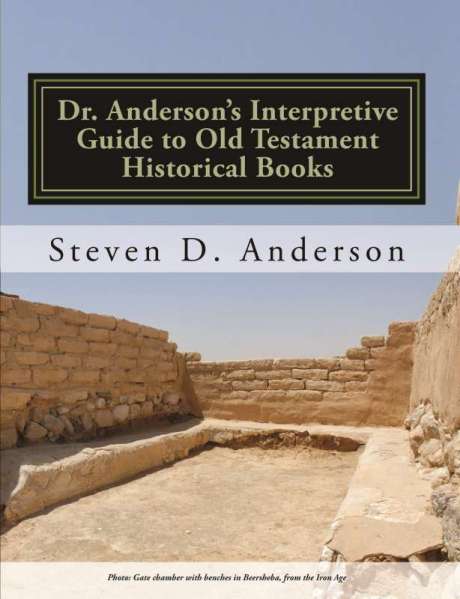
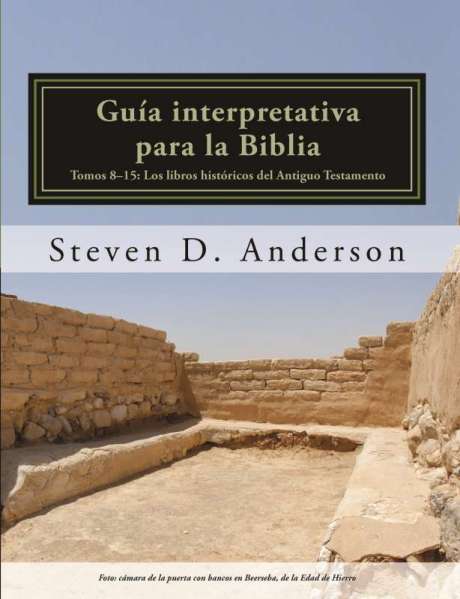
First, I have written an eight-volume guide to understanding each book of the Bible, Dr. Anderson’s Interpretive Guide to the Bible. These books are available for free download from my website, or for purchase on Amazon. The first two volumes of this series are newly revised and translated into Spanish as Guía interpretativa para la Biblia. The Spanish volumes are available for free download on my website; print volumes are available for purchase on Amazon.

GenesisSecond, I have made playlists on SoundCloud of free recordings of the entire Old Testament read in the original Hebrew and Aramaic by Omer Frenkel and produced by the 929 Project, an Israeli Jewish (non-Christian) organization (there are 929 chapters in the Hebrew Bible). Omer Frenkel is a native speaker of Hebrew and a well known Israeli narrator. While I am not affiliated with the 929 Project, any SoundCloud user can make playlists of their recordings, which are not easily accessible otherwise.

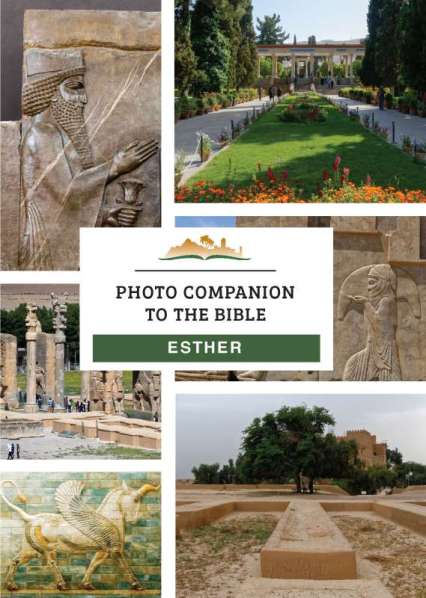
DVD Cover ESTHER-800DVD Cover DANIEL 800

Third, new volumes of the Photo Companion to the Bible continue to be released. I began this project with Todd Bolen in November 2014 in order to find the best photographs to illustrate the Bible by chapter and verse. The project has since grown significantly, with more than half a dozen other scholars contributing, although I have done most of the first drafts. My favorites among the new releases are the Daniel and Esther volumes, for which I was the primary creator. Since these volumes do not just include photographs but also extensive explanations, anyone who is interested in the relationship of historical and archaeological background information to the Bible will find the Photo Companion to the Bible profitable.

NT banner 2

Fourth, I am happy to promote the new single-volume edition of the Syriac-English New Testament published by Gorgias Press. (This is a sponsored mention.) The Syriac New Testament is important for New Testament textual criticism, and also for the certain parts of historic Eastern Christianity. The English translation provides access to readings of the Syriac Peshitta for those who cannot read Syriac. For students of Syriac, the English translation will provide a handy way to check one’s understanding of the Syriac text as it is read. This is a high-quality academic edition with features that attempt to reproduce the look and feel of historic Syriac Bibles.

There are some other projects I am working on that, Lord willing, will be released one by one over the coming months and years. These include: (1) A commentary on Revelation that I have been writing for the past few years (I am currently on chapter 14). (2) Spanish translations of more volumes of my Interpretive Guide to the Bible. (3) Spanish translations of some of my blog posts, each one linked to an updated English version.

Enjoy this content? Buy me a coffee, or support this blog via a PayPal donation.

Share this:

  • Click to share on X (Opens in new window) X
  • Click to share on Facebook (Opens in new window) Facebook
  • Click to share on LinkedIn (Opens in new window) LinkedIn
  • Click to share on WhatsApp (Opens in new window) WhatsApp
  • Click to email a link to a friend (Opens in new window) Email
  • Click to print (Opens in new window) Print
Like Loading...

Identifying the Pharaoh of the exodus

27 Wednesday Mar 2019

Posted by Steven Anderson in Apologetics, Bible scholarship

≈ 12 Comments

Tags

Biblical archaeology

There are three different Pharaohs noted in the book of Exodus: that of 1:8, that of 2:15, and that of 5:1 et al. None of these Pharaohs is named, making their identification disputed. Some suggest that Moses intentionally decided not to name Pharaohs in order to snub these mighty kings who claimed to be gods on earth—although “Pharaoh” almost seems to function as a proper name in the Pentateuchal narratives.

Identifying the Pharaoh of the exodus necessitates following four paths of investigation, and seeing where all the data points line up. These paths of evidence include: (1) the date of the exodus according to the Bible; (2) the historical circumstances of the exodus according to the Bible; (3) the dates of reigning Pharaohs according to the chronology of ancient Egypt; and (4) the historical circumstances of ancient Egypt. Other evidence could also be added, such as for the date of the conquest of Canaan, but this additional evidence will be related to the four points just noted. To find the correct date, one must prioritize the biblical evidence, and allow this to inform one’s understanding of Egyptian history and chronology. Unfortunately, the most common evangelical identifications of the Pharaoh of the exodus make fundamental errors in their methodology, and ultimately place greater confidence in the claims of secular archaeologists than in the claims of Scripture.

The first common error is to suggest the Bible does not give a clear or reliable date for the exodus. A date and a Pharaoh of the exodus is then proposed by forming theories based on certain historical indicators in the biblical text in combination with the narrative of ancient Near Eastern history that is propounded by archaeologists who have an anti-biblical worldview and agenda. Scholars who commit this error hold that the exodus occurred sometime in the thirteenth century BC (ca. 1275 BC), within the conventional dates for the reign of Ramesses II (1290–1224 BC). This is based in part on the mention of the word “Rameses” (with two different spellings) twice in Exodus, which is likely associated with a city where Ramesses II conducted extensive construction work.[1] Perhaps just as important to these scholars are theories about the Israelite conquest and settlement of Canaan, and archaeological dates of occupational levels at sites in Canaan/Israel. However, these theories must dismiss in some way the clear statement in 1 Kings 6:1 that there were 480 years between the exodus and the second month of the fourth year of Solomon’s reign (cf. Judg 11:26). There is wide agreement among scholars that biblical and extrabiblical data can be combined to yield a date of 966 or 965 BC for the second month of the fourth year of Solomon’s reign. Counting backwards 480 years from this date places the exodus in 1446 or 1445 BC, and the thirteenth century BC date can be dismissed as incompatible with Scripture. It is important to note that scholars of this persuasion typically only accept certain historical indicators in the Bible—in this instance, the name “Rameses/Raamses,” while dismissing as “metaphorical” or inaccurate the many other indicators that don’t fit the theory. In essence, the identification of Ramesses II as the Pharaoh of the exodus is rooted in a low view of scriptural authority.[2]

Many evangelical scholars accept the 1446/1445 BC date for the exodus, but commit a second error which again results in a misidentification of the Pharaoh of the exodus. This is the error of accepting the secular (conventional) chronology of ancient Egypt, which either ignores or intentionally contradicts biblical chronological data and is instead based on an assumed evolutionary history of man. Simply matching a Pharaoh from this timeline with the biblical calendar date for the exodus results in the identification of Thutmose III (reigned ca. 1479–1426 BC in the conventional chronology) as the Pharaoh of the exodus. The problem is, the historical circumstances of Thutmose III’s reign in no way fit the biblical data for what happened at the time of the exodus. There is no evidence for a large population of Semitic slaves in Egypt at that time, nor is there any evidence for a collapse of Egyptian civilization due to the plagues and the destruction of Pharaoh and his army in the Red Sea (cf. Deut 11:4). In fact, if Thutmose III was the Pharaoh of the exodus, he and his army survived the Red Sea event quite nicely, for Thutmose III undertook vast campaigns of conquest and is considered by many scholars to have been the most powerful of all the Pharaohs (along with his powerful son and successor, Amenhotep II). Because of this incompatibility between the history of Thutmose III and the biblical history of the exodus, it is clear that the view that Thutmose III was the Pharaoh of the exodus, like the view that Ramesses II was the Pharaoh of the exodus, is another capitulation to the authority of secular archaeology over Scripture.

Although proponents of the Thutmose III view often claim faithful adherence to the biblical chronology, this is only the case for the statement in 1 Kings 6:1. These scholars actually argue strenuously against the chronology from the Deluge to Abraham that is presented in Genesis 11. Either major problems with the Hebrew text of that chapter are hypothesized, or else the historicity of its genealogy is dismissed altogether. This is because if Genesis 11 is accepted as literal, accurate history, adding up the numbers results in 2417 BC as the date when the Deluge ended, and approximately 2317 BC for the dispersion of the nations from Babylon (Babel), which means there was less than 900 years of history from the beginning of Egyptian civilization until the exodus from Egypt in 1446 BC. However, the common date given for the first king of the first dynasty of united Egypt is 3100 BC, with rulers of upper and lower Egypt preceding him as part of a prehistory which spans more than 2,000 years. Most Bible scholars assume that it is impossible to compress the events and rulers in the conventional chronology of Egypt into the far shorter biblical chronology, and as a result they assume that the genealogy of Genesis 11 is wrong in some way. Ultimately, they have more confidence in the claims of secular archaeologists than in the reliability of Scripture. Their firm belief in the accuracy of the conventional chronology of ancient Egypt is the reason why they stand by the identification of Thutmose III as the Pharaoh of the exodus in spite of the way in which the history of Egypt during his reign does not seem to allow for the events described in the book of Exodus. This view also runs into problems with finding archaeological evidence for the Israelite conquest of Canaan under Joshua, since archaeological sites in Canaan/Israel are dated in early periods by connecting them with contemporaneous periods of Egyptian history (Middle Bronze Age, Late Bronze Age, etc.).

Thus, in order to identify the Pharaoh of the exodus correctly, it is necessary to calculate the date of the exodus from the Bible (contra the Ramesses II theory), but this is not enough. It is also necessary to calculate Egyptian chronology according to the biblical timescale, and in accordance with biblical history (contra the Thutmose III theory). Specifically, it is necessary to look for evidence of a period in ancient Egypt that matches the biblical description of a large population of Semitic slaves living in the land of Goshen, followed by cataclysmic plagues and the abrupt departure of the Semitic population, followed by a collapse of Egyptian power. If this period is correctly identified, then the date of this period of Egyptian history can be established according to the biblical chronology, and earlier and subsequent Egyptian history can be filled in naturally according to the biblical timescale. The Pharaoh of the exodus will be one who is not succeeded by his firstborn son, and whose death marks a sudden collapse of Egyptian civilization.

The reality is that while dates in Egyptian chronology may be presented very dogmatically by modern scholars, the extrabiblical evidence for these dates is not at all clear-cut, and has been interpreted in many different ways. The proper way to construct a chronology of ancient Egypt is to use the Bible as one’s starting point, rather than Darwinian evolution. Guided by the Bible, scholars can place the rulers and events of Egyptian history into a chronological framework that fits both the biblical data and the extrabiblical archaeological and literary evidence. In fact, an agnostic scholar who views the Bible as largely historical, David Rohl, has done extensive work on a “new chronology” which shows that the most natural way to interpret the archaeology of ancient Egypt is in a way that fits biblical chronology and history. Rohl and others have shown that the picture of consecutive Egyptian dynasties that is often presented is much too oversimplified. Dynasties often overlapped; at times Egypt was divided into multiple parts, with four or even up to twelve kings reigning at the same time. There are also issues with interpreting Egyptian astronomical records in view of Egyptian calendar reforms. The result is a far shorter Egyptian chronology—one which comports with the biblical timescale. Further, since ancient Greek, Cypriot, Hittite, and Canaanite dates are dependent on Egyptian chronology, a compression of the conventional Egyptian chronology also results in a downward revision of the other chronologies. Rohl identifies the Pharaoh of the exodus with Dudimose, who reigned near the end of the 13th dynasty. In support of this, Rohl cites Manetho (quoted by Josephus), who calls the Pharaoh of the exodus “Tutimaeus” (= Dudimose?). In Rohl’s reconstruction, the 13th dynasty ended with the invasion of the Hyksos, whom he identifies with the biblical Amalekites (cf. Num 24:20). Rohl identifies the pre-Hyksos Asiatics who lived at Avaris in the land of Goshen as the Israelites. Rohl’s theory has much to commend itself, although he advocates the “short” Egyptian sojourn (215 years), in contradiction of Exodus 12:40-41.

As for Ramesses II, Rohl identifies him with the biblical “Shishak” who was king of Egypt near the end of Solomon’s reign (1 Kgs 11:40), and who successfully invaded Judah in the fifth year of Rehoboam (1 Kgs 14:25; 2 Chr 12:2-9). According to Rohl’s chronology, the reign of Ramesses II began around 979 BC, late in the period of David’s reign. Based on a Hittite cuneiform tablet which records a treaty made with Ramesses II, Rohl suggests that Ramesses II was known as “Shysha” in the ancient Near East, which becomes “Shishak” in the Bible. According to Rohl, a relief at Karnak temple depicts a battle which Ramesses II fought with Israelites/Judeans, in which the Israelites are depicted in chariots. Since the Israelites did not acquire chariots until the reign of David or Solomon, Rohl argues that this battle cannot predate the united monarchy period.

Building largely on the work of David Rohl and John Bimson, evangelical filmmaker Tim Mahoney has done an excellent job of presenting the archaeological evidence for the Israelites in Egypt in the documentary film Patterns of Evidence: Exodus. In this film, Mahony embarks on a personal search for archaeological evidence of Israel’s exodus from Egypt in response to challenges from archaeologists who deny that the exodus event ever happened. Mahoney finds that there is abundant archaeological evidence for the biblical account of the Israelites journeying to Egypt, becoming a great nation there, being enslaved, leaving in a dramatic exodus, and conquering Canaan some 40-45 years later. However, this evidence is not recognized by scholars who are committed to interpreting archaeological data within the conventional chronological framework, since the evidence is not from the right time period. Mahoney shows that it is entirely reasonable to compress the conventional chronology, resulting in the evidence for the Israelites living in Egypt lining up with the biblical chronology.

While there is still considerable work to be done to bring the conventional Egyptian chronology and history fully into conformity with biblical chronology and history, believers can rest assured that when the evidence is correctly understood, the Bible stands as written and does not need to be allegorized or modified to fit with archaeology. The common identifications of the Pharaoh of the exodus with Ramesses II or Thutmose III are not possible from a biblical standpoint, and also do not ultimately fit the archaeological data. It does seem that the Hyksos are the biblical Amalekites, and that they invaded the largely-defenseless Egypt and ruled the Egyptians for 400 years (until the time of Saul) in an act of divine judgment following the departure of the Israelites. As for Rohl’s identification of the last major pre-Hyksos Pharaoh as Dudimose, this seems less certain, and provides a subject for further investigation by Bible-believing Egyptologists.

Enjoy this content? Buy me a coffee, or support this blog via a PayPal donation.
[1] There are actually five references to Rameses/Raamses in the Pentateuch: “the land of Rameses” (Gen 47:11), the store-city of “Raamses” (different spelling – Exod 1:11), and the site of “Rameses” (Exod 12:37; Num 33:3, 5). Some scholars point to this as evidence that the Pentateuch was written during or after the reign of Ramesses II (a.k.a. “Ramses,” “Rameses”). However, such a supposition is unnecessary, as there are numerous other instances throughout the Pentateuch of original place names being substituted for later names by a later inspired “updater” (possibly Ezra—see the Introduction to the Pentateuch). These updates were made so that later readers could understand the referents of the original place names. While various explanations have been offered, most likely the references to “Rameses” or “Raamses” in the Pentateuch are to the great city of Pi-Ramesses, which was located next to and encompassed Tell el-Dab‘a (Avaris), the center of Israelite civilization in the land of Goshen. Pi-Ramesses was one of the largest cities in the ancient Near East, and therefore is most likely the site named in the biblical text. Since Pi-Ramesses (Pi = “house [of]”) was built or greatly expanded by Ramesses II and his father Seti I, the references to a land of Ramesses or a city of Ramesses in the biblical text can be considered an inspired update to the original text of the Pentateuch, which likely read “Avaris.”

[2] Evangelical scholars who identify Ramesses II as the Pharaoh of the exodus also typically follow many other naturalistic explanations of Old Testament history, such as for the ten plagues, the crossing of the Red Sea, the appearance of God on Mount Sinai, and the crossing of the Jordan River. Dates, census figures, and historical details are routinely explained away as some sort of metaphor or literary device. Although such scholars claim to believe the Bible, their real confidence usually rests in naturalistic theories of science and archaeology.

Share this:

  • Click to share on X (Opens in new window) X
  • Click to share on Facebook (Opens in new window) Facebook
  • Click to share on LinkedIn (Opens in new window) LinkedIn
  • Click to share on WhatsApp (Opens in new window) WhatsApp
  • Click to email a link to a friend (Opens in new window) Email
  • Click to print (Opens in new window) Print
Like Loading...

The church’s new trinitarian crisis

04 Tuesday Dec 2018

Posted by Steven Anderson in Theology

≈ 1 Comment

Tags

heresy, Trinity

The greatest theological battles in the early church were fought over the nature of the Holy Trinity. There were a great many heterodox views of the Trinity propounded in the first Christian centuries, most of them stemming from Greek philosophy. Many heresies denied the perfect union of God and man in the person of Christ; some denied Christ’s divinity, while others denied His humanity. Some heresies denied that the Father, the Son, and the Holy Spirit are three distinct Persons; others denied that the three Persons of the Trinity are united in a single, shared divine essence. The orthodox Christian understanding of the Trinity was formally codified at the Councils of Nicea (325), Constantinople (381), and Chalcedon (451). Those who disagreed with the orthodox position were declared to be heretics (unbelievers) and were excommunicated from the church.

History has a tendency to repeat itself, and today the evangelical church is being overrun by heterodox views of the Trinity. However, this theological development has largely happened under the radar because it has occurred in the amorphous realm of popular theology, and not (largely) as a formal denial of orthodox trinitarianism by prominent church leaders, pastors, or theologians. Popular theology holds that the Father = Jesus = the Holy Spirit. This view is known theologically as “modalism” or “Sabellianism,” and was condemned as heretical by the early church. In conversations with my friends from seminary, as well as in my own experience, we find that people in churches all over the United States commonly say in their prayers that the Father died on the cross for their sins and rose from the dead. Some will even say “Father Jesus” in their prayers and pray to the Father “in your name.” Others will pray something like “Lord, thank you for dying on the cross for us, in Jesus’ name, Amen”—a very confusing prayer which seems to imply that “Lord” is the Father and that He, not Jesus, died on the cross. Prayers like these are seldom, if ever, corrected by pastors, even if prayed in front of the congregation—an indication that pastors think this sort of doctrinal error is a big deal. Many pastors likely do not even view this as a doctrinal error, as they also equate Jesus with the Father.

The evidence for evangelical confusion about the Trinity is not merely anecdotal: a 2016 survey found that fifty-six percent of American evangelicals believe that the Holy Spirit is a force, not a person. While that is a modalistic view, seventy percent of evangelical respondents actually affirmed that Jesus is a created being, which is the Arian heresy (not modalism). See also this 2018 survey. It is easy to see how these views arise among people who have virtually no theological or Scriptural grounding and give little or no thought to the doctrine of the Trinity. If you ask evangelical Christians “Is Jesus God?” most would say “Yes.” Then if you ask them “Is Jesus a created being?” most would say “Yes” again, because they know Jesus was born to Mary. If you ask evangelicals “Is Jesus the Father?” most would say “Yes,” because they think Jesus = God = the Father. Many think of the Holy Spirit as a force rather than as a personal being, even if they pray to the Holy Spirit, because they never see the Holy Spirit pictured in human form. Jesus, the One pictured in human form and sung about in church, is “God” to most people, while the Father is just another word for “God,” and the Holy Spirit is God’s power or force, or is simply another manifestation of Jesus.

Very basic teaching on the Bible and theology is all that is needed to understand that God is three Persons in one essence. (For an excellent detailed exposition of the Trinity, see this book by Dr. Imad Shehadeh.) Yet many evangelical laymen appear to have a modalistic understanding of the Trinity. Their lead pastors may be orthodox trinitarians, but do not stress this or correct false ideas. There are several reasons for the development of heterodox views of the Trinity in evangelical churches.

  1. Many pastors think theology is impractical, and prefer to preach on topics that their congregants will see as relevant to their day-to-day lives. Sermons and small groups at most evangelical churches are primarily applicational in their orientation, not didactic. However, since the Christian faith is defined by theological formulations of doctrine, theology is actually at the core of what the church is and of what it means to be a Christian. Most people will never learn basic Christian theology if it is not taught in church services. Some pastors openly propound the view that theology is boring and largely irrelevant. But when pastors emphasize the importance of theology and exalt knowledge of the Scriptures, their congregations also become interested in theology and begin to see its importance. Some evangelicals have gravitated toward Reformed churches in recent years because traditional Reformed churches actually teach theology (even if their theology tends to get separated from exegesis).
  2. Many pastors are poorly trained in theology and the Bible. Many evangelical churches do not require a seminary or Bible college degree for their pastors, nor do many ordination councils. The seminaries themselves are increasingly emphasizing counseling and “practical ministry,” with ever-decreasing requirements in theology, Bible, and biblical languages. Preaching is taught as an exercise in application. Many new pastors are primarily interested in relationships, outreach, and counseling, and do not like to read theology books, church history books, Bible commentaries, or Greek and Hebrew grammars. While there was a time when most evangelical pastors and many laymen had a keen interest in theological study, few do today.
  3. Some pastors teach that the Trinity is a mystery which defies description or understanding. Some pastors simply teach that the Trinity cannot be understood or described, without ever giving the orthodox formulation of trinitarian doctrine. Some even avoid calling Jesus the Son of God, simply calling Him “God” instead, because they think it will confuse people to call Jesus “the Son of God” or to say that God sent His Son into the world, or to say that Jesus is seated at God’s right hand. While there are some things about the nature of God and the holy Trinity that are beyond our understanding, God is knowable, and it is possible to communicate from Scripture the orthodox doctrine of the Trinity in a clear and understandable manner. Failure to do this will result in many people developing false ideas about God.
  4. Strong cultural forces are opposed to a trinitarian view of God. It is well known that politically correct chaplains and pastors refuse to pray in Jesus’ name in ecumenical settings, since Jews, Muslims, and others are offended by the assertion that Jesus is the divine Son of God. Politicians are careful to mention “God” but not “Jesus” so as to avoid offending those who do not believe in the trinitarian God revealed in Scripture. Within the church are anti-trinitarian influences from Oneness Pentecostalism, which comes partly through popular preachers associated with the Word of Faith movement. These and other cultural pressures have made many Christians hesitant to make strong statements about the Trinity. However, the points where the Christian faith is being attacked most strongly are the points which ought to be emphasized most strongly in order to prevent heresies from growing.
  5. Formal liturgy has been removed from most evangelical churches. There was a time when people recited and affirmed a formulation of orthodox Christian theology every time they went to church. Usually this was the Apostles’ Creed or the Nicene Creed, although some denominational creeds have also been used. In every service, prayers were read which clearly expressed a trinitarian view of God. The strongly trinitarian Doxology or Gloria Patri was sung in every service. Trinity Sunday was celebrated once a year on the church calendar, giving the pastor an opportunity for focused teaching on the nature of the Holy Trinity. These are traditions which date back to the early centuries of church history, and they reflect the stress which the early church placed on correct understanding of the Trinity as absolutely essential to the Christian faith. The wholesale removal of these traditions has resulted in many churchgoers neither knowing nor believing fundamental doctrines of the Christian faith. While modern evangelical churches may wish to make small adjustments to traditional creeds in response to problems that theologians have long pointed out (such as the statement that Christ descended into hell), it is important for theology to be taught in weekly church services, and it is important to give people in the church the opportunity to make a verbal affirmation of their faith. If prayers are made spontaneously instead of read, then those who lead in prayer must be instructed in how to pray (pray to the Father in Jesus’ name), and should be encouraged to include a correctly-formulated trinitarian doxology in their prayers.
  6. God the Father has been neglected. For decades, evangelical churches have increasingly neglected God the Father. Songs and preaching alike are mainly about Jesus, with a secondary focus on the Holy Spirit in worship. The Father has been forgotten. Thus, most Christians have no concept of who the Father is or what His relationship is to Jesus and the Holy Spirit. They have the idea that because Jesus is God and God is One, the Father is somehow the same as Jesus. The terms “Father,” “God,” “Lord,” and “Jesus” are used interchangeably in their prayers. This is not just due to a failure to teach basic theology but also to a failure to teach the Bible, since the Bible cannot be understood without distinguishing the Father from Jesus and the Holy Spirit. Many contemporary Christians would be shocked to learn that Jesus was not the primary focus of the early church’s worship and prayers—God the Father was. They would be surprised to know that many or most uses of “God” in the New Testament refer specifically to God the Father. And they might become angry and argumentative if told that the Person on the throne in the book of Revelation is not Jesus, but the Father.
  7. Popular church music is not robustly trinitarian. Lester Ruth has noted that neither the most popular traditional hymns nor the most popular modern worship songs are robustly trinitarian. There are in fact many old hymns which clearly teach trinitarianism, in which God is worshipped as triune. However, a list of the 70 most commonly published hymns in evangelical hymnals, as well as the 99 most popular songs on top-25 lists from CCLI shows that the most popular hymns and songs are lacking in the area of trinitarian theology. These popular hymns and songs are overwhelmingly about Jesus, with few or no references to God as triune, or to worship of God as triune. They seldom mention more than one Person of the Godhead, and usually use generic references such as “God,” “Lord,” and “King,” which could be interpreted in non-trinitarian ways. Often the emphasis is on Jesus = God, an equation which is often misunderstood when there is no balance. Some modern songs even seem to express a sort of unitarianism, identifying Jesus as completely indistinct from the Father/God.

If many or most American evangelicals today hold a modalistic view of the Trinity, this gives rise to a troubling question: can someone believe in modalism and still be saved? The early church was unequivocal in affirming that modalists were not Christians. When Paul was combating anti-resurrection teaching in the Corinthian church, he wrote that “some have no knowledge of God” (1 Cor 15:34). When John was combating a teaching that denied the divine-human nature of Jesus Christ, he called those who hold this view deceivers and antichrists (2 John 7), and warned the church that to hold a false view of Jesus is to worship an idol (1 John 5:21). Today’s popular theology is amorphous and not formally defined; sometimes it is hard to tell exactly what people believe. Perhaps some people are just confused about terminology, but the reality is that many have a false view of God. The main reason why we see so many people walking away from the church in our day is that they were never saved to begin with. The preaching of the gospel must start with right theology, including and especially a right view of who God is.

Trinity

Enjoy this content? Buy me a coffee, or support this blog via a PayPal donation.
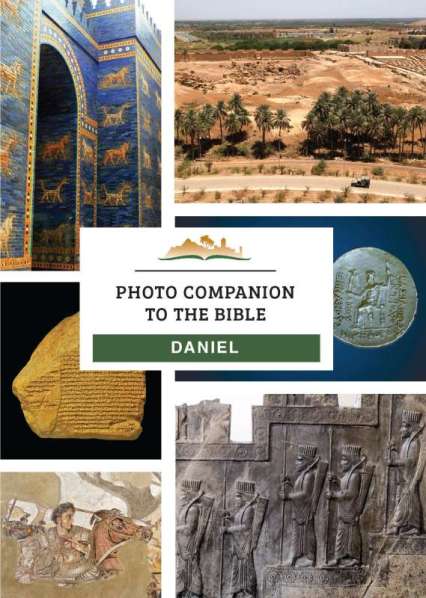
Share this:

  • Click to share on X (Opens in new window) X
  • Click to share on Facebook (Opens in new window) Facebook
  • Click to share on LinkedIn (Opens in new window) LinkedIn
  • Click to share on WhatsApp (Opens in new window) WhatsApp
  • Click to email a link to a friend (Opens in new window) Email
  • Click to print (Opens in new window) Print
Like Loading...

Resources for Biblical Aramaic

29 Saturday Sep 2018

Posted by Steven Anderson in Bible scholarship, Biblical languages

≈ 16 Comments

Tags

Aramaic studies, BA

I previously published an article on Aramaic that provides historical background to the language and describes its relevance for biblical studies. My aim in the present article is to help people who want to study the Bible in the original languages find and use resources for Biblical Aramaic. What follows below is a fairly comprehensive list of available resources, with descriptions, evaluations, and recommendations. This post is updated regularly with new resources.

First, it will be helpful to explain what is meant by “Biblical Aramaic.” Aramaic is a language with 3,000 years of written history, which means that there are many varieties/dialects of Aramaic. The type of Aramaic used in the Bible (Ezra 4:8–6:18 and 7:12-26, Daniel 2:4b–7:28, and Jeremiah 10:11) is called “Biblical Aramaic.” When studying the Aramaic of the book of Ezra or the Aramaic of the book of Daniel, it is important to use grammars and lexicons of Biblical Aramaic, since other dialects of Aramaic have some differences in grammar and vocabulary.

Grammars

Hebrew and Aramaic are closely related languages, something like Spanish and Italian. Thus, most Biblical Aramaic (BA) beginning grammars (except the one by Reymond) are designed for students who already have a working knowledge of Biblical Hebrew (BH). Because these grammars build on a student’s Hebrew knowledge, they are generally intended to teach Aramaic grammar in only one semester, rather than the usual full year. Thus, if you don’t know Biblical Hebrew you will do well to learn the basics of Biblical Hebrew before launching into Biblical Aramaic. English language Biblical Aramaic grammars that I recommend include the ones by Callaham, Cook, Johns/Jumper, Muraoka, Rosenthal, Schuele, and Steinmann. In general, students who are primarily using one Biblical Aramaic grammar to learn the language will find it helpful to have a second grammar available to look up further explanations in the second grammar when there is a gap or something they don’t understand in the main grammar they are using. For example, Callaham is a useful supplement for Johns or Schuele, and vice versa.

Callaham, Scott N. Biblical Aramaic for Biblical Interpreters: A Parallel Hebrew-Aramaic Handbook. HA’ARETS. Wilmore, KY: GlossaHouse, 2021.

  • Amazon: paperback, hardcover; GlossaHouse: paperback, hardcover; Logos edition under development. There is also a Chinese version (ISBN: 9789869896733) available from U.S. Tien Dao Books and Conservative Baptist Press. The Logos edition of the Chinese version is divided into the Aramaic section and the Hebrew section.
  • Number of chapters: 19
  • Callaham earned his Ph.D. from Southwestern Baptist Theological Seminary. He is currently Dean of the Institute of Public Theology. It is evident from his grammar that he is a careful and well-read scholar. However, he was not trained as an Aramaic specialist.
  • An understanding of the grammar of Biblical Hebrew, such as two semesters of Hebrew grammar courses, is a prerequisite for using this book. The book starts by discussing how Biblical Aramaic is similar to and different from Biblical Hebrew, without presenting the Aramaic alphabet and vowel system or explaining how to find and use editions of the Biblical Aramaic text, because parallel knowledge of Hebrew is assumed. It is also assumed that students will be able to pronounce (read) the Aramaic words on their own, using Hebrew pronunciation.
  • This grammar (abbreviated BABI) aims to facilitate the teaching of Biblical Aramaic by making side-by-side comparisons with Biblical Hebrew throughout the book. Throughout most of the grammar, the page on the left side explains a Hebrew grammatical concept, and the page on the right side explains the corresponding concept in Aramaic, with similarities and differences noted. This is a helpful approach, not only for learning Biblical Aramaic, but also for solidifying one’s knowledge of Biblical Hebrew.
  • There are a small number of “Suggested Learning Exercises” at the end of each chapter, but these are different from traditional homework assignments, and there are no vocabulary lists to memorize for each chapter. Callaham says this is because Bible software programs have reduced or eliminated the need to memorize paradigms and vocabulary lists. He favors an inductive approach to learning Biblical Aramaic, in which students learn to recognize vocabulary and grammatical forms through reading and working with the Aramaic text, and relating it to their knowledge of Hebrew. Because of Callaham’s inductive style, Aramaic grammar is explained from the start by citing portions of the biblical text that have vocabulary and grammatical forms which students have not been taught. Although there is a glossary in the back, it is assumed that students will have access to a Bible software program to parse and define words they cannot figure out on their own. Teachers who have a more traditional pedagogical style could create their own quizzes with paradigms and vocabulary, but that is not the way this grammar is designed.
  • This grammar is printed with black, red, and blue text. The red and blue text is used for color-coding grammatical features.
  • When new topics are introduced in the grammar, cross-references are provided to parallel sections in Johns, Muraoka, and Rosenthal for additional explanations.
  • Callaham helpfully prints both the traditional names of Aramaic verbal stems and the letters used for these stems by Semiticists, e.g., Peal G, Pael D, Shaphel C, Haphel C.
  • There is a complete glossary of Biblical Aramaic in the back of the grammar, with Biblical Hebrew cognates noted.
  • Callaham writes in the introduction to his grammar (p. xi), “this course is free of written composition exercises and the development of speaking and listening skills.” While I agree that it is not necessary to learn Aramaic as a living language, I do find that hearing and speaking the text is part of the learning process, and is essential to developing reading skills. Of course, a professor who uses this grammar can read the Aramaic text out loud and ask students to do the same.
  • Callaham has Aramaic video lessons based on his grammar on the Daily Dose of Aramaic website (YouTube). These videos are especially valuable for independent learners. Note, however, that the Daily Dose videos are not as rigorously researched or edited as the grammar. Also note that both Vimeo and YouTube have auto-generated transcripts for the videos, and these are searchable. For example, searching the Daily Dose of Aramaic YouTube channel for “Westminster” will show the YouTube videos where Callaham comments on the Westminster morphological database.
  • This is an excellent and up-to-date grammar with many scholarly references. I recommend it with the caveat that it is different from a traditional grammar, and as such will not fit everyone’s teaching or learning style. However, if one uses a traditional grammar such as Johns, Callaham’s grammar will still be a valuable tool for reference.
  • Callaham wrote this grammar with the intention of making it easily translatable; it is linguistics-based, not English-based. Callaham himself translated the grammar into Chinese. Qualified persons who wish to translate the grammar into other languages may contact Callaham or GlossaHouse.

Johns, Alger F. A Short Grammar of Biblical Aramaic. Rev. ed. Berrien Springs, MI: Andrews University Press, 1972.

Jumper, James N. An Annotated Answer Key to Alger Johns’s A Short Grammar of Biblical Aramaic. Rev. ed. Berrien Springs, MI: Andrews University Press, 2003.

  • Amazon: Johns, Jumper; Logos: both Johns and Jumper; read for free on archive.org. There is also a Korean translation (WorldCat; Kyobo). Note that the Korean edition leaves some English glosses untranslated.
  • Number of Lessons: 20
  • This is an excellent introductory grammar for Biblical Aramaic, written in a traditional style. Johns is Adventist, but he doesn’t have any specifically Adventist theology in his grammar. Importantly, he has a conservative view of Daniel and Ezra, and this view comes through in both Johns’ grammar and in Jumper’s answer key.
  • Johns and Jumper were both trained in Semitics. Johns studied Semitics under William Foxwell Albright, and he studied Aramaic under Joseph Fitzmyer. Thus, he is not just an OT Hebrew professor who also teaches Aramaic, but is someone whose knowledge of Aramaic is much broader and deeper than Biblical Aramaic alone. I have a high level of confidence in the volumes by Johns and Jumper since they combine advanced Aramaic scholarship with a conservative view of the Bible.
  • If you know Biblical Hebrew well, you can use this grammar to teach yourself Biblical Aramaic in a few months, reading a chapter of Johns each week, doing the homework exercises, and checking your work with the answer key. Many of the early exercises in Johns are made up, but the later exercises will lead you through a translation of all of Aramaic Ezra. Translating the biblical text and reading the annotations in Jumper’s answer key was something that I found very helpful.
  • Johns and Jumper work well with the traditional approach to teaching grammar. However, a professor should supplement this grammar with other, more recently published grammars that use newer terminology, especially the newer labels used by Semiticists for verbal stems.
  • The price of these volumes is lower than most.

Schuele, Andreas. An Introduction to Biblical Aramaic. Louisville: Westminster John Knox Press, 2012.

  • This book comes in two sizes. The 8½ x 11 size has larger text that is much easier to read, but it is also a bulkier volume to carry around. The 6 x 9 size has much smaller Aramaic text, and the pointing can be hard to read, but it is a more convenient size to carry around. See current options from Amazon, Barnes & Noble, and Christianbook.com. There are several ebook versions: Kindle, Christianbook.com, and Google Play. The book is also available on Everand, Perlego, archive.org, and Google Books (preview).
  • Schuele’s book is arranged as a reference grammar, but is written at an introductory level. It can be used by itself to learn biblical Aramaic, but it is best used as a complement to another grammar, such as Johns’. Since it is more technical than Johns’ grammar, students will find it helpful for providing fuller explanations for things that Johns may only explain briefly.
  • Schuele’s comparative word list on pp. 93-94 is helpful.
  • The book includes an answer key for the homework exercises.
  • Schuele’s grammar is an easy read for those who have already worked their way through another Biblical Aramaic grammar. The whole book could be read in a day or two.
  • Note that Schuele does not hold to the authenticity of the book of Daniel. However, he does hold that Biblical Aramaic is part of the Imperial Aramaic dialect.
  • For a review of Schuele’s grammar, see Brian Davidson, Bulletin for Biblical Research, vol. 23, no. 2 (2013), 249-50, available here.

Rosenthal, Franz. A Grammar of Biblical Aramaic. 7th, expanded ed. Porta Linguarum Orientalium. Wiesbaden: Harrassowitz Verlag, 2006.

  • Available from Amazon. The sixth edition is available on archive.org.
  • This is one of the best intermediate/advanced reference grammar of Biblical Aramaic. Its main weaknesses are its brevity and the fact that it reflects somewhat older scholarship.
  • When studying or translating Biblical Aramaic verses, I would recommend looking up the references in Rosenthal for each verse. This will to solidify your understanding of Aramaic grammar, as well as providing helpful grammatical information about the verse you are studying. The glossary in the back is also helpful.
  • An earlier edition of this book is also available in a French translation as Grammaire d’araméen biblique (Amazon; WorldCat; Google Books).
  • Rosenthal is also the editor of An Aramaic Handbook, Porta Linguarun Orientalium, Neue Serie, x, 2 parts in 4 volumes, (Wiesbaden: Otto Harrassowitz, 1967). This is an anthology of Aramaic texts from various dialects. See WorldCat for library availability.

Muraoka, Takamitsu. A Biblical Aramaic Reader: With an Outline Grammar. 2nd ed. Leuven: Peeters, 2020.

  • Available from Amazon.
  • The first part of this book is a nice outline of Biblical Aramaic grammar designed for students who already know Biblical Hebrew. The grammar is brief and technical, but is complete enough to be used as an introductory Aramaic grammar.
  • The second part of this book consists of a verse-by-verse commentary on the grammar of Biblical Aramaic. This section is helpful for exegesis, since Muraoka is one of the greatest biblical linguists of the modern era. He is also an evangelical Christian.
  • Note that although this is called a “Reader,” it doesn’t print the text of Biblical Aramaic. 
  • Overall, I highly recommend this volume for the study of Biblical Aramaic.

Steinmann, Andrew E. Fundamental Biblical Aramaic. 2nd edition. Saint Louis: Concordia, 2022.

  • This is the second part of a book called Fundamental Biblical Hebrew and Fundamental Biblical Aramaic. The Fundamental Biblical Hebrew section was written by Andrew H. Bartlet.
  • This book can be purchased from the Concordia website and Christianbook.com. The first edition is available on Logos.
  • This is designed as a traditional teaching grammar, with eighteen lessons, vocabulary lists, and homework exercises drawn from the biblical text.
  • Two digital downloads are available from the Concordia website (under “More Information”): an answer key (to the first edition; the Aramaic section starts on p. 78 of the pdf) and “What the Aramaic verb will tell you about itself.”
  • Overall, I would recommend this as a solid grammar written from a conservative theological viewpoint. It does have some peculiarities. Steinmann has a different way labeling the t-infix stems (e.g., he calls the Hithpeel “HtG” instead of “tG”) but it is easy enough to learn other systems of nomenclature.

Cook, Edward. Biblical Aramaic and Related Dialects: An Introduction. Cambridge: Cambridge University Press, 2022.

  • Amazon paperback; Kindle; hardcover; an eTextbook is available from Cambridge; an ebook is also available from Google Play and Barnes & Noble.
  • Number of chapters: 18. The book is also organized by section numbers, which the author cites instead of citing page numbers.
  • The author is an expert linguist who has studied the Aramaic language in great depth. See this DDA interview.
  • The author is a professor at Catholic University in Washington, D.C. Although Christian in name, the Bible department at Catholic University has long been a bastion of liberalism that strongly opposes the evangelical approach to Scripture.
  • The book asserts, without mentioning that many capable scholars disagree, that the book of Daniel was written in the mid-second century BC. Cook writes, “Despite the setting in the Neo-Babylonian and Persian period, it is clear from internal evidence (particularly the prophetic visions of chapters 2 and 7, and the Hebrew of chapters 8–12) that the real time of composition was the 2nd century BCE against the backdrop of the Antiochene crisis (166–164 BCE)” (p. 10). The “internal evidence” to which Cook refers is the fact that the book of Daniel prophesies future events. Since it is humanly impossible to give a detailed prophecy of future events, critics whose theology does not allow for the possibility that future events were revealed to Daniel by God must allege that the book of Daniel was a forgery (a pseudonymous work) written after the fact, rather than a true prophecy. Critics acknowledge that the prophetic visions of the book of Daniel describe genuine historical events until about 165 BC, and thus they date the time of composition of the book to around that year—in spite of compelling evidence that the book of Daniel was in fact written around 533 BC, at the time of the last vision recorded in the book.
  • As a result, Cook unhelpfully classifies Biblical Aramaic (BA) as a separate dialect from Imperial Aramaic (IA), and he tries to show that the grammar of Biblical Aramaic is part of a transition from Imperial Aramaic to the Aramaic of Qumran. (Traditionally, critics have recognized that Biblical Aramaic has the grammatical characteristics of Imperial Aramaic, and have simply extended the period of Imperial Aramaic to the mid-second century BC in order to include the book of Daniel.) The examples and explanations throughout the book are designed to compare and contrast BA with IA, as well as with Qumran Aramaic (QA). Cook’s theological errors can lead him to make to linguistic errors, when he assumes that certain characteristics of BA must be later developments from IA instead of dialectical variations within IA (which was not a perfectly uniform dialect).
  • This grammar is highly technical, and is designed for use by linguists or Semiticists, rather than by the typical seminary student. The book uses terms such as SC (“suffix conjugation”) instead of “imperfect,” PC (“prefix conjugation”) instead of “perfect,” A-clause, B-clause, and TAM (“Tense Aspect Mood”). The grammar also uses letters such as G, D, C, tG, tD, etc. for labeling verbal stems. While this system of labeling verbal stems is efficient from a linguistic point of view, students may find it difficult to relate what they have learned to discussions in other grammars and commentaries of the Peal, Pael, Haphel, Aphel, etc. In addition, non-linguists will encounter a considerable amount of completely new vocabulary that differs from older or “standard” grammatical terminology. Many of the technical grammatical notes in the grammar, while helpful, are extraneous for developing the ability to read Biblical Aramaic and more properly belong in a reference grammar.
  • Cook takes an inductive approach to learning Aramaic. Therefore, there are no homework exercises or vocabulary lists in Chapters 1-17. Professors will have to create their own homework assignments or quizzes if using this grammar. Chapter 18 contains a selection of Aramaic readings with grammatical and lexical notes. These readings are selected from both biblical and extrabiblical Aramaic.
  • The book includes a complete glossary of Biblical Aramaic.
  • I believe Cook’s grammar is very useful as a reference grammar for Biblical Aramaic, due to its wealth of detailed linguistic information. Indeed, it is more like a reference grammar than an introductory/teaching grammar. People who have already been introduced to Biblical Aramaic through another grammar may want to work their way through Cook’s grammar as a means of reviewing and deepening their knowledge of Biblical Aramaic. However, many seminary students will find this grammar too technical for use as their first introduction to Aramaic, and some professors will be disappointed by the lack of homework exercises and assigned vocabulary. The antibiblical theology of Cook’s grammar also makes me hesitant to recommend it as a seminary textbook. This grammar is really designed for use in a Semitics program, although it also has considerable value as a reference grammar.

Greenspahn, Frederick E. An Introduction to Aramaic. 2nd ed. Atlanta: Society of Biblical Literature, 2003.

  • Available from Amazon; Logos: English; Spanish; Korean version: WorldCat, Kyobo
  • Number of chapters: 32; answer key in back
  • The title of this book indicates that it is a general introduction to Aramaic, but in fact its focus is on Biblical Aramaic until the final chapters. Compared to Johns, this is a much longer introductory grammar that is designed to be part of a year-long Introduction to Aramaic course in a Semitics program, rather than a one-semester Biblical Aramaic course in a seminary program. Greenspahn’s method is, unfortunately, based on the view that the Bible is not any more special than other works of literature. He says, “With only some 200 verses of the Bible in Aramaic, there would be little reason to learn the dialect for that reason alone” (p. 1).
  • Greenspahn’s grammar is liked by many Aramaicists for its linguistic accuracy. However, as the SBL grammar, it is heavily colored by higher criticism, and for me this ruins the book. For example, on p. 5, he says, “scholars are not certain about the historical reliability of biblical statements about the patriarchs.” His comments on Daniel 7 are in line with the critical interpretation of that key prophetic chapter. He says on p. 161 that “The reference to Daniel’s spirit as having a sheath (נִדְנֶה) suggests a distinction between the body and the mind, which emerged only late in the biblical period.” There really is no reason to add his belief that earlier biblical writers didn’t believe that the soul or mind is distinct from the body.
  • One thing that bothered me when using Greenspahn was the way he cavalierly edits the biblical text in the homework exercises. In theory, the homework exercises require the translation of the entire corpus of Biblical Aramaic, but nearly all of the biblical texts are “simplified” and “abridged” and “normalized” in order to fit the plan of Greenspahn’s grammar. To Greenspahn, the biblical text is not sacred, so there is nothing bothersome about changing it to suit his purposes. Only Daniel 7 is presented without modification.
  • Greenspahn uses a different system of nomenclature for the Aramaic verbal system than many other grammars of Biblical Aramaic, which can be confusing. The system Greenspahn uses has its merits, but it is designed for comparative Semitics scholars and linguists, not for clergymen who want to learn Biblical Aramaic. It would be helpful if Greenspahn used the nomenclature of both systems, so that students would be able to understand other grammars, lexicons, and commentaries.
  • Many of the homework exercises are too challenging for most students. Asking students to translate unpointed extrabiblical Aramaic texts and write in the correct vowels is okay for an advanced Semitics program, but not for a seminary class in Biblical Aramaic. The same could be said for the exercises which ask students to translate English sentences into Aramaic.
  • In summary, this grammar has an arrogant tone, which is evident in (1) Greenspahn’s glib handling of the biblical text; (2) Greenspahn’s strident dismissal of the authenticity of Daniel, without so much as mentioning that there are many competent scholars who believe the book is authentic; (3) Greenspahn’s replacement of standard BA verbal nomenclature with the labels used by Semiticists; and (4) Greenspahn’s presentation of homework exercises that are too challenging for anyone but gifted Semitics students.
  • Greenspahn’s comments on Aramaic grammar are generally reliable, where they are not colored by his theology. But Johns is easier to understand and better organized.

Van Pelt, Miles V. Basics of Biblical Aramaic. 2nd ed. Grand Rapids: Zondervan, 2023.

  • Amazon: paperback, Kindle; also available on Logos. The video lectures for the second edition are expensive; they can be purchased from Zondervan or from Vimeo or accessed through Zondervan’s MasterLectures for a monthly subscription. Logos sells the video lectures for the first edition.
  • The second edition only makes superficial modifications from the first edition; it is not a comprehensive revision. The second edition is a higher quality printing than the first edition, with stronger, whiter pages. It also adds colored fonts to highlight words or parts of words in the Aramaic text.
  • Number of Lessons: 22. An answer key (for the first edition) is available online here.
  • Van Pelt’s approach is the polar opposite of Greenspahn’s and Cook’s. He says, “This grammar was not written for Aramaic scholars or for students interested in comparative Semitic grammar” (p. xi). Van Pelt makes no attempt whatsoever to explain the place of Aramaic in the Semitic language family or the history of the Aramaic language.
  • Van Pelt’s grammar is popular because of the Zondervan marketing machine, but it is oversimplified for language purists. Van Pelt has a Ph.D. in Old Testament from Southern Baptist Theological Seminary, but was not trained as an Aramaicist or a Semiticist. Thus, his explanations are not as precise as those in other grammars, and are too dumbed-down at times. Van Pelt mentions in the preface that he received some assistance from his colleague Peter Lee, who has a Ph.D. in Semitics and Egyptian languages, but the fact that he needed help hardly gives me confidence in this grammar, and I don’t trust its technical accuracy. The Basics of Biblical Hebrew grammar coauthored by Pratico and Van Pelt has also been criticized for technical inaccuracy, such as referring to wāw-consecutives as “the converted Perfect” and “the converted Imperfect.”
  • Example #1: Van Pelt unhelpfully refers to the Aramaic infinitive as the “infinitive construct,” on the assumption that this will help students who know Biblical Hebrew understand the function of the Aramaic infinitive. However, Biblica Aramaic only has one infinitive, and so Aramaicists do not use the term “infinitive construct,” which is a Hebrew grammar term.
  • Example #2: Van Pelt does not use any diacritics or guttural markers in his transliterations, on the assumption that these will make the grammar too difficult. Many Semiticists would say that Van Pelt misrepresents the sounds of Aramaic by omitting these diacritics.
  • Example #3: Van Pelt seems to treat Aramaic as a dialect of Hebrew in order to “help” students learn the language (p. 3), but from a linguistic standpoint this is incorrect.
  • See also Andrew W. Litke’s review of the first edition of Van Pelt. Most of Litke’s corrections and criticisms were not taken into account in the publication of the second edition.
  • Concerns about the linguistic accuracy of Van Pelt’s grammar make me hesitant to use or recommend it.

Ribera-Florit, Josep. Guía para el Estudio del Arameo Bíblico. 2nd edition. Madrid: Sociedad Bíblica, 2005.

  • Included in select Logos libraries; see also WorldCat. ISBN: 8480830700
  • This is an original (not translated) Spanish grammar of Biblical Aramaic. It was written by a specialist who was obviously an expert in the Aramaic language. Some students may find it too technical, but the linguistic information in the book is reliable.
  • More information about the book can be found on the late author’s website (English; Spanish).
  • The book includes a complete glossary of Biblical Aramaic.
  • The book prints the complete text of the Aramaic portions of Biblica Hebraica Stuttgartensia, without the text critical notes.
  • This is very valuable volume for the study of Biblical Aramaic by Spanish speakers. Because of its high level of scholarship, it can also be used for reference by speakers of other languages. Hopefully will be back in print soon.
  • For information about older Spanish grammars of Biblical Aramaic, see Vega María García González, “Viscasillas y Goñi: el arameo bíblico en España entre el XIX y el XX,” available on Academia.edu.

Magnanini, Pietro and Pier Paolo Nava. Grammatica di aramaico biblico. Bologna: Edizioni Studio Domenicano, 2008.

  • This Italian grammar of Biblical Aramaic was written by Pietro Magnanini, who has a Ph.D. in Semitics and is a career professor of Semitic languages, with the technical assistance of Pier Paolo Nava. The two authors have also published a grammar of Biblical Hebrew in Italian. They are Catholic but not conservative vis-à-vis their date of the book of Daniel. A Spanish language review of this grammar by Ángel Urbán is available here. The Magnanini-Nava grammar is clear and concise, and is organized by paragraph numbers for use as a reference grammar. It is written like a reference grammar, without a separate section for syntax (only phonology and morphology), but it can be used as an introductory grammar. The main part of the grammar is followed by verb paradigms, the text of the entire corpus of Biblical Aramaic, and a complete glossary of Biblical Aramaic. There is also an index of verses cited. This grammar is available new or used from various online booksellers, such as Amazon.com, Amazon.it, and Edizioni Studio Domenicano. For library availability, see WorldCat. This book is certainly a great resource for Italian speakers, and its quality makes it a useful reference for non-Italian speakers.

Geiger, Gregor. Introduzione all’aramaico biblico. 2nd ed. Milan: Edizioni Terra Santa, 2021.

  • This is an introductory grammar of Biblical Aramaic written in Italian, designed for use by students who already have some knowledge of Biblical Hebrew. The author has a Ph.D. in Hebrew from Hebrew University in Jerusalem, and taught Biblical Aramaic at Studium Biblicum Franciscanum in Jerusalem for fifteen years before writing this grammar. The grammar is arranged in 12 chapters, with vocabulary and homework exercises. A book review by Claudio Balzaretti is available here. To obtain this volume, see Edizioni Terra Santa, Amazon.com, Google Play, and this Google Books preview.

Dammron, A. Grammaire de l’araméen biblique. Strasbourg: P. H. Heitz, 1961.

  • This is an original (not translated) French language grammar of Biblical Aramaic by Alfred Dammron. It was reviewed favorably by E. Dhorme (WorldCat; JSTOR; Persée). Pierre Grelot also recommended the book, but wrote a list of corrections (JSTOR). Dammron’s Grammaire is intended to teach Biblical Aramaic grammar to students who already have some knowledge of Biblical Hebrew. The book is organized by section numbers, not chapters, and does not include homework exercises. Dammron appears to hold to the authenticity of the books of Ezra and Daniel, and he even affirms conservative dates for the reigns of Saul (1030–1011) and David (1011–972). Since this book is out of print but still copyrighted, it is difficult to obtain; HathiTrust cannot display a pdf copy, but helpfully shows search results for words and phrases within the book. The book is owned by 114 libraries worldwide, according to WorldCat. Readers of this book will find some of its terminology and linguistic conventions dated, and should refer to Grelot’s review for his corrections/criticisms. The French translation of Rosenthal is another useful supplement. Also see the introductory grammar by Patrick Anani Etoughé. Although Dammron’s Grammaire was published more than 60 years ago, it remains useful due to the paucity of Biblical Aramaic resources in the French language.

Bauer, Hans and Pontus Leander. Grammatik des Biblisch-Aramäischen. Tübingen: Max Niemeyer, 1927.

  • Bauer-Leander is a standard reference grammar of Biblical Aramaic, although it is somewhat dated. The book is out of print and only exists in German; used copies may be found on eBay. Libraries that hold copies of this grammar can be found on WorldCat. A pdf version may be borrowed free of charge from Archive.org or downloaded free of charge from Freimann-Sammlung Universitätsbibliothek, Google Books, or Google Play Some of the English grammars of Biblical Aramaic incorporate insights from Bauer-Leander. Importantly, the Aramaic section of the HALOT lexicon contains frequent references to Bauer-Leander.

Segert, Stanislav. Altaramäische Grammatik: mit Bibliographie, Chrestomathie und Glossar. Leipzig: VEB Verlag Enzyklopädie, 1975.

  • This is a reference grammar for various dialects of ancient Aramaic, including Biblical Aramaic. One of the most helpful sections of the grammar (on pp. 470-486) is a verse-by-verse grammatical analysis of selected Biblical Aramaic texts (Gen 31:47; Jer 10:11; Ezra 7:12-26; Daniel 2:4-49; 7:1-8). This grammar is out of print and there is no English translation; used copies may be available on eBay. Libraries that hold copies of this grammar can be found on WorldCat. It can also be borrowed free of charge from Archive.org. See also the reviews by Isbell, Naveh, Pardee, Clarke, Hopkins, and Hoftijzer.

김구원. 『성서 아람어 문법』. 서울: 비블리카 아카데미아, 2012. (Translation: Kim, Koowon. A Grammar of Biblical Aramaic. Seoul: Biblica Academia, 2012.)

  • This is an original (not translated) grammar of Biblical Aramaic in Korean that was published in 2012. The author has an M.Div. from Westminster Theological Seminary and a Ph.D. from the University of Chicago. For Korean speakers who have limited knowledge of English, this grammar is probably easier to understand than the translations of Greenspahn and Johns. It has 20 chapters, with homework exercises, paradigms, and a glossary. For more information, see WorldCat, Kyobo, and the author’s Academia.edu page.

Other Grammars

  • Neef, Heinz-Deiter. Arbeitsbuch Biblisch-Aramäisch. 3rd ed. Tübingen: Mohr Siebeck, 2018. This is the most up-to-date introductory grammar of Biblical Aramaic in German. It is nicely formatted and linguistically reliable. It can be purchased from Logos, Amazon, or Mohr Siebeck. See also WorldCat and Google Books.
  • Reymond, Eric D. Complete Aramaic: A Comprehensive Guide to Reading and Understanding Aramaic with Original Texts. London: Teach Yourself, 2021. The title Complete Aramaic refers to the fact that this book is designed to teach Biblical Aramaic “from scratch,” without assuming previous knowledge of Biblical Hebrew. This is the main advantage and distinctive of this grammar. Note that the author does not accept the authenticity of the book of Daniel, and often says things that dismiss the claims made in the biblical text. The grammar is designed to be easy to follow, although it would be nice if the author gave both the older and newer labels for the verb stems. He calls, for example, “hitpə‘el” what other grammars call the “Hithpeel” or “Gt” stem. The grammar is available from Amazon and Christianbook.com.
  • Anani Etoughé, Patrick. Précis de grammaire d’Araméen biblique. Lulu, 2013. The author’s name is sometimes written as Patrick Anani Etoughé, and sometimes as Patrick Etoughé Anani. This appears to be the most up-to-date French language grammar of Biblical Aramaic. The author is Seventh-day Adventist. This self-published book is available from the printer, Lulu, and from Amazon.fr and Amazon.ca.
  • Jean, Charles-F. Grammaire hébraïque élémentaire: Suivie de notions d’araméen biblique. 3rd ed. Paris: Letouzey et Ané, 1950. This book has been reprinted and is available from various online booksellers; search by ISBN number 2706300361.
  • Koopmans, Jochem Jans. Aramese Grammatica. 2nd ed. Leiden: Nederlands instituut voor het Nabije Oosten, 1957. See WorldCat for library availability; the Google Books page for this book does not show a preview. The first (1949) edition is cited once in HALOT.
  • Dalrymple-Hamilton, Francis. An Inductive Grammar of Biblical Aramaic with Particular Reference to Daniel 24b–728. Edinburgh: Edina Press, 2012. See the review by Gardner in Australian Biblical Review (Academia.edu; FBS). For library availability, see WorldCat. Dalrymple-Hamilton began his academic career later in life, but earned two doctorates and several master’s degrees. He taught Semitic languages at Sheffield and St Andrews Universities and at Princeton Seminary. Although he was a Baptist minister (like H. H. Rowley), Dalrymple-Hamilton explicitly denies the inerrancy of the book of Daniel in his grammar, and he affirms that the book of Daniel was written between 167 and 165 BC. This, in turn, affects his analysis of the language of the book of Daniel. (The doctrinal statement of his church affirms the inspiration of the Bible, but not its inerrancy; see the video of his funeral service from March 2023.) The method of learning Biblical Aramaic recommended in this grammar will be difficult for most students—Dalrymple-Hamilton says to read through Rosenthal’s reference grammar and then to read the text of Daniel 2:4b–7:28 while referring to the explanatory notes in his book. However, those who learn Biblical Aramaic through a standard introductory grammar will find this book valuable as an aid to reading and analyzing the Aramaic text of Daniel.
  • Strack, Hermann Leberecht. Grammatik des Biblisch-Aramäischen. 6th ed. Clavis linguarum semiticarum 4. München: Beck, 1921. Strack’s grammar has been reprinted by Wipf and Stock and is available on Amazon. A digital edition is available for free on archive.org.
  • Kautzsch, E. Grammatik des Biblisch-Aramäischen. Leipzig: F. C. W. Vogel, 1884. For more information, see WorldCat. A pdf copy can be downloaded from archive.org or Freimann-Sammlung Universitätsbibliothek.
  • Marti, Karl. Kurzgefasste Grammatik der Biblisch Aramäischen: Sprache, Literatur, Paradigmen, Texte und Glossar. 3rd ed. Berlin: Reuther & Reichard, 1925. For more information, see WorldCat and this review. A pdf of the first edition can be downloaded from archive.org or Freimann-Sammlung Universitätsbibliothek. A pdf of the second edition can be downloaded from Google Books. A pdf of the third edition can also be downloaded from Google Books. The grammar has been reprinted by various distributors who list it on Amazon, but which edition is reprinted is unclear.
  • Qimron, Elisha. ארמית מקראית [Biblical Aramaic]. Rev. ed. The Biblical Encyclopaedia Library, ed. Shmuel Aḥituv, vol. 10. Jerusalem: Ben-Gurion University of the Negev, 2002. This is a grammar of Biblical Aramaic written in Modern Hebrew. For more information, see WorldCat and Amazon or search for ISBN 9653426141.

Lexicons

  • Koehler, Ludwig, and Walter Baumgartner. The Hebrew and Aramaic Lexicon of the Old Testament. Translated by M. E. J. Richardson. Leiden: Brill, 2001. This work, commonly abbreviated as HALOT, is widely recognized as the standard lexicon for Biblical Hebrew and Biblical Aramaic. The Aramaic section is volume 5 of the 5-volume edition (ISBN: 9789004115286, 9004115285), or at the end of volume 2 of the 2-volume edition. This lexicon reflects a high level of Aramaic scholarship and incorporates the advances in Aramaic studies that followed the discovery of the Dead Sea Scrolls. HALOT is generally reliable; its main weaknesses are that it does not extensively survey extrabiblical usage, and it relies heavily on older grammars and commentaries. HALOT is also too quick to propose emendations to the biblical text to simplify perceived difficulties. To purchase HALOT, see Amazon; Accordance; Logos. The Aramaic volume of the German edition (Aramäisches Lexikon, vol. 5 of Hebräisches und aramäisches Lexikon zum Alten Testament, 3rd ed., ISBN: 9004098038) can be borrowed from archive.org. When doing Aramaic exegesis, I recommend opening HALOT in Accordance or Logos and doing a Scripture search for the verse you are studying in order to read what HALOT says about the use of each word in each verse.
  • Gzella, Holger, ed. Aramaic Dictionary. Translated by Mark E. Biddle. Volume 16 of Theological Dictionary of the Old Testament, ed. G. Johannes Botterweck, Helmer Ringgren, and Heinz-Joef Fabry. Grand Rapids: William B. Eerdmans Publishing Company, 2018. This excellent resource (abbreviated TDOT) often reflects superior scholarship to HALOT. TDOT Aramaic is based on primary source research, surveying word usage in Old Aramaic, Imperial Aramaic, Biblical Aramaic, Qumran Aramaic, and sometimes other dialects. It is more up to date than HALOT and contains more information about each word. TDOT Aramaic includes in-depth articles for nearly all Biblical Aramaic words, except for certain conjunctions, pronouns, particles, and proper names. The authors of these articles are Aramaic experts. Words are often grouped together by semantic domain, so consult the alphabetical Aramaic-English Word List at the end of TDOT to find entries. Note that while the linguistic information in this volume is reliable, the theological analysis will be from a critical point of view that does not acknowledge the sixth century date of the book of Daniel. To purchase, see Amazon; Christianbook; Logos; Accordance. For the original German edition, see Logos; Amazon. The original German edition is Aramäisches Wörterbuch, vol. 9 of Theologisches Wörterbuch zum Alten Testament (ThWAT).
  • Vogt, Ernst. A Lexicon of Biblical Aramaic: Clarified by Ancient Documents. Translated and revised by J. A. Fitzmyer. Subsidia Biblica 42. Rome: Gregorian & Biblical Press, 2011. This lexicon by Vogt and Fitzmyer is an excellent supplement to HALOT. It is much better than BDB but not as reliable as HALOT or TDOT Aramaic. For availability, see Amazon and WorldCat.
  • The Comprehensive Aramaic Lexicon (CAL = “Targum Lexicon” in Logos) is the best general Aramaic lexicon. CAL covers all periods of ancient Aramaic, not just Biblical Aramaic. CAL can be accessed online for free. The online version is more complete than the version in Logos. For Biblical Aramaic definitions, look for the abbreviations BAEzra and BADan (example). In the Logos version of CAL, the abbreviation is “BibAr” (also “BibArEzra” or “BibArDan”).
  • Holladay, William L. A Concise Hebrew and Aramaic Lexicon of the Old Testament. Based upon the lexical work of Ludwig Koehler and Walter Baumgartner. Leiden: Brill, 1991. (Amazon; Christianbook; Eerdmans; Logos) This lexicon was first published in 1971. The 1991 printing was the twelfth corrected printing. This book is not an abridgement of HALOT, but is rather an abridged translation of the third edition of the Koehler-Baumgartner lexicon that was published in 1967. The Aramaic section was based on the second edition of the Koehler-Baumgartner lexicon. Holladay’s lexicon has been replaced by HALOT, but it still has some value for its conciseness and price.
  • Harris, R. Laird, Gleason L. Archer, and Bruce K. Waltke, eds. Theological Wordbook of the Old Testament. 2 vols. Chicago: Moody Press, 1980. (Amazon; Christianbook; Logos; Accordance) The end of volume 2 (pp. 983-1086) covers Biblical Aramaic. Most of the Aramaic section was written by R. Laird Harris and was based on BDB. There are longer articles written by Charles D. Isbel on the following words: בָּעוּ ,חֲוָה ,עִדָּן, and פְּלַח. A positive aspect of this work (abbreviated TWOT) is that it is written from an evangelical perspective.
  • Brown, Francis, S. R. Driver, and Charles A. Briggs, eds. A Hebrew and English Lexicon of the Old Testament with an Appendix Containing the Biblical Aramaic. Oxford: Clarendon Press, 1907. This work, commonly abbreviated as BDB, was the standard lexicon of Biblical Hebrew and Biblical Aramaic before the publication of HALOT. While I still use and recommend BDB for Biblical Hebrew, I generally do not refer to BDB for Biblical Aramaic. BDB is based on an analysis of word usage in the biblical corpus, which is too small for a reliable analysis of Aramaic words. Thus, the Aramaic section  of BDB contains some errors and is not as well researched as the Hebrew section. To purchase BDB, see Amazon; Christianbook; Logos; Accordance; see also archive.org for online access.
  • Gibson, Jonathan and Bryce Simon. An Interpretive Lexicon of Old Testament Hebrew and Aramaic: Analysis of Adverbs, Conjunctions, Interjections, Particles, Prepositions, and Pronouns. Grand Rapids: Zondervan, 2024. The Aramaic section of this book lists summarized information on conjunctions, interjections, particles, prepositions, and pronouns from BDB, E. Cook (the book erroneously has “Cook, John A.”), HALOT, Holladay, Rosenthal, and Vogt. It is strictly a summary of secondary sources, without any original analysis. To purchase, see Amazon, Christianbook, and Logos.
  • Duke, Robert R. Biblical Hebrew and Aramaic Dictionary. Grand Rapids: Zondervan, 2024. This work (abbreviated BHAD) seems to lack a clear purpose. It includes a brief gloss of Hebrew and Aramaic words and quotes a couple of texts where the words are used. However, it does not include definitions of Hebrew words used less than ten times or Aramaic words used less than five times, which are the ones that people typically need to look up in a dictionary. For those who know Hebrew and Aramaic reasonably well, reading through the book might be a nice way to review common vocabulary words. Duke writes, “this work can be consulted on a regular basis to refresh one’s Hebrew vocabulary and familiarity with the Paleo-Hebrew and unpointed texts. Setting a goal of reviewing one letter each day for a month will be a good way to remind oneself of words that have been forgotten” (p. xxii). To purchase this book, see Amazon, Christianbook, Zondervan, and Logos.
  • Swanson, James A. A Dictionary of Biblical Languages with Semantic Domains: Aramaic (Old Testament). 2nd ed. Logos Research Systems, 2001. This is a useful resource for Biblical Aramaic that is only available in Logos. However, it is not as reliable as HALOT.
  • Swanson, James. Diccionario de idiomas bíblicos: Arameo (Antiguo Testamento). Translated by Alejandro Peluffo. Edited by Rubén Videira Soengas and Guillermo Powell. Lexham Press, 2014. This resource is only available in Logos.
  • Reymond, Philippe. Dictionnaire d’Hébreu et d’Araméen bibliques. Les éditions du Cerf, 2017. This book was evidently first published in 1998, but has since been reprinted or revised. Can search for the ISBN 9782204124669. The author was one of the editors of HALOT.
  • Reymond, Philippe. Dizionario di ebraico e aramaico biblici. Claudiana, 2019. Available from the publisher (ISBN: 9788868982430).
  • Ortiz, Pedro. Léxico hebreo-español y arameo-español. Madrid: Sociedad Bíblica, 1997. This dictionary gives short definitions of each word in the Hebrew and Aramaic Old Testament. The Hebrew section is first, and the Aramaic section follows. The unique thing about this dictionary is that the words are alphabetized by the Spanish definitions, rather than by the Aramaic spellings. The book is available on archive.org and Logos; can search for hard copies using the ISBN number 8480830727.
  • Davidson, Benjamin. The Analytical Hebrew and Chaldee Lexicon. London: Samuel Bagster & Sons, 1850. Reprinted by Hendrickson Publishers. The first part of this book contains a concise grammar of Biblical Hebrew and Biblical Aramaic, with paradigms. While this grammar is very dated, this book is still in print and worth mentioning because it is the only printed analytical lexicon of the Old Testament. (An analytical lexicon lists all the inflected forms of all the words in the Old Testament in alphabetical order, with parsing information and brief definitions.) Davidson does not list the Aramaic words separately from the Hebrew; Aramaic words are identified by the abbreviation “Ch.” or “Chald.” The print book is available from Amazon or Christianbook.com. The digitized book is available on archive.org. Bible software has taken over most of the purpose of analytical lexicons, but a printed lexicon can still be useful at times, such as to check a questionable parsing in Bible software.
  • Matheus, Frank. A Biblical Hebrew & Aramaic Lexicon (GlossaHouse, 2020). This is a very concise but complete lexicon of Biblical Hebrew and Biblical Aramaic. Available from Amazon: hardcover; paperback.
  • Diehl, Johannes Friedrich and Markus Witte, eds. Hebräisches und aramäisches Wörterbuch zum Alten Testament. 4th ed. Berlin: Walter de Gruyter, 2021. This is a “completely revised edition” of the book by the same title that was originally edited by Georg Fohrer and published in German in 1971, with an English translation published in 1973. (Hebrew and Aramaic Dictionary of the New Testament, available from Logos; Amazon; see WorldCat for library availability.) A Spanish translation was published in 1982. (Fohrer, Georg. Diccionario del hebreo y arameo bíblicos. De Gruyter, 1982. Available from De Gruyter, Google Play, Barnes & Noble; see WorldCat for library availability.) The new edition provides brief glosses for every Hebrew and Aramaic word in the Old Testament, as well as for some words that occur in related extrabiblical Hebrew and Aramaic, such as in the books of Sirach and Tobit. The Aramaic vocabulary is listed alphabetically after the Hebrew section. Presumably an English translation will be published soon. The new German edition is available on Amazon and Logos.
  • Postma, F., H. J. Bosman, and R. Oosting. Wörterbuch zum Alten Testament: Hebräisch/Aramäisch-Deutsch und Hebräisch/Aramäisch-Englisch. (A Hebrew/Aramaic-English and Hebrew/Aramaic-German Lexicon of the Old Testament.) Deutsche Bibelgesellschaft, 2009. This lexicon gives brief definitions of Aramaic and Hebrew words in German and English. It was originally made for the Stuttgart Electronic Study Bible, to provide readers with brief definitions of words when hovering over a tagged text. It is only available in Logos.
  • Mitchel, Larry A. A Student’s Vocabulary for Biblical Hebrew and Aramaic. Updated edition. Grand Rapids: Zondervan, 2017. The Aramaic section of this book lists all the vocabulary of Biblical Aramaic, organized by frequency, with brief definitions. Available from Amazon: 2nd edition; Logos: 1st edition. There is also a Korean-English version of the 1984 edition (WorldCat; Kyobo).
  • Pratico, Gary D. and Miles V. Van Pelt. The Vocabulary Guide to Biblical Hebrew and Aramaic. 2nd ed. Grand Rapids: Zondervan, 2019. The Aramaic section of this book lists all the vocabulary of Biblical Aramaic, organized by frequency, with brief definitions. Available from Amazon; Logos.
  • Most introductory grammars of Biblical Aramaic include a glossary.
  • Biblical Aramaic Vocabulary: All Aramaic Words in the Old Testament. Languages of the Bible and the Qur’an. Andalus Publications, 2021. This book lists all the vocabulary of Biblical Aramaic, organized by alphabetically, with brief English glosses. Available on Amazon.
  • Vocabulario Arameo Bíblico: Todas las palabras arameas del Antiguo Testamento. Lenguas de la Bíblia y el Corán. Andalus Publications, 2021. This book lists all the vocabulary of Biblical Aramaic, organized by alphabetically, with brief Spanish glosses. Available on Amazon.
  • Vocabulaire Biblique Araméen: Tous les mots araméens de l’Ancien Testament. Andalus Publications, 2021. Available from Amazon.fr and Amazon.ca.
  • Vocabulari Bíblico Arameu – Català: Totes les paraules aramees de l’Antic Testament. Llengües de la Bíblia i l’Alcorà, vol. 6. Andalus Publications, 2021. Available from Amazon.es and Amazon.com.
  • Cook, Edward. Dictionary of Qumran Aramaic. Winona Lake, IN: Eisenbrauns, 2015. This dictionary is less useful for Biblical Aramaic, since it is designed for use with Aramaic texts from Qumran; Biblical Aramaic is from an earlier period. Available from Amazon and Accordance.
  • Marcus Jastrow, A Dictionary of the Targumim (available free here and here; for purchase in Logos and Amazon) and Payne Smith, A Compendious Syriac Dictionary (available free here and here; for purchase in Logos and Amazon) can be used with CAL for diachronic word studies, but should not be used for translating Biblical Aramaic.

Other resources

  • Bible software – Bible software is an extremely useful resource that has unique tools in its own right, but that also brings together many of the other resources in one place and helpfully links them together. The top two academic Bible software programs are Accordance and Logos. Logos has many more Biblical Aramaic books available, though I personally find Accordance more user-friendly for the resources that it has. Both programs are very expensive. (1) Both Accordance and Logos offer multiple syntax trees for the entire Old Testament, including the Aramaic sections. Of course, it is ideal if your knowledge of Aramaic advances to the point where you can evaluate these syntax trees critically, but the syntax trees are still very helpful for understanding the grammar of the text. For Accordance, see Holmstedt (default), ETCBC (most accurate), and Andersen-Forbes (less accurate but more detailed). (2) Accordance and Logos both have tagged Targumic texts. Accordance has the most complete tagging, but doesn’t provide information from CAL, like Logos does. (3) Accordance and Logos also offer Syriac resources.
  • Cook, John A. Aramaic Ezra and Daniel: A Handbook on the Aramaic Text. Baylor Handbook on the Hebrew Bible. Waco, TX: Baylor University Press, 2019. (Amazon; Logos) – This book provides detailed analysis and explanations of the Aramaic grammar of Ezra and Daniel. Note that Cook follows critical views of the interpretation of Ezra and Daniel, and considers the Aramaic of Daniel to have been written in the second century BC. Nevertheless, this book is a key resource for the study of Biblical Aramaic.
  • Online platforms – Various online platforms are available for the study of Biblical Aramaic, such as Jesus Spoke Aramaic, Daily Dose of Aramaic, and Immersion Biblical Aramaic.
  • Seminaries – Many seminaries offer an introductory Aramaic course, and often these courses are available online for registered students.
  • STEP Bible – STEP Bible is a popular free resource for studying the Bible in the original languages, and it includes both Biblical Aramaic and the Syriac NT. See, for example, Daniel 7:1 with the tagged ASV text in parallel with the tagged Aramaic text (Strong’s). Also, John 1:1 with a tagged ASV text in parallel with the tagged Tyndale House Greek New Testament, the Syriac Peshitta text, and James Murdock’s translation of the Syriac Peshitta.
  • Bible Hub – Bible Hub is another popular free resource for studying the Bible in the original languages. See, for example, Daniel 5:31 with the tagged Aramaic text (which the website calls “Hebrew”).
  • MARBLE – This online tool produced by the United Bible Societies includes tagged Aramaic text (e.g., Daniel 7:1). 
  • The Comprehensive Aramaic Lexicon – CAL is not just a lexicon; it also features tagged Biblical Aramaic texts, with the words in the biblical text linked to lexicon entries. 
  • AI – AI tools such as ChatGPT are increasingly powerful. They can be useful for various purposes, but should always be checked against published books or other scholarly sources.
  • Biblical Aramaic: A Reader and Handbook. Peabody, MA: Hendrickson, 2016. (Amazon; Christianbook; Logos) – This volume is small enough to be easily portable, and provides a handy way to keep your Biblical Aramaic fresh by reading through it periodically. The text of Biblical Aramaic is printed at the top of the pages, and below are definitions of words occurring less than twenty-five times, along with parsing information. The definitions are based on HALOT and are contextualized. The extensive word lists in the back are also helpful. You can read through Biblical Aramaic using this volume for review quite quickly. Similar information is available in Bible software, but a reader is probably better for language proficiency.
  • Lee, Timothy A. Biblical Aramaic: A Reader. Cambridge, England: Timothy A. Lee Publishing, 2023. (Amazon; author’s website; large print) – A well-made reader with less complete parsing information than the Hendrickson reader, but perhaps easier to use for some. Proper nouns occurring ten times or less are printed in gray font, and other words occurring ten times or less are glossed at the bottom. Parsing information is given for “difficult” forms. The definitions are based mainly on BDB (unfortunately). Lee also has Hebrew & Aramaic readers on Ezra & Nehemiah (Amazon; author’s website; large print) and Daniel (Amazon; author’s website; large print) These readers were reviewed by Scott Callaham on Daily Dose of Aramaic (Vimeo; YouTube).
  • Brown II, A. Philip and Bryan W. Smith. A Reader’s Hebrew Bible. Grand Rapids: Zondervan, 2008. (Amazon; Christianbook) – This reader includes the Aramaic as well as the Hebrew sections of the Old Testament. In the Aramaic sections, it gives definitions of words occurring 25 times or less, but does not give parsing information. There is also A Reader’s Greek and Hebrew Bible (Amazon; Christianbook).
  • Armstrong, Terry A., Douglas L. Busby, and Cyril F. Carr. A Reader’s Hebrew-English Lexicon of the Old Testament. Grand Rapids: Zondervan, 1989. (Amazon; Christianbook; archive.org) In spite of its title, this book includes Biblical Aramaic, although it reflects older scholarship. (The definitions were taken from BDB.) It was designed as a way to quickly find glosses while reading before the development of Bible software.
  • Kline, Jonathan G. Keep Up Your Biblical Aramaic in Two Minutes a Day: 365 Selections for Easy Review. Peabody, MA: Hendrickson, 2017. (Amazon, hardcover; Christianbook, imitation leather; Accordance; Logos) – This book has the Aramaic text in parallel with an English translation, and a sort of interlinear below. It does not contain parsing information or paradigms. Some Biblical Aramaic verses are skipped, while others are abridged and/or repeated. The verses are not in order. I find the free Daily Dose of Aramaic videos and the readers published by Hendrickson and Lee more helpful for daily review.
  • Magnanini, Pietro and Alberto Maccaferri. Analisi grammaticale dell´aramaico biblico. Bologna, Italy: Edizioni Studio Domenicano, 2013. (Amazon.com; Amazon.it; Edizioni Studio Domenicano) – This book prints the text of each Aramaic verse in the Bible, with annotations underneath including parsings, Italian translations, brief grammatical explanations, and references to grammars. It also includes an analysis of all the Aramaic terms in the New Testament.
  • Kaddari, Menaḥem Z. Paradigmes of Biblical Aramaic. 2nd ed. Tel Aviv: Mifal Hashichpul, 1968. See WorldCat or search for ISBN 9110871640. As the title suggests, this is a book of Biblical Aramaic paradigms in the form of large fold-out charts. The title pages, table of contents, and headings are in both English and Modern Hebrew. The charts are very complete and well-made.
  • Noonan, Benjamin J. Advances in the Study of Biblical Hebrew and Aramaic. Grand Rapids: Zondervan Academic, 2020. (Amazon; Logos) – This book is a handy reference for the history of scholarly research and debate regarding Biblical Hebrew and Biblical Aramaic. Noonan talks about the book for much of his interview on Daily Dose of Aramaic, where he mentions that a second edition is planned.
  • Wagner, Max. Die lexikalischen und grammatikalischen Aramaismen im alttestamentlichen Hebräisch. Beihefte zur Zeitschrift für die alttestamentliche Wissenschaft 96. Berlin: Alfred Töpelmann, 1966. (Google Books preview; Google Play; Perlego) – This is a book on Aramaisms in Biblical Hebrew.
  • Jerusalmi, Isaac. The Aramaic Sections of Ezra and Daniel: A Philological Commentary with Frequent References to Talmudic Aramaic Parallels and a Synopsis of the Regular Verb. 2nd ed. Auxiliary Materials for the Study of the Semitic Languages 7. Cincinnati: Hebrew Union College-Jewish Institute of Religion, 1970. Available on Google Play; see also JSTOR and Google Books). This book, written by a rabbi, was originally written (in 1966) for use as a one-semester graduate course in Biblical Aramaic, and was primarily intended for use by Jewish students. The book is designed to teach Biblical Aramaic inductively, proceeding verse-by-verse through all the Biblical Aramaic passages. It contains a list of many of the words in each verse, with definitions and parsings—something that Bible software now generally does better. More helpfully to the contemporary student, the book also includes verse-by-verse explanations of the grammar and orthography of Biblical Aramaic. Comparisons are made with Biblical Hebrew and Talmudic Aramaic, with the intention of using one’s knowledge of Biblical Hebrew to learn Biblical Aramaic, and to use one’s knowledge of Biblical Aramaic to learn Talmudic Aramaic. Some Syriac and Arabic parallels are also noted.
  • Carver, Daniel E. Illustrated Daniel in Hebrew & Aramaic. GlossaHouse Illustrated Biblical Texts. Wilmore, KY: GlossaHouse, 2018. (GlossaHouse; Amazon)
  • Commentaries on Ezra and Daniel interpret the Aramaic text. It is important when studying grammatical aspects of the text to understand how possible grammatical options affect interpretation, and which of these interpretations are reasonable in the context. Many commentaries also include notes about Aramaic grammar and meanings of words. Note, however, that most of the technical commentaries are non-evangelical.
  • The UBS Handbooks on Ezra (Logos; UBS) and Daniel (Logos; UBS; Amazon) are helpful for translation issues, although they are not written from a conservative viewpoint. In Accordance, the OT UBS Handbooks are sold only as a set. The Daniel volume was originally published in French and is available for free borrow on archive.org.
  • Bible dictionaries will have an article on Aramaic and articles on many of the names that occur in Biblical Aramaic.
  • The Photo Companion to the Bible contains translations of Aramaic verse snippets, some comments on Aramaic terms, and photos to illustrate Aramaic inscriptions and artifacts such as the musical instruments in Daniel 3. I was the primary author of the Daniel volume and was a contributor to the Ezra volume.
  • Academic studies – There are many academic books, book sections, and journal articles written on specific issues in Biblical Aramaic, as well as on general Aramaic grammatical issues that relate to Biblical Aramaic. See, among others:
    • Andrason, Alexander and D. Allen Hutchinson. “Interjections in Biblical Aramaic: A Radial Model.” Aramaic Studies 18 (2020): 1-45. (Academia.edu; Brill; also available in EBSCO)
    • Andrason, Alexander, Vuyisa Gysman, Hans-Christoph Lange, and Martinus Van Renssen, “The Historical Present qātēl in Biblical Aramaic.” Journal of the American Oriental Society 142.3 (2022): 547-571. (Academia.edu; Lockwood; ProQuest; also available in EBSCO/ATLA)
    • Archer, Gleason L., Jr. “The Aramaic of the ‘Genesis Apocryphon’ Compared with the Aramaic of Daniel.” Pages 160-169 in New Perspectives on the Old Testament, edited by J. Barton Payne. Waco, TX: Word Books, 1970. (Archive.org; Archive.org)
    • Butts, Aaron Michael. “The Aramaic Šap̄ˁel in Its Semitic Context.” Aramaic Studies 16 (2018): 117-143. (Brill)
    • Carver, Daniel E. “The Past Time Uses of the Imperfect in the Aramaic of Daniel.” Aramaic Studies 19 (2021): 155-176. (Brill)
    • Fitzmyer, Joseph A. and Stephen A. Kaufman. An Aramaic Bibliography, Part I: Old, Official, and Biblical Aramaic. Baltimore: Johns Hopkins, 1992. This work contains a list of journal articles and books relating to Old, Official (Imperial), and Biblical Aramaic. It is somewhat dated and somewhat tedious to use. Available for free borrow on archive.org. See the updates to this bibliography on the CAL Bibliographic Resources page. See also the CAL Bibliography for Biblical Aramaic, for Biblical Aramaic: Ezra (BAEzra), and for Biblical Aramaic: Daniel (BADan).
    • Fitzmyer, Joseph A. A Wandering Aramean: Collected Aramaic Essays. SBL Monograph Series 25. Atlanta: Scholars Press, 1979. (archive.org)
    • Kitchen, K. A., “The Aramaic of Daniel.” Pages 31-79 in Notes on Some Problems in the Book of Daniel. London: Tyndale, 1965. (archive.org)
    • Li, Tarsee. The Verbal System of the Aramaic of Daniel: An Explanation in the Context of Grammaticalization. Studies in Aramaic Interpretation of Scripture 8. Leiden: Brill, 2009. (Brill; Google Preview). See this review by Holger Gzella and this review by Edward Cook. The author is Adventist.
    • Makujina, John. “Old Persian and the Marking of Narrative Sequence in Biblical Aramaic: The Possible Influence of Pasāva on Bēʾdayin and ʾĕdayin.” Journal of Near Eastern Studies 72, no. 1 (2013): 85-97. (JSTOR; University of Chicago)
    • Muraoka, Takamitsu. “Three Grammatical Issues in Biblical Aramaic.” Ancient Near Eastern Studies 57 (2020): 53-58. (Peeters)
    • Noonan, Benjamin J. “A (New) Old Iranian Etymology for Biblical Aramaic ‮אֲדַרְגָּזַר‬‎.” Aramaic Studies 16 (2018): 10-19. (Brill; also available in EBSCO)
    • Paul, Shalom. “Dan 6,8: An Aramaic Reflex of Assyrian Legal Terminology.” Biblica 65 (1984): 106-10. (JSTOR; Brill)
    • Paul, Shalom. “Gleanings from the Biblical and Talmudic Lexica in Light of Akkadian.” Pages 242-256 in Minḥah le-Naḥum: Biblical and Other Studies Presented to Nahum M. Sarna in Honour of his 70th Birthday (ed. Marc Brettler and Mihael Fishbane; JSOTSup 154; Sheffield: Sheffield Academic Press, 1993). (Brill; Logos; Amazon; Perlego) See p. 252 for Paul’s comments on Daniel 6:8 and 9:27.
    • Paul, Shalom M. “Decoding a ‘Joint’ Expression in Daniel 5:6, 16.” Journal of the Ancient Near Eastern Society 22 (1993): 121-127. (archive.org; archive.org; Brill)
    • Paul, Shalom. “Daniel 6:20: An Aramaic Calque on an Akkadian Expression.” Scriptura 87 (2004): 315-316. (Academia.edu; Brill; Scriptura)
    • Powell, Herbert Harry. The Supposed Hebraisms in the Grammar of the Biblical Aramaic. Semitic Philology 1.1. Berkeley: University of California Press, 1907. Available on archive.org. The reprint by Wipf and Stock (Amazon) unfortunately misspells the title. Also available as a reprint from Wentworth Press and Forgotten Books.
    • Pusey, E. B. Daniel the Prophet. 2nd ed. Oxford: James Parker, 1868. See his discussion of “Peculiarities of Biblical Aramaic” (pp. 44-57) and “Aramaic words of Daniel lost subsequently” (pp. 602-622). Page numbering differs in the edition of this book published by Funk & Wagnalls in 1885, which has larger pages. In that edition, these discussion are on pages 102-114 and 482-498.
    • Rowley, H. H. The Aramaic of the Old Testament. Oxford: Oxford, 1929. Rowley compares various forms of extrabiblical Aramaic with Biblical Aramaic, showing similarities and differences. He argues strongly, though dishonestly, for a second century date of composition for the book of Daniel. (archive.org)
    • Shepherd, Michael B. The Verbal System of Biblical Aramaic: A Distributional Approach. Studies in Biblical Literature, vol. 116. New York: Peter Lang, 2008. (Amazon)
    • Smelik, Willem. “A Biblical Aramaic Pastiche from the Cairo Geniza.” Aramaic Studies 9/2 (2011): 325-339. (Academia.edu; Brill; also available in EBSCO/ATLA)
    • Suchard, Benjamin D. “Biblical Hebrew יש and Biblical Aramaic איתי Followed by Non-verbal Clauses as Markers of Polarity Contrast.” Journal of Northwest Semitic Languages 47/1 (2021): 61-78. (Academia.edu; Leiden)
    • Suchard, Benjamin D. “The Origins of the Biblical Aramaic Reading Tradition.” Vetus Testamentum 71 (2021): 105-119. (Academia.edu; Brill)
    • Stefanovic, Zdravko. The Aramaic of Daniel in the Light of Old Aramaic. JSOTSup 129. Sheffield, England: Sheffield Academic, 1992. (Logos; Amazon; Google Books preview) Stefanovic’s conclusion: “The text of DA in its present form (including ch. 7) contains a significant amount of material similar to OA texts. The key desideratum coming out of this study is that the search for features in DA of an early date should be pursued more intensively in the future” (p. 108). Stefanovic is a Seventh Day Adventist, and this was his dissertation at Andrews University.
    • Wilson, R. Dick. “Aramaisms in the Old Testament.” The Princeton Theological Review 23, no. 2 (April 1925): 234-266. Booklet on archive.org; link to original article; hard copy reprint.
    • Wilson, Robert Dick. “The Aramaic of Daniel.” Pages 261-306 in Biblical and Theological Studies. New York: Charles Scribner’s Sons, 1912. (archive.org)
  • Critical editions of the Hebrew/Aramaic biblical text will note variants in the manuscripts or ancient translations of Aramaic Ezra and Daniel.
    • BHS (Amazon; Christianbook; Logos; Accordance) is still the standard scholarly edition, in spite of its shortcomings.
    • BHQ includes a helpful textual commentary, but the only Aramaic fascicle available to date is Ezra and Nehemiah (Amazon; Logos; Accordance). It can also be helpful to read the Masora notes in BHQ. The Daniel fascicle of BHQ is currently in preparation by Agustinus Gianto and Marco Settembrini.
    • Kennicott is often overlooked, but very useful.
    • Also very helpful is Hans-Friedemann Richter, Daniel 2–7: Ein Apparat zum aramäischen Text, Semitica et Semitohamitica Berolinensia 8 (Aachen: Shaker Verlag, 2007). This book is a verse-by-verse textual commentary on the Aramaic section of Daniel. A pdf copy can be purchased from the publisher. Hard copies are available from Amazon. See WorldCat for library listings.
    • For an analysis of variants in the Syriac Peshitta, see Richard A. Taylor, The Peshitta of Daniel, Monographs of the Peshitta Institute of Leiden. vol. 7 (Leiden: Brill, 1994). Available from Logos; Amazon; Google Books preview.
    • Shelomo Morag, The Book of Daniel: A Babylonian-Yemenite Manuscript (Jerusalem: Kiryat-Sepher, 1973). This is an important catalogue of variants in “Bab-Yem,” a fourteenth century Hebrew/Arabic diglot MS. (archive.org)
    • Barthélemy, Dominique. Josué, Juges, Ruth, Samuel, Rois, Chroniques, Esdras, Néhémie, Esther. Volume 1 of Critique Textuelle de l’Ancien Testament. Orbis Biblicus et Orientalis 50/1. Göttingen: Vandenhoeck & Ruprecht, 1982. See pp. 532-538 for the text critical notes on Aramaic Ezra.
    • Barthélemy, Dominique. Ézéchiel, Daniel et les 12 Prophètes. Volume 3 of Critique Textuelle de l’Ancien Testament. Orbis Biblicus et Orientalis 50/3. Göttingen: Vandenhoeck & Ruprecht, 1992. See pp. 437-455 for the text critical notes on Aramaic Daniel.
  • Audio recordings – Biblical Aramaic is a small enough corpus so that you listen to all of it in an hour or two. (1) Michael Wingert’s readings of Aramaic Daniel and Aramaic Ezra are excellent, with authentic-sounding pronunciation. Wingert’s wife is a native speaker of Aramaic. (2) The 929 Project has excellent free online recordings, which are made by native speakers of Modern Hebrew who read Aramaic with a Hebraic pronunciation. I have made playlists of Omer Frenkel’s reading of Ezra and Daniel in Hebrew and Aramaic on SoundCloud. (3) Abraham Schmueloff’s recordings, which feature modern Hebrew/Sephardic pronunciation, are available in various places online, such as here.
  • Flashcards – The small size of the Biblical Aramaic corpus makes memorizing the entire vocabulary of Biblical Aramaic an achievable goal. With the vocabulary memorized, you will be able to sight-read all the Biblical Aramaic texts. Various flashcard apps can be used to help with this. Alternatively, you can make your own physical flashcards for Aramaic. Search Amazon for “blank flash cards” to see options.
  • Comparative Semitics – (1) See my chart of Semitic phonological equivalences. A chart like this one is important for recognizing Aramaic cognates of Hebrew words. An Aramaic word and a Hebrew word that are from the same Semitic root may be spelled differently due to differences in the development of Hebrew and Aramaic phonology from Proto-Semitic (example: דְהַב in Aramaic = זָהָב in Hebrew). (2) See my chart of the Semitic verbal system. This chart will help you remember the function of Aramaic verbal stems by showing their Hebrew equivalents. It also shows the two different systems of nomenclature for Aramaic verbal stems. (3) More technical studies include Comparative Semitic Linguistics: A Manual by Patrick R. Bennet and The Semitic Languages: An International Handbook, edited by Stefan Weninger (sample chapter on Christian Palestinian Aramaic here).

Going beyond

It is possible to gain a working knowledge of Aramaic solely by studying Biblical Aramaic, especially if one already knows Biblical Hebrew. However, the amount of Aramaic in the biblical corpus is too small to develop expertise in the Aramaic language simply by reading and rereading Biblical Aramaic. This is the opposite of the situation for Classical Hebrew, which has a large biblical corpus and a very small extrabiblical corpus. In Aramaic, the biblical corpus is generally too small for lexical studies, but there is a large corpus of extrabiblical Aramaic. There are various ways to “go beyond” Biblical Aramaic in order to become an Aramaic expert. This usually entails study in a Semitics program, although there are also online lessons and self-study options.

  1. Judaic Aramaic – Studying extrabiblical Jewish texts written in various Aramaic dialects will give one the sort of exposure to a large corpus of literature that is needed to develop skill in a language. The Targumim and Midrashic literature are very helpful in this regard. For texts closer to the biblical period, one can study the Elephantine Papyri, the Aramaic texts from Qumran, and Jewish inscriptions from the Second Temple Period.
    • A. Cowley, Aramaic Papyri of the Fifth Century B.C. (Oxford: Clarendon, 1923) is available on archive.org (here, here, and here) and in Logos.
    • James M. Lindenberger, Ancient Aramaic and Hebrew Letters, 2nd ed. (Atlanta: Society of Biblical Literature, 2003) is available from Amazon and Logos.
    • Takamitsu Muraoka, A Grammar of Egyptian Aramaic, 2nd ed., Handbook of Oriental Studies (Leiden: Brill, 2003). The Brill edition is hardcover, which makes it expensive (Amazon), but it is even expensive as a pdf from Brill. A less expensive paperback edition was published by SBL Press in 2014 (Amazon). The first edition is available on archive.org (here and here). For library availability, see WorldCat (Brill rev. edition; SBL edition).
    • Porten, Bezalel and Ada Yardeni, eds. Textbook of Aramaic Documents from Ancient Egypt: Newly Copied, Edited, and Translated into Hebrew and English. The first and third volumes of this four-volume series are available for free borrow on archive.org.
    • Takamitsu Muraoka, A Grammar of Qumran Aramaic, Ancient Near Eastern Studies, Supplement 38 (Leuven: Peeters, 2011). For availability, see Amazon and WorldCat. This grammar follows the same format and outline as Muraoka’s Grammar of Egyptian Aramaic, which makes it easy to compare the two.
    • A Handbook of the Aramaic Scrolls from the Qumran Caves by Daniel Machiela is available for free download, although the reader should note that Machiela’s discussion of the Aramaic of Daniel overlooks key features which reflect a sixth-century Mesopotamian setting for the composition of the book, such as the use of Akkadian names and expressions.
    • Various resources are available for the study of Targumic Aramaic, such as Frank’s grammar, Cook’s glossary, and Daily Dose of Aramaic.
  2. Syriac – Syriac is a dialect of Aramaic with a vast corpus of literature and many connections to biblical studies. Syriac is useful for textual criticism in both the OT and the NT. It is also useful for Comparative Semitics and Patristics. Syriac is still used in the liturgy of some Eastern churches. Syriac is the dialect of Aramaic that the Biblical Language Center chose for their course on learning Aramaic as a living language. There are many grammars and other resources available for the study of Syriac. A useful printed Syriac-English New Testament is the one published by Gorgias Press.
  3. Imperial Aramaic – The study of extrabiblical Imperial Aramaic literature (including inscriptions) is useful for the study of Biblical Aramaic. See the CAL bibliography selections for Imperial Aramaic and the CAL bibliography for Imperial Aramaic. Edward Cook’s Biblical Aramaic and Related Dialects is partly a grammar of Imperial Aramaic. The Aramaic volume of TDOT is also helpful for Imperial Aramaic, as TDOT surveys the usage of Biblical Aramaic words in extrabiblical Aramaic.
  4. Old Aramaic – For a reader of Old Aramaic (i.e., the Aramaic before Imperial Aramaic), a good place to start is Inscriptions from the World of the Bible: A Reader and Introduction to Old Northwest Semitic by Peter Bekins (Amazon; Logos).
  5. Neo-Aramaic – For those who wish to learn Aramaic as a spoken language, there are various dialects of Neo-Aramaic in existence, such as Assyrian and Chaldean. But be aware that there are significant differences between Biblical Aramaic and Neo-Aramaic. For more information, see the articles on Neo-Aramaic here and here. For Chaldean, see this Mango Languages course, this introductory grammar, this intermediate grammar, and this video course based on the grammar. There is also an inexpensive dictionary of Modern Aramaic.
  6. Comparative Semitics – Learning other Semitic languages besides Hebrew will also increase one’s grasp of Aramaic. The Semitic languages are closely related, so if one learns Arabic, Akkadian, Ethiopic, Ugaritic, et al. he will be able to understand how the specific grammar and vocabulary of Biblical Aramaic fits within the overall pattern of Semitic grammar and vocabulary.

Enjoy this content? Buy me a coffee, or support this blog via a PayPal donation.
Share this:

  • Click to share on X (Opens in new window) X
  • Click to share on Facebook (Opens in new window) Facebook
  • Click to share on LinkedIn (Opens in new window) LinkedIn
  • Click to share on WhatsApp (Opens in new window) WhatsApp
  • Click to email a link to a friend (Opens in new window) Email
  • Click to print (Opens in new window) Print
Like Loading...

Asking the wrong questions

19 Sunday Aug 2018

Posted by Steven Anderson in Bible scholarship

≈ Leave a comment

Tags

hermeneutics, progressive dispensationalism

What did this text mean to the original recipients? What was the intended meaning of the human author? These questions are commonly presented in contemporary biblical scholarship as the main questions an interpreter should ask when approaching a biblical text. Scholars say that the Bible must be interpreted in its historical and cultural setting, and that means asking these two hermeneutical/interpretive questions. However, these two questions are often merely smokescreens designed to conceal/justify an antichristian theological agenda that has nothing to do with interpreting the Bible in its historical and cultural setting. This theological agenda is the a priori denial of all predictive prophecy on the basis of the belief that (1) the Bible is a purely human product, not revelation from God because (2) there is no (overt) divine activity in the world because (3) “God” is either impersonal, or removed from the world, or does not have any real existence at all.

There is no doubt that understanding the historical, cultural, and linguistic setting of the biblical world is important for interpreting the Bible accurately. When the Bible speaks of “trumpets,” for example, we need to do archaeological research to understand what those instruments were like and how they were used, rather than thinking of them in terms of the trumpets that are used in modern orchestras. We also need to study the ancient Hebrew, Aramaic, and Greek languages in which the Bible was originally written in order to understand the grammar and idioms of those languages. But when scholars ask the question “What did this text mean to the original recipients?” what they mean is, “How was this text relevant to the original recipients?” They further claim that the primary, objective meaning of the text is limited to its relevance to the original recipients, even if it has a secondary, subjective meaning or application that is relevant to others.

There are four key, usually unstated, assumptions made by scholars who equate the meaning of a text with its relevance to its original recipients. Each of these assumptions is demonstrably false.

  1. The Bible was written solely or primarily to the writer’s contemporaries, and not to future generations. Response: The assumption that everything in the Bible had to be written specifically for and understood by the original recipients contradicts such verses as Daniel 8:27, Daniel 12:8-9, and 1 Peter 1:10-12. These verses state directly that some prophecies could not be understood by the original recipients, and were not directed primarily to them. First Corinthians 10:11 states that even some or all historical passages in the Bible were written primarily to later generations of believers, rather than to the original readers/hearers. Usually when a writer records events and messages of his own time, it is not for the benefit of his contemporaries who lived through the events and heard the messages, and therefore knew all about them. It is for the benefit of future generations, who would not otherwise have knowledge of these things. While this is true in general, it is especially true of the Bible, as the special revelation of God to man. The Bible was written as a testimony to all believers of all times and places until the second coming of Christ.
  2. The original recipients of Scripture did not understand any of the Bible as direct prophecies of events in the distant future. Response: Both Second Temple Judaism and early Christianity interpreted much of biblical prophecy eschatologically. For example, the the earliest known Christian interpretations of Revelation follow the futurist approach (e.g., Papias, Justin Martyr, Irenaeus). By contrast, the first systematically preterist interpretation of Revelation is found in the writings of the Jesuit Alcasar circa 1614, making preterism the last of the four major interpretive approaches to Revelation to be developed. The assumption that the original recipients of Scripture followed the preterist approach to prophecy is disproved by history.
  3. People only find a discussion of contemporary events relevant, not future events. Response: It is assumed that prophecies of the distant future have no practical significance and would have held no interest to the original recipients of Scripture—prophecy is essentially worthless. In fact, however, people have always great interest in future events, and they have always seen eschatological prophecy as relevant to them. The New Testament presents the second coming of Christ, the resurrection of the saints, and the establishment of Christ’s kingdom on the earth as the central hope of the Christian faith. Eschatological prophecy had great significance to the original readers/hearers of Scripture, and it still does for us today.
  4. The primary meaning of the text is the intended meaning of the human author, who had no awareness of future events and did not intend to write about future events. Response: (a) The idea that the Holy Spirit is the author of Scripture is excluded (by unbelievers) or made of secondary importance (by evangelicals, who say that the Holy Spirit gave a secondary meaning to the human author’s intended meaning). However, the New Testament asserts that the Holy Spirit was the primary author of Scripture in 2 Timothy 3:16 and 2 Peter 1:19-21 (cf. 2 Sam 23:2; Acts 1:16; 28:25; Heb 3:7). (b) While many contemporary scholars assume that the human author was focused completely on his own time and place, and did not know and was not interested in events in the distant future, we know from our own experience that future events hold great interest and relevance to people in the present. (c) The intended meaning of the human author is a matter of speculation or psychology. If we want to understand what the text means, then we need to focus on the meaning of the words in the text, interpreting them according to the literal hermeneutic. (d) There are indications in the New Testament, especially in 2 Peter 3:15-16, that the writings of the New Testament were misinterpreted by false teachers and claimed to support false doctrine while the writers were still alive. This is because the writings were recognized in the churches to carry an authority which transcended that of a human author and whatever he said he had in mind as he wrote.

When we read the Bible, we need to seek the literal (i.e., non-allegorical) meaning of the text, rather than speculating about the mind of the human author or making assumptions that exclude the possibility of predictive prophecy. Doing so results in a dispensational, premillennial, pretribulational understanding of the Bible. The denial of eschatological prophecy is based on an allegorical reading of the text that views the literal meaning as a sort of code for the “real meaning.” Every scholar who denies predictive prophecy and/or the classic dispensational reading of eschatological prophecy also strongly opposes the literal hermeneutic. The mainstream view today is nothing more than a theological construct that is imposed on the Scriptures, and as such it has no validity.

Asking how the original recipients of Scripture would have understood the text or what the human author meant can be helpful when studying certain passages, if the right assumptions are made when asking these questions and they are not presented as the sole goal of interpretation. But more often than not, these questions are merely designed to render palatable the old antichristian theological agenda of unbelieving Bible scholars. This agenda contains an a priori refusal to recognize any genuine predictive prophecy in the Bible, based on the basic premise of higher criticism—that the Bible is a human product—and the common theological assumption which underlies it—that there is no (overt) divine activity in the world.

While there was a time when higher criticism was recognized as anti-evangelical, in the past fifty years there has been a big push by evangelical scholars seeking respectability among their unbelieving peers to “evangelicalize” higher criticism—the terms and methods used by critical scholars are slightly modified and redefined by evangelical scholars, who then use them. Many evangelical scholars have adopted the critical approach to prophetic passages throughout the Bible, while still trying to put an evangelical “spin” on them. This includes not just eschatological prophecies, but also OT messianic prophecies. The “spin” is that while the intended meaning of the human author was always directed solely with the affairs of his own day, and this is the primary meaning of the texts as understood by the original recipients, in some cases the Holy Spirit, at a much later point, gave these texts a messianic application/meaning to Christians. The validity of this later application, however, can always be called into question. Some leading evangelical scholars claim that there are no direct messianic prophecies in the OT (or perhaps no more than one or two). Jewish messianism is said to have developed in the Second Temple Period through a hermeneutically dubious reading of the OT. If this is true, then it would seem that Jesus came to fulfill a misinterpretation of prophecy, and Christianity has no validity. Without prophecy, the revelatory nature of Scripture itself could be called into question as well, since the Bible presents predictive prophecy as proof of the Bible’s divine origin (Deut 18:21-22; Isa 40–48).

Making concessions to higher criticism begins a causal chain whose logical conclusion is always the outright rejection of the Bible as revelation from God. This is perhaps seen most clearly in the progressive dispensationalist denial that Psalm 110—the most-quoted psalm in the NT—is a direct messianic prophecy. This denial requires a denial of the Davidic authorship of Psalm 110, even though every Hebrew (and non-Hebrew) manuscript attributes Psalm 110 to David, and Davidic authorship is the linchpin of Jesus’ use of this text to prove that the Messiah is divine (Matt 22:41-46; Mark 12:35-37; Luke 20:41-44; cf. Acts 2:34-35). A denial of Davidic authorship of Psalm 110 is a denial of the inerrancy of the Bible.

Another striking example of the lengths to which scholars must go to deny the existence of predictive prophecy is their translation in the New Testament of βασιλεία—a common Greek word that always refers to both a territory and a people ruled by a king—as “reign” rather than “kingdom.” This term actually has to be redefined on the basis of theology, without lexical evidence, in order to deny the truth that the NT predicts a future earthly kingdom of God on the earth, ruled by King Jesus. The translation of βασιλεία as “reign” in many modern English Bible versions is extremely poor scholarship, which is an expression of extremely poor theology.

Many evangelical scholars have been deceived by the antichristian agenda of unbelieving scholars who deny the existence of most or all direct predictive prophecy in the Bible. But the root of the problem is spiritual, not intellectual. When scholars acknowledge that simply taking the words of the Bible at face value will result in understanding many passages as direct predictive prophecies, the denial of these prophecies is a spiritual problem. The error of their views is manifested by the way in which they must advocate for them, writing whole books of full of confusing arguments—such as the already/not yet, both/and, postmodern hermeneutic of progressive dispensationalism—solely to avoid understanding the Bible to mean what it actually says. Simply asking what the text means—instead of what it hypothetically meant to specific people—will result in understanding much of the Bible as prophetic, and will strengthen one’s faith by giving assurance that just as many prophecies have already been fulfilled precisely, the rest also will be fulfilled precisely in due time.

Enjoy this content? Buy me a coffee, or support this blog via a PayPal donation.
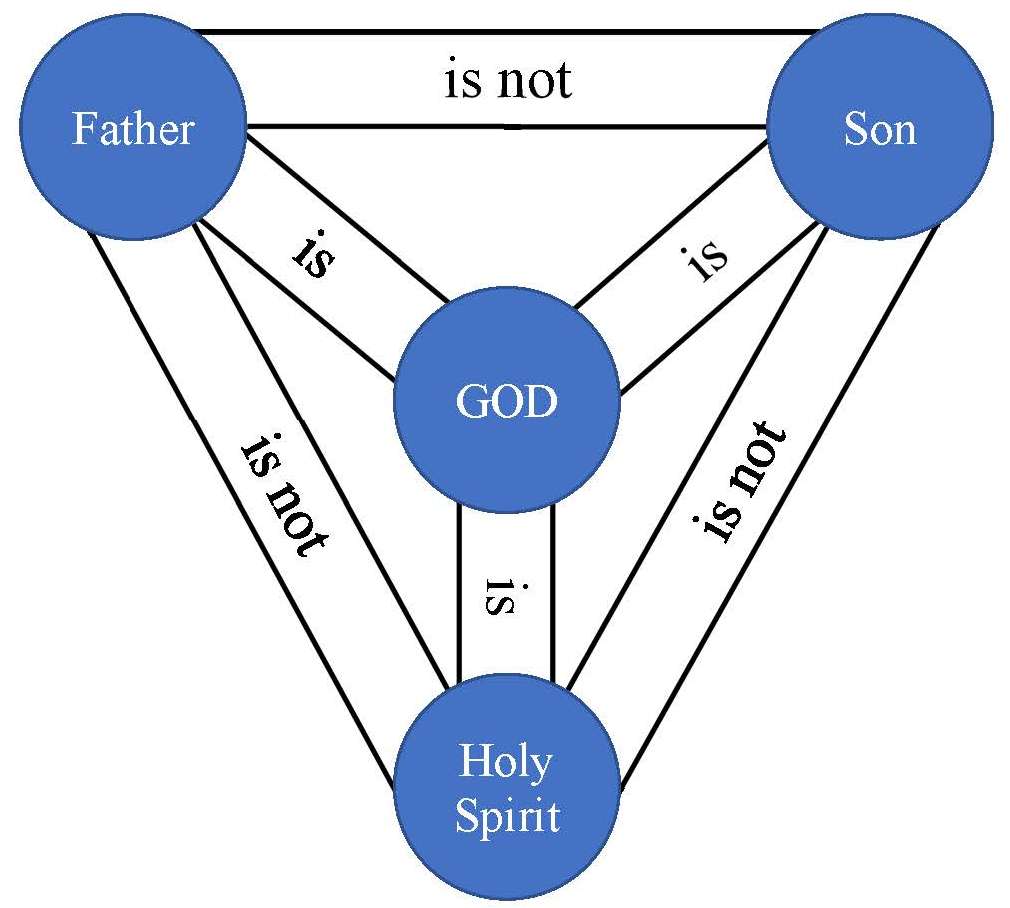
Share this:

  • Click to share on X (Opens in new window) X
  • Click to share on Facebook (Opens in new window) Facebook
  • Click to share on LinkedIn (Opens in new window) LinkedIn
  • Click to share on WhatsApp (Opens in new window) WhatsApp
  • Click to email a link to a friend (Opens in new window) Email
  • Click to print (Opens in new window) Print
Like Loading...

Psalm 23: A Photo Commentary

19 Tuesday Jun 2018

Posted by Steven Anderson in Bible, Books

≈ Leave a comment

Tags

Psalm 23 photos

Psalm 23 is the most familiar and best loved of all the psalms. It is a source of comfort and encouragement for Christians throughout the vicissitudes of life, and its reassuring words are often read at funeral services. There is truly a spiritual bond between the writer of this psalm—King David of Israel—and modern Christians. Yet there is also a profound gap of time and culture that forms a barrier to our understanding of the psalm’s meaning. David lived 3,000 years ago in a cultural world that was vastly different from the United States of America. Many helpful studies on Psalm 23 have been written, often focused on the theme of shepherding. But there has never been a study published which uses photographs to elucidate the historical and cultural setting of this ancient psalm. This gap is now filled with a new book I have coauthored with my friend and fellow Bible scholar, Todd Bolen. Psalm 23: A Photo Commentary illustrates Psalm 23 with more than 60 high-quality photographs. The photographs include traditional cultural scenes, modern landscapes, and museum artifacts. The accompanying text explains the visual information in the photographs and relates it to Psalm 23 through a verse-by-verse commentary. The book is available from Amazon in both print and Kindle editions. The Kindle (Matchbook) price will be lowered to $0.00 after purchase of the print book. The photographs are also available in PowerPoint format from BiblePlaces.com.

As would be expected, many of the photographs in our book show shepherds and sheep. We have taken care to use photos from the land of Israel that match the cultural and historical setting of Psalm 23 as closely as possible. For example, the “still waters” where sheep found refreshment (Psalm 23:2) are illustrated by photos of pools and streams in the areas of Judah where David may have traveled with his flock of sheep, like this one:

Ein Perat, tb020804282

Still waters of Ein Farah in the Judean wilderness

The book also includes many historic photographs from the late 19th century through the first half of the 20th century in order to show Palestinian shepherds in traditional garb, like the scene we chose for the front cover:

Psalm_23_A_Photo_Co_Cover_for_Kindle

The valley of the shadow of death (Psalm 23:4) is a concept that may seem foreign to modern readers. The Judean wilderness, which is largely barren, contains many deep valleys with seasonal streams and vegetation that would be needed to sustain a flock of sheep. However, the steep walls of these valleys cast dark shadows throughout the day, and predatory animals often lurked behind the rocks and thickets. Our book provides a number of examples of these valleys, such as this one:

Nahal Zin, tb010512847

Dark shadow in Nahal Zin

The shepherd-sheep metaphor ends after verse 4, and in the last two verses of Psalm 23 David speaks of his relationship with the Lord under the metaphor of a host and guest. One of the things David affirms in this section is that the Lord prepares a table before him in the presence of his enemies (Psalm 23:5). Our photos give visual proof that the territory of Israel’s enemy Moab can be seen from either Jerusalem or Bethlehem on a clear day. The Lord literally built up David’s kingdom in full view of his enemies.

Bethlehem Shepherds Fields and Mts of Moab, db6601060303

View of the mountains of Moab across the Dead Sea from Bethlehem

As these examples demonstrate, our goal is connect modern readers with the historical and cultural world of King David in order to better understand Psalm 23. A picture is truly worth a thousand words; photos can communicate concepts that would be difficult to understand through a written description. Our personal understanding of Psalm 23 was deepened through the research we did to write this book, and our hope is that our readers also will literally see this beloved psalm more clearly through this unique photo commentary.

Enjoy this content? Buy me a coffee, or support this blog via a PayPal donation.

Share this:

  • Click to share on X (Opens in new window) X
  • Click to share on Facebook (Opens in new window) Facebook
  • Click to share on LinkedIn (Opens in new window) LinkedIn
  • Click to share on WhatsApp (Opens in new window) WhatsApp
  • Click to email a link to a friend (Opens in new window) Email
  • Click to print (Opens in new window) Print
Like Loading...

Israel, the Bible, and current events

29 Tuesday May 2018

Posted by Steven Anderson in Bible prophecy, Current events

≈ Leave a comment

Tags

prophecies about Israel, regathering of Israel

It is impossible to read the Bible without being struck by the centrality of the nation of Israel and the Jewish people in the plan of God. Beginning with the call of Abraham in Genesis 12, virtually the entire Old Testament is about God’s dealings with the nation of Israel. The hope of future salvation and blessing for believers is channeled through God’s covenants with Israel. Nearly all of the Old Testament was written in Hebrew, the national language of the Jewish people. Nearly every book of the Old Testament was written by Israelites.

References to Israel abound in the New Testament, as well. Christianity began in the Jewish world, and all but two books of the New Testament (Luke and Acts) were written by Jews. The early Christians identified themselves as the sect of true Judaism, which recognized Jesus as the Messiah promised in the Old Testament. Jesus and the twelve apostles were observant Jews who lived in Israel’s land (Galilee and Judea), and Jesus came specifically to offer the promised kingdom to Israel. When Peter preached the gospel in Acts 3, he proclaimed that Jesus would return and restore the kingdom to Israel whenever the Jewish nation repented and accepted Him as their Messiah (cf. Acts 1:6; 3:19-21). The New Testament epistles are filled with references to Israel, as early Christians struggled with the relation of Jews to Gentiles in the church. Jesus and the apostles taught that all the promises to Israel are still valid and will be fulfilled to the Jewish people at the end of the age, but that there is an interim period in which the church exists as a non-national (primarily Gentile) entity.

Although many early church fathers interpreted prophecy literally, the allegorical interpretation of prophecy came to dominate Christian theology by late antiquity. The church was asserted to have replaced Israel in God’s program, and the Jewish people were considered no longer to be special in any way. The hatred of Christians by Jews which dates back to the crucifixion of Jesus was matched at times by the persecution of Jews on the part of professing Christians. The church’s hostility toward Jews began gradually to change after the Protestant Reformation, when Christians sought to return to Scripture as the source of their beliefs. In 18th century England and America, the study of Hebrew and renewed scholarly interest in the Old Testament led to the recovery of premillennial theology and the literal interpretation of prophecy among some Protestant groups. Prophecy scholars in the 19th century often spoke at length about God’s miraculous preservation of the Jewish people through the ages and asserted that God would yet bring the Jews back to their land and fulfill the promises made to Abraham, Isaac, Jacob, and David. At about the same time, biblical faith on the European continent was being swept away by a wave of liberal theology, higher criticism, and rationalism. The Bible’s teachings were not merely disbelieved, but were vigorously opposed. Since those who hate God also hate His chosen people, higher criticism led to a marked rise in anti-Semitism and violent acts against the Jews across Europe. This persecution forged a new nationalist spirit among the Jews, leading to the adoption of the shield (star) of David as the symbol of Judaism, and to the revival of Hebrew as a spoken language. It also gave rise to the modern Zionist movement, which sought to establish a homeland for the Jews where they would be protected from persecution. Paradoxically, higher criticism and rationalism made great inroads into Judaism as well as Christianity in the 19th century, leading to the abandonment of Orthodox Judaism by the majority of Jews and the rise of Reform and Conservative Judaism. While in Christianity higher criticism had the effect of undermining the gospel, in Judaism it removed longstanding theological barriers to the acceptance of the gospel.

While there have always been small numbers of Jews who have converted to Christianity, the 20th century saw a dramatic increase in Christian missionary efforts to the Jews. The number of Jews who became Christians also increased greatly. However, because Christianity remained stigmatized among the general population of Jews, a “Messianic” Jewish movement arose in which Jews professed faith in Jesus as their Messiah but did not call themselves Christians or join churches. Instead, they formed separate “messianic synagogues” which met on Saturday and were led by rabbis, not pastors. Many aspects of Jewish tradition and the Mosaic Law continued to be observed by these groups, in blatant contradiction of the book of Hebrews and other New Testament writings. These movements continue in great strength to the present day.

Since the late 1800s, Jews began returning in increasing numbers to their historic homeland (then known by the name “Palestine,” which the Roman emperor Hadrian gave to it), and the modern state of Israel was finally founded in 1948, following the Nazi Holocaust. Although the majority of modern Israelis are secular (non-observant) Jews, they have maintained a strong Jewish identity through their national struggle for survival. Since the 1960s, Israel’s greatest foreign supporter has been the United States of America. For decades, the base of support for Israel in the United States was a bipartisan coalition of American Jews and evangelical Christians. In recent years, however, the American left has taken a radical stance against the values of biblical Christianity, and this has resulted in increasing hostility toward Israel, even among many liberal American Jews. Mainline Christian denominations have also consistently opposed Israel. The main base of support for Israel in the United States is now a large segment of evangelical Christians, who believe that those who bless Abraham are still blessed, and those who curse Abraham are still cursed (Gen 12:1-3). Recognizing this fact, the current Israeli government has very directly courted American evangelicals, tossing aside the traditional Jewish hostility toward Christians for preaching Jesus as the Messiah.

The new friendliness of Jews with evangelical Christians is a great sign. Israeli Jews are now beginning to understand that evangelical, dispensational Christians love them and are their most reliable friends, in contrast to nominal Christians. More importantly, Jews at the highest levels of leadership in Israel now realize that there is nothing inherently anti-Semitic about Christianity or the Christian gospel. This is significant because the Bible is clear that Israel will accept Jesus as the promised Messiah before He returns (and as a condition for His return). A shift in Jewish attitudes toward Christians is a sign that Israel’s partial hardening (Rom 11:25) is finally beginning to lift.

The Bible clearly describes a regathering of the Jewish people to their historic homeland at the end of history. It describes how they overcome their ancient adversaries, repossess their ancient homeland, and become incredibly prosperous once again. By the time of the tribulation period, they are living in great peace with their neighbors, to the point of having no walls or army. Yet this physical restoration of the Jewish people is merely a precursor to their spiritual restoration, as Israel’s acceptance of Jesus as their Messiah is the main event which must occur prior to the second coming of Jesus. (For more details on this, see the comments on Ezekiel 34–39 in vol. 4 of my Interpretive Guide to the Bible.)

Satan seeks three things with regard to Israel in order to prevent the fulfillment of God’s promises: (1) The genocide of the Jewish people. (2) Driving the Jewish people out of the land of Israel. (3) Preventing the spiritual conversion of the Jewish people. While Satan has always sought these things, his efforts have greatly intensified in the last 250 years, as God’s program for Israel draws closer to its final consummation. Yet God’s program continues to move forward in the face of Satan’s opposition, resulting in a great conflict.

When events happen in the Middle East, and especially in the land of Israel, a common question Christians ask is whether that event was prophesied. While some specific events are indeed prophesied, such as the end-time regathering of Israel and the rebuilding of the Jewish temple, most events in the news today are not specifically mentioned in biblical prophecy. The recent opening of the new U.S. embassy in Jerusalem is an example of this type of event. Of course there is nothing in the Bible specifically about the U.S. embassy. But everything that happens in Israel has its part in God’s plan, and the embassy move was a significant event. It could fairly be said that the U.S. embassy move occurred as part of a prophesied process of Israel’s increasing rootedness in their land. We must avoid the extreme of allegorizing Scripture to make it appear as if specific events in the news were prophesied, but we must also avoid the much more common extreme of allegorizing Scripture in order to claim that biblical prophecy has nothing to say at all about the modern state of Israel. The history of nation of Israel holds a central place in redemptive history, because God is unfolding His plan of redemption through His covenants with Israel. The various stages through which the history of the Jews has passed are coterminous with the central events in the development of God’s plan of redemption, which are the events of real significance in the history of the entire human race. Seen in this light, the present regathering of the Jewish people to the Promised Land is of great significance in the plan of God and in the history of the world—God is in the process of winding up human history.

Some people say that Christians should only focus on the gospel and should avoid discussing Israel because it is divisive. But the apostles preached the second coming of Jesus to establish His kingdom as the main hope of Christians, and the kingdom which Jesus will establish is the kingdom of Israel on the earth, fulfilling God’s promises to David and Abraham. Christians who oppose Israel not only fail to understand the plan of God as revealed in the Bible, but are actually opposing the work of God in our day.

Enjoy this content? Buy me a coffee, or support this blog via a PayPal donation.

Share this:

  • Click to share on X (Opens in new window) X
  • Click to share on Facebook (Opens in new window) Facebook
  • Click to share on LinkedIn (Opens in new window) LinkedIn
  • Click to share on WhatsApp (Opens in new window) WhatsApp
  • Click to email a link to a friend (Opens in new window) Email
  • Click to print (Opens in new window) Print
Like Loading...
← Older posts
Newer posts →
Follow TruthOnlyBible on WordPress.com

Enter your email address to follow this blog and receive notifications of new posts by email.

Join 309 other subscribers

Categories

  • Apologetics
  • Archaeology
  • Bible
  • Bible prophecy
  • Bible scholarship
  • Biblical languages
  • Books
  • Christmas
  • Church history
  • Creation
  • Current events
  • Easter
  • Ecclesiology
  • Evangelism
  • History
  • Missions
  • Practical theology
  • Theology

RSS links

  • RSS - Posts
  • RSS - Comments

Blog at WordPress.com.

  • Subscribe Subscribed
    • TruthOnlyBible
    • Join 309 other subscribers
    • Already have a WordPress.com account? Log in now.
    • TruthOnlyBible
    • Subscribe Subscribed
    • Sign up
    • Log in
    • Report this content
    • View site in Reader
    • Manage subscriptions
    • Collapse this bar
 

Loading Comments...
 

    Privacy & Cookies: This site uses cookies. By continuing to use this website, you agree to their use.
    To find out more, including how to control cookies, see here: Cookie Policy
    %d