• About Dr. Steven Anderson

TruthOnlyBible

~ About the Bible, Christianity, and current events

TruthOnlyBible

Category Archives: Books

Messianic prophecy and typology

08 Monday Apr 2024

Posted by Steven Anderson in Bible prophecy, Books

≈ 1 Comment

Tags

biblical typology, hermeneutics

Leer en español

The following is an excerpt from the new edition of volume 3 of my Interpretive Guide to the Bible (print book; pdf).

Many verses in the Psalms are quoted in the New Testament as prophecies of the Messiah (Christ). In some instances, such as Psalm 2 and Psalm 110, the psalms quoted are direct prophecies of future events. See the comments on these psalms for challenges to the view that they are direct prophecies. However, in many other instances a psalm in which David is describing his personal experiences is quoted in the New Testament as a prophecy of Christ’s experiences. For example, in Acts 2:25-31 Peter quotes Psalm 16:8-11 as a prophecy of the resurrection of Christ, even though that psalm seems to be describing David’s experiences. It should be noted that Peter’s quotation of this psalm was not his own invention, but was likely an interpretation which Jesus taught the disciples directly after His resurrection (Luke 24:44-47), and certainly was something Peter was led by the Holy Spirit to teach. Some Christian interpreters have tried to argue that all the messianic prophecies in the Psalms are to be understood as speaking exclusively of Christ and not of David. Evangelicals who are influenced by higher criticism often argue that these psalms were intended only to speak of David (or an anonymous “psalmist”) in their original context, which seems to make the New Testament references to them as prophecies erroneous. However, there is a better way to make sense of both these psalms and their New Testament quotations.

Definition of typology

The seemingly indirect prophecies of the Messiah in the psalms are best understood through the hermeneutics of prophetic typology. Typology is the study of types. The English word “type” is derived from the Greek word τύπος, which means “pattern.” However, this Greek word is not used in the New Testament as a technical hermeneutical indicator of typological structures the way the English word “type” is used. Further, even this hermeneutical sense of the word “type” is outdated in modern English; the word “prototype” (or “archetype”) would be clearer, but “type” is still the word used in hermeneutical discussions. A good working definition of typology comes from Horne’s nineteenth century work:

A type, in its primary and literal meaning, simply denotes a rough draught, or less accurate model, from which a more perfect image is made; but, in the sacred or theological sense of the term, a type may be defined to be a symbol of something future and distant, or an example prepared and evidently designed by God to prefigure that future thing. What is thus prefigured is called the antitype.

Thomas Hartwell Horne, An Introduction to the Critical Study and Knowledge of the Holy Scriptures (4th ed.; London: T. Cadell, 1823), 2:649.

The validity and importance of typology

The numerous citations of typological relationships in the NT shows that typology is indeed a valid mode of interpretation, for which we need only discover its governing hermeneutical principles. There are some passages in the NT wherein a typological relationship is explicitly recognized, such as that of Melchizedek and Christ (Heb 5:10; 7:1-17), David and Christ (Acts 2:25-34), and Christ and the Passover lambs (John 1:29, 36; 1 Cor 5:7). At other times, a typological relationship is not explicitly stated, but a parallel is drawn between an OT reality and an NT reality such as the tabernacle and sacrificial system (cf. Col 2:17; Heb 10:1). Typology is particularly important for understanding how the Old Testament foreshadows and anticipates the person and work of the Messiah.

The Old and New Testaments are linked through the fulfillment of OT promises in the NT, which verifies that Christianity is the continuation of the Jews’ religion in a perfected form, not a heretical cult. Typological relationships form part of this linkage. Much of the Old Testament points to and is fulfilled in the New Testament, and the New Testament is dependent on the Old Testament.

One reason why the Bible uses typology is that object lessons are a particularly helpful teaching tool. It is easier for people to understand theological truth when they can see a model of that truth, rather than being taught the principles or prophecies abstractly. Typology also shows how God uses historical events to prepare the world for future events in His plan.

Identification of biblical types

Three characteristics are shared by all legitimate types in the Bible: promise-fulfillment, functional correspondence, and historicity.

First, the promise-fulfillment criterion means that the antitype must in some way fulfill the type. This implies that:

  1. There must be a prophetic promise which links type and antitype. This promise must be left unfulfilled or partially unfulfilled by the type. The historical role of the type must be incomplete and look toward a future fulfillment. A genuine OT typological structure must contain specific promises which point to a fulfillment in a specific antitype, and not just general promises which could have many potential fulfillments. Excessive typology tends to overlook this criterion. Many interpreters identify types on the basis of similarities and patterns, without the presence of an associated prophecy.
  2. Typological indicators should be present in the original OT context. The only way the NT can legitimately claim fulfillment of an OT type is if the typological structure is recognizable from exegesis of the OT text using the literal hermeneutic. The NT simply recognizes what was intended in the OT text all along. If a type can only be recognized on the basis of NT revelation, then in what sense is it a prefigurement? Views of typology which define a type on the basis of a list of correspondences which can only be recognized retrospectively miss an “awareness of the fundamental direction in which revelation points.” (Philip E. Powers, “Prefigurement and the Hermeneutics of Prophetic Typology” [PhD dissertation, Dallas Theological Seminary, 1995], 175.)
  3. A type must precede its antitype in history. Since a type is a prophetic anticipation of an antitype, it must precede the antitype in history.
  4. A type must be prepared and designed by God to represent its antitype. Since a type is a prophetic object lesson, God must shape history in such a way that the type takes on essential characteristics of the antitype.

Second, the functional correspondence criterion means that the type must have the same historical function as the antitype. Specifically, the type must have the function, role, or office which is noted in the prophetic promise that connects the type with the antitype. As an example, a messianic type must occupy a messianic office or function, though the Messiah occupies this role in a greater and fuller way than the type. Thus, David and Melchizedek both occupied a messianic office/function. Functional correspondence is a necessary part of typology because a type must lack completion in itself and look forward to a goal to be fulfilled in an antitype, which is by definition greater and fuller than the type. When the antitype arrives, the need for the role played by the type is done away, and the antitype replaces the function of the type. An example of the way this works is that when Christ died, the whole sacrificial system of the Mosaic Law was fulfilled and ceased to operate in a legitimate manner. Excessive typology tends to focus on corresponding external elements between a proposed type and antitype while ignoring the need for identity in office/function and the inherent deficiency of the type. The retrospective recognition view of typology also encounters problems with the functional correspondence criterion, since the antitype seems to provide the model for recognizing the type. However, by the very definition of typology, “it is the type that points toward the antitype, not the antitype which points back toward the type” (Powers, “Prefigurement and the Hermeneutics of Prophetic Typology,” 181), and therefore the type must have some function or office that is incomplete and awaits completion in an antitype.

Third, the historicity criterion means that both the type and the antitype must be real historical entities, not mere literary inventions. Historicity is a problem in modern critical scholarship, which tends to view supposed literary motifs almost as typological indicators. See further, W. Edward Glenny, “The ‘People of God’ in Romans 9:25-26” Bibliotheca Sacra 152 (Jan.–Mar. 1995): 56.

Categories of typology

Biblical types can be divided into three major categories: legal types, prophetical types, and historical types.

  1. Legal types are rituals or symbols in the Mosaic legal system that prefigured a future entity or event, usually the person and work of the Messiah. An example of a legal type is the lambs sacrificed on Passover, which foreshadowed Christ’s death on Passover as the Lamb of God who takes away the sin of the world (John 1:29, 36; 1 Cor 5:7). The fulfillment of the types of the Law in the person and work of the Messiah is central to the theology of the NT, and forms a bridge between the Old Testament and the New. It is evident that the sacrifices in the Law were functionally incomplete, since they had to be repeated every year. Hebrews 10:1-18 connects this functional deficiency with messianic prophecies to argue that Christ’s death is the antitype of the Mosaic sacrificial system.
  2. A prophetical type is an action or object lesson deliberately portrayed by a prophet to symbolize a future event. An example of this is Isaiah walking naked and barefoot to portray the captivity of Egypt (Isa 20:1-6). While all typology is prophetic, this category of typology refers to direct and deliberate portrayals of future events by a prophet. It can be debated whether prophetic object lessons designed to portray future events should be classified as types or symbols.
  3. Historical types are what most people think of when they think of typology. Horne defines historical types as “characters, actions, and fortunes of some eminent persons recorded in the Old Testament, so ordered by Divine Providence as to be exact prefigurations of the characters, actions, and fortunes of future persons who should arise under the Gospel dispensation” (Thomas Hartwell Horne, An Introduction to the Critical Study and Knowledge of the Holy Scriptures [4th ed.; London: T. Cadell, 1823], 2:651). An example of a historical type is David’s experiences in Psalm 22 that are cited in the Gospels as fulfilled in Christ’s experiences (Mark 15:34; John 19:23-24).

Erroneous approaches to typology

The most common error made in recognizing types is the idea that parallels alone indicate the existence of types, with the result that interpreters find far too many types. Powers comments:

The greatest confusion in the area of biblical typology comes as a result of the broad application of the term to a variety of literary and historical situations simply because a recurring pattern is recognized. Thus any repetition of word, symbol, event, person, genre, or theological theme is prone to be explained by typology and all those characteristics associated with typological structure are then applied to elicit a new or fuller meaning of the original text. The problem becomes acute when those typological characteristics are attached to literary structures or historical situations creating meanings which are no longer supported by the textual evidence, and so are not a part of the author’s intended meaning. For some, typology has no bearing on the meaning of the text, but is simply a recognition of a pattern by subsequent interpreters. For others, typology is a method of exegesis; and for others still, it is not a method of exegesis, but part of the author’s intended meaning.

Powers, “Prefigurement and the Hermeneutics of Prophetic Typology,” 293-94.

The main problem with identifying types solely on the basis of similarities between two entities is that it adds to the Bible a claimed meaning that is not stated in the biblical text (i.e., the criteria of promise-fulfillment and functional correspondence are not met). Such identifications of types are subjective decisions made by the interpreter, which cannot be validated objectively. Traditionally, one of the main motives for excessive typology (“hyper-typing”) has been the Christo-centric hermeneutic—the theological proposition that every portion of the Old Testament is designed to point to Christ. Because many portions of the Old Testament are not directly about Jesus Christ, interpreters have to posit typologies and allegories in these portions in order to find a prophetic link to Christ. However, the Bible nowhere affirms the Christo-centric hermeneutic, and this supposedly spiritually-minded method of interpretation is exegetically and theologically erroneous. There is a sense in which all of history before the cross was preparing the world for the incarnation of Christ, and all of history afterward is leading to Christ’s second advent, but most of the particulars in history do not directly foreshadow the person and work of the Messiah.

As a reaction to hyper-typing and extreme allegorism, Bishop Herbert Marsh, writing in the early nineteenth century, proposed the following rule: only types that are specifically recognized in the New Testament may be considered valid. This rule has been followed by many evangelical interpreters since Marsh’s time. However, this approach is problematic because it is too minimalistic. The recognition in the New Testament of types in various Old Testament passages points to the existence of typology in whole classes of passages, and not just ones specifically cited by the New Testament writers. In many instances, it seems that the NT writers are not recognizing types through direct revelation from God, but through the application of hermeneutical principles. Recognition of these principles should allow other interpreters to identify other types. For example, Colossians 2:17 and Hebrews 9:11 and 10:1 indicate that many aspects of the Mosaic Law point to the person and work of the Messiah, but do not individually list each type and antitype. Another example is the clear typological connection between Antiochus IV Epiphanes and the eschatological antichrist in Daniel 8 and 11, which is at best only alluded to in the New Testament. A further problem with both the maximalist and the minimalist approaches to typology is that they only recognize typology retrospectively, which reverses the direction of prophecy and revelation.

A third erroneous view of typology is the view of unbelieving or liberal Bible scholars, who reject the possibility of genuine prophecy because it would imply the supernatural activity of God. For these critics, therefore, all prophetic typology is invalid as authentic prophecy, and what is called “typology” is nothing more than allegory or analogy. Parallels between characters in the OT and characters in the NT are seen as merely accidental, and not as intentional prophetic foreshadowings. If the critics always stated their position as a stark denial of the supernatural, of course it would not attract evangelical adherents. However, critical Bible scholars often use language that sounds very similar to the language used by evangelical scholars, hypothesizing “typological” relationships based on an analysis of recurring words or motifs in order to find “the real meaning” of the text below its surface meaning. What they seldom say is that they do not believe the Bible is historically reliable, or prophetic of future events, or inspired by the Holy Spirit of God. Too many evangelical scholars are analyzing the biblical text using critical methods of intertextual connections (source criticism) and motifs (literary criticism), among other methods that undermine literal interpretation and faith.

Too many evangelical scholars are also influenced by the claim of critical scholarship that the typological interpretation of Old Testament passages in the New Testament is an application of first century Jewish hermeneutical methods that were essentially allegorical. While an analysis of such Jewish hermeneutical methods as Pesher and omnisignificance would require a separate treatise, it may briefly be stated that the NT handles the OT differently than it is handled in the literature of rabbinic Judaism and the Qumran cult. The NT understanding of Scripture was shaped by the person and work of Jesus Christ, as the NT writers saw how Christ fulfilled prophecy and typology. Importantly, Jesus’ disciples learned how to interpret Scripture the way Jesus interpreted it, which was often different from the prevailing understanding of the Bible in contemporary Judaism. Wherever Jesus commented on a specific OT text, the apostles would follow His interpretation—and where He made general statements about Scripture, they applied the principles He gave to specific passages. Even the apostle Paul, who was thoroughly steeped in Judaism, says that immediately after his conversion he went away to Arabia to be taught directly by the Holy Spirit (Gal 1:16-17), and he says he counts his background in Judaism as loss for Christ (Phil 3:4-8). The NT views the Jewish interpretation of the OT as flawed because it fails to recognize the fulfillment of messianic promises in the person and work of Jesus Christ (2 Cor 3:14-16). One important difference between rabbinic exegesis and NT exegesis is that the NT use of typology takes into account the whole context of an OT passage. The linking of texts on linguistic similarities, apart from the historical setting and literal meaning of the texts, is not a characteristic of NT exegesis. In summary, the NT sees itself as a continuation of OT revelation, and sees a movement in revelatory history which culminated in the coming of the Messiah. The NT’s recognition of typology in the OT is therefore rooted in the meaning of the OT text and a belief in its fulfillment in the person and work of Jesus Christ. This is far different from contemporary first century methods of Jewish exegesis.

Messianic typology in the Psalms

Several verses in psalms of David are cited in the New Testament as typological prophecies of Christ, most notably portions of Psalm 16 and Psalm 22. David functioned as a type of Christ because of the Davidic Covenant, in which God promised to David that his dynasty and throne would continue forever, implying that the Messiah would be one of his descendants and would rule from his throne. Peter states the typological connection directly in Acts 2:30-31. There are some personal experiences of David in the psalms that he described in metaphorical language that Christ experienced literally, such as having his hands and his feet pierced by his enemies (Ps 22:16). David’s son Solomon also appears to function as a type of Christ in Psalm 45, since he was a son of David who ruled Israel from David’s throne. It is noteworthy that the New Testament never cites a psalm ascribed to another author as typological of Christ. This shows that the New Testament writers have paid attention to the historical context of the material they are citing as typological, and are not merely citing convenient parallels. In fact, David had some experiences that were typological of the Messiah’s experiences, and he was led by the Holy Spirit to describe these experiences in language that was metaphorically true of himself but literally true of the Messiah.

Enjoy this content? Buy me a coffee, or support this blog via a PayPal donation.

Share this:

  • Click to share on X (Opens in new window) X
  • Click to share on Facebook (Opens in new window) Facebook
  • Click to share on LinkedIn (Opens in new window) LinkedIn
  • Click to share on WhatsApp (Opens in new window) WhatsApp
  • Click to email a link to a friend (Opens in new window) Email
  • Click to print (Opens in new window) Print
Like Loading...

Profecía mesiánica y tipología

08 Monday Apr 2024

Posted by Steven Anderson in Bible, Bible prophecy, Books

≈ Leave a comment

Tags

hermenéutica, tipología bíblica

Read in English

Este post es un extracto de mi Guía interpretativa para la Biblia (libro impreso; pdf de Salmos).

Muchos versículos de los Salmos son citados en el Nuevo Testamento como profecías del Mesías (Cristo). En algunos casos, como el Salmo 2 y el Salmo 110, los salmos citados son profecías directas de eventos futuros. Ver más adelante los comentarios sobre estos salmos para una refutación del punto de vista de que no son profecías directas. Sin embargo, en muchos otros casos, un salmo en el que David describe sus experiencias personales es citado en el Nuevo Testamento como una profecía de las experiencias de Cristo. Por ejemplo, en Hechos 2:25-31 Pedro cita el Salmo 16:8-11 como una profecía de la resurrección de Cristo, aunque ese salmo parece estar describiendo las experiencias de David. Cabe señalar que la cita de Pedro de este salmo no fue su propia invención, sino que probablemente fue una interpretación que Jesús enseñó a los discípulos directamente después de Su resurrección (Lucas 24:44-47), y ciertamente fue algo que Pedro fue guiado por el Espíritu Santo a enseñar. Algunos intérpretes cristianos han tratado de argumentar que todas las profecías mesiánicas en los Salmos deben ser entendidas como hablando exclusivamente de Cristo y no de David. Los evangélicos que están influenciados por la alta crítica a menudo argumentan que estos salmos solo tenían la intención de hablar de David (o un “salmista” anónimo) en su contexto original, lo que parece hacer que las referencias a ellos en el Nuevo Testamento como profecías sean erróneas. Sin embargo, hay una mejor manera de dar sentido a estos salmos y sus citas en el Nuevo Testamento.

Definición de tipología

Las profecías aparentemente indirectas del Mesías en los Salmos se entienden mejor a través de la hermenéutica de la tipología profética. La tipología es el estudio de tipos. La palabra en español “tipo” se deriva de la palabra griega τύπος, que significa “patrón”. Sin embargo, esta palabra griega no se usa en el Nuevo Testamento como un indicador hermenéutico técnico de estructuras tipológicas de la forma en que se usa la palabra en español “tipo”. Además, incluso este sentido hermenéutico de la palabra “tipo” está desactualizado en el español moderno; la palabra “prototipo” (o “arquetipo”) sería más clara, pero “tipo” sigue siendo la palabra utilizada en las discusiones hermenéuticas. Una buena definición práctica de tipología proviene de la obra de Horne del siglo xix:

Un tipo, en su significado primario y literal, simplemente denota un borrador sin pulir o modelo menos exacto, a partir del cual se extrae una imagen más perfecta; pero, en el sentido sagrado o teológico del término, un tipo puede definirse como un símbolo de algo futuro y distante, o un ejemplo preparado y evidentemente diseñado por Dios para prefigurar ese algo futuro. Lo que de ese modo es prefigurado se denomina antitipo.

Traducido de Thomas Hartwell Horne, An Introduction to the Critical Study and Knowledge of the Holy Scriptures (4.a ed.; London: T. Cadell, 1823), 2:649.

La validez e importancia de la tipología

Las numerosas citas de relaciones tipológicas en el Nuevo Testamento muestran que la tipología es de hecho un modo válido de interpretación, por lo cual sólo necesitamos descubrir sus principios hermenéuticos rectores. Hay algunos pasajes en el Nuevo Testamento en los que se reconoce explícitamente una relación tipológica, como la de Melquisedec y Cristo (Hebreos 5:10; 7:1-17), David y Cristo (Hechos 2:25-34) y Cristo y los corderos pascuales (Juan 1:29, 36; 1 Corintios 5:7). Otras veces, no se establece explícitamente una relación tipológica, sino se dibuja un paralelo entre una realidad del Antiguo Testamento y una realidad del Nuevo Testamento, por ejemplo, entre el tabernáculo y el sistema de sacrificios (cf. Colosenses 2:17; Hebreos 10:1). La tipología es particularmente importante para comprender cómo el Antiguo Testamento prefigura y prevé la persona y obra del Mesías.

El Antiguo Testamento y el Nuevo Testamento están conectados a través del cumplimiento de las promesas del Antiguo en el Nuevo, lo cual corrobora que el cristianismo es la continuación de la religión de los judíos en una forma perfeccionada, no un culto herético. Las relaciones tipológicas forman parte de este vínculo. Gran parte del Antiguo Testamento apunta y se cumple en el Nuevo Testamento, y el Nuevo Testamento es dependiente del Antiguo Testamento.

Una de las razones por las que la Biblia usa la tipología es que los ejemplos prácticos son una herramienta de enseñanza particularmente útil. Es más fácil para las personas comprender la verdad teológica cuando pueden ver un modelo de esa verdad, en lugar de que se les enseñen los principios o las profecías de manera abstracta. La tipología también muestra cómo Dios usa los eventos históricos para preparar al mundo para eventos futuros en Su plan.

Identificación de tipos bíblicos

Todos los tipos legítimos en la Biblia comparten tres características: promesa y cumplimiento, correspondencia funcional e historicidad.

Primero, el criterio de promesa y cumplimiento significa que el antitipo debe cumplir de alguna manera el tipo. Esto implica que:

  1. Debe haber una promesa profética que conecta el tipo con el antitipo. El tipo debe dejar esta promesa incumplida o parcialmente incumplida. El rol histórico del tipo debe estar incompleto y orientarse hacia un cumplimiento futuro. Una estructura tipológica genuina del Antiguo Testamento debe contener promesas específicas que apuntan a un cumplimiento en un antitipo específico, y no solo promesas generales que podrían tener muchos cumplimientos potenciales. La tipología excesiva tiende a pasar por alto este criterio. Muchos intérpretes identifican tipos sobre la base de similitudes y patrones, sin la presencia de una profecía asociada.
  2. En el contexto original del Antiguo Testamento deben estar presentes indicadores tipológicos. La única forma en que el Nuevo Testamento puede afirmar legítimamente el cumplimiento de un tipo del Antiguo Testamento es si la estructura tipológica es identificable a partir de la exégesis del texto del Antiguo Testamento usando la hermenéutica literal. El Nuevo Testamento simplemente identifica la intención que tenía el texto del Antiguo Testamento desde el principio. Si un tipo solo puede identificarse sobre la base de la revelación del Nuevo Testamento, ¿en qué sentido es una prefiguración? Los puntos de vista de tipología que definen un tipo sobre la base de una lista de correspondencias que solo pueden identificarse retrospectivamente pierden una “conciencia de la dirección fundamental a la que apunta la revelación”. (Traducido de Philip E. Powers, “Prefigurement and the Hermeneutics of Prophetic Typology” [PhD disertación, Dallas Theological Seminary, 1995], 175.)
  3. Un tipo debe preceder a su antitipo en la historia. Dado que un tipo es una anticipación profética de un antitipo, debe preceder al antitipo en la historia.
  4. Un tipo debe ser preparado y diseñado por Dios para representar su antitipo. Dado que un tipo es un ejemplo práctico profético, Dios debe moldear la historia de tal manera que el tipo adquiere características esenciales del antitipo.

El segundo criterio, la correspondencia funcional, significa que el tipo debe tener la misma función histórica que el antitipo. Específicamente, el tipo debe tener la función, rol o posición que se indica en la promesa profética que conecta al tipo con el antitipo. Como ejemplo, un tipo mesiánico debe ocupar una posición o función mesiánica, aunque el Mesías ocupa este rol de una manera superior y más plena que el tipo. Así, tanto David como Melquisedec ocuparon una posición/función mesiánica. La correspondencia funcional es una parte necesaria de la tipología porque un tipo debe carecer de culminación en sí mismo y aguardar que la meta sea cumplida en un antitipo, el cual por definición es mayor y más completo que el tipo. Cuando llega el antitipo, se elimina la necesidad del rol desempeñado por el tipo y el antitipo reemplaza la función del tipo. Un ejemplo de la manera como esto funciona es que cuando Cristo murió, todo el sistema de sacrificios de la ley mosaica se cumplió y dejó de operar de manera legítima. La tipología excesiva tiende a centrarse en los elementos externos correspondientes entre un tipo propuesto y un antitipo, ignorando la necesidad de identidad en la posición/función y la inherente deficiencia del tipo. El punto de vista de comprensión retrospectiva de la tipología también encuentra problemas con el criterio de correspondencia funcional, ya que el antitipo parece proporcionar el modelo para identificar el tipo. Sin embargo, por la definición de tipología, “el tipo es el que apunta hacia el antitipo, no el antitipo el que apunta hacia el tipo (hacia atrás)” (traducido de Powers, “Prefigurement and the Hermeneutics of Prophetic Typology,” 181), y por lo tanto el tipo debe tener alguna función o posición que está incompleta y espera ser completada en un antitipo.

El tercer criterio, la historicidad, significa que tanto el tipo como el antitipo deben ser entidades históricas reales, no meras invenciones literarias. La historicidad es un problema en la erudición crítica moderna, que tiende a ver los supuestos motivos literarios casi como indicadores tipológicos. Ver más, W. Edward Glenny, “The ‘People of God’ in Romans 9:25-26” Bibliotheca Sacra 152 (Jan.–Mar. 1995): 56.

Categorías de tipología

Los tipos bíblicos se pueden dividir en tres categorías principales: tipos legales, tipos proféticos y tipos históricos.

  1. Los tipos legales son rituales o símbolos en el sistema legal mosaico que prefiguraban una entidad o un evento futuro, generalmente la persona y obra del Mesías. Un ejemplo de un tipo legal es los corderos sacrificados en la Pascua, que presagiaban la muerte de Cristo en la Pascua como el Cordero de Dios que quita el pecado del mundo (Juan 1:29, 36; 1 Corintios 5:7). El cumplimiento de los tipos de la Ley en la persona y obra del Mesías es central para la teología del Nuevo Testamento y forma un puente entre el Antiguo y el Nuevo Testamento. Es evidente que los sacrificios en la Ley eran funcionalmente incompletos, ya que tenía que ser repetidos cada año. Hebreos 10:1-18 conecta esta deficiencia funcional con profecías mesiánicas para argumentar que la muerte de Cristo es el antitipo del sistema mosaico de sacrificios.
  2. Un tipo profético es una acción o demostración práctica representada deliberadamente por un profeta para simbolizar un evento futuro. Un ejemplo de esto es Isaías caminando desnudo y descalzo para representar el cautiverio de Egipto (Isaías 20:1-6). Si bien toda tipología es profética, esta categoría de tipología se refiere a representaciones directas y deliberadas de eventos futuros por parte de un profeta. Se puede debatir si las demostraciones prácticas proféticas diseñadas para representar eventos futuros deberían ser clasificadas como tipos o símbolos.
  3. Los tipos históricos son los que la mayoría de la gente piensa cuando piensan en tipología. Horne define los tipos históricos como “personajes, acciones y circunstancias de algunas personas eminentes registradas en el Antiguo Testamento, ordenadas por la Providencia Divina como para ser prefiguraciones exactas de los personajes, acciones y circunstancias de las personas futuras que deberían surgir bajo la dispensación del Evangelio” (traducido de Thomas Hartwell Horne, An Introduction to the Critical Study and Knowledge of the Holy Scriptures [4.a ed.; London: T. Cadell, 1823], 2:651). Un ejemplo de un tipo histórico es las experiencias de David en el Salmo 22 que son citadas en los Evangelios como cumplidas en las experiencias de Cristo (Marcos 15:34; Juan 19:23-24).

Planteamientos erróneas sobre la tipología

El error más común que se comete en el reconocimiento de tipos es la idea de que los paralelos por sí solos indican la existencia de tipos, con la consecuencia de que los intérpretes encuentran demasiados tipos. Powers comenta:

La mayor confusión en el área de la tipología bíblica surge como resultado de la amplia aplicación del término a una variedad de situaciones literarias e históricas simplemente porque se reconoce un patrón recurrente. Por lo tanto, cualquier repetición de palabra, símbolo, evento, persona, género o tema teológico tiende a ser explicada por la tipología y todas aquellas características asociadas a la estructura tipológica son entonces aplicadas para obtener un significado nuevo o más completo del texto original. El problema se agudiza cuando esas características tipológicas se unen a estructuras literarias o situaciones históricas creando significados que ya no están respaldados por la evidencia textual y, por lo tanto, no son parte del significado concebido por el autor. Para algunos, la tipología no influye en el significado del texto, sino que es simplemente el reconocimiento de un patrón por parte de los intérpretes posteriores. Para otros, la tipología es un método de exégesis; y para algunos otros, no es un método de exégesis, sino parte del significado concebido por el autor.

Traducido de Powers, “Prefigurement and the Hermeneutics of Prophetic Typology,” 293-94.

El principal problema con la identificación de tipos únicamente sobre la base de similitudes entre dos entidades es que añade a la Biblia un significado supuesto que no está declarado en el texto bíblico (es decir, no se reúnen los criterios de promesa y cumplimiento y correspondencia funcional). Las identificaciones de tipos de esa manera son decisiones subjetivas tomadas por el intérprete, que no pueden ser validadas objetivamente. Tradicionalmente, uno de los motivos principales para la tipología excesiva (“hiper-tipificación”) ha sido la hermenéutica cristocéntrica, la proposición teológica de que cada porción del Antiguo Testamento está diseñada para apuntar a Cristo. Puesto que muchas porciones del Antiguo Testamento no se refieren directamente a Jesucristo, los intérpretes tienen que plantear tipologías y alegorías en estas porciones para encontrar un vínculo profético con Cristo. Sin embargo, la Biblia en ninguna parte afirma la hermenéutica cristocéntrica, y este método de interpretación supuestamente de mentalidad espiritual es exegética y teológicamente erróneo. En cierto sentido, toda la historia antes de la cruz estaba preparando al mundo para la encarnación de Cristo, y toda la historia posterior conduce a la segunda venida de Cristo, pero la mayoría de los detalles de la historia no prefiguran directamente la persona y obra del Mesías.

Como reacción a la hiper-tipificación y al alegorismo extremo, el obispo Herbert Marsh, escribiendo a principios del siglo xix, propuso la siguiente regla: solo los tipos que son específicamente reconocidos en el Nuevo Testamento pueden considerarse válidos. Esta regla ha sido seguida por muchos intérpretes evangélicos desde la época de Marsh. Sin embargo, este enfoque es problemático porque es demasiado minimalista. El reconocimiento en el Nuevo Testamento de tipos en varios pasajes del Antiguo Testamento apunta a la existencia de tipología en clases enteras de pasajes, y no solo en aquellos específicamente citados por los escritores del Nuevo Testamento. En muchos casos, parece que los escritores del Nuevo Testamento no reconocen los tipos mediante la revelación directa de Dios, sino mediante la aplicación de principios hermenéuticos. El reconocimiento de estos principios debería permitir a otros intérpretes identificar otros tipos. Por ejemplo, Colosenses 2:17 y Hebreos 9:11 y 10:1 indican que muchos aspectos de la ley mosaica apuntan a la persona y obra del Mesías, pero no enumeran individualmente cada tipo y antitipo. Otro ejemplo es la clara conexión tipológica entre Antíoco IV Epífanes y el anticristo escatológico en Daniel 8 y 11, que a lo sumo, solo es aludido en el Nuevo Testamento. Otro problema tanto con el enfoque maximalista como con el minimalista de la tipología es que solo reconocen la tipología retrospectivamente, lo cual invierte la dirección de la profecía y la revelación.

Una tercera visión errónea de la tipología es la opinión de los eruditos bíblicos liberales o no creyentes, que rechazan la posibilidad de una profecía genuina porque esta implicaría la actividad sobrenatural de Dios. Para estos críticos, por tanto, toda tipología profética es inválida como profecía auténtica, y lo que es llamado “tipología” no es más que una alegoría o una analogía. Los paralelos entre los personajes del Antiguo Testamento y los del Nuevo Testamento se ven como meramente accidentales y no como prefiguraciones proféticas intencionales. Si los críticos siempre declararan su posición como una clara negación de lo sobrenatural, por supuesto esta no atraería seguidores evangélicos. Sin embargo, los eruditos críticos de la Biblia a menudo usan un lenguaje que suena muy similar al usado por los eruditos evangélicos, hipotetizando relaciones “tipológicas” basados en un análisis de palabras o motivos recurrentes para encontrar “el significado real” del texto debajo de su significado superficial. Lo que rara vez dicen es que no creen que la Biblia es históricamente confiable, o profética de eventos futuros, o inspirada por el Espíritu Santo de Dios. Demasiados eruditos evangélicos están analizando el texto bíblico utilizando métodos críticos de conexiones intertextuales (crítica de fuentes) y motivos (crítica literaria), entre otros métodos que socavan la interpretación literal y la fe.

Muchos eruditos evangélicos también están influenciados por la afirmación de la erudición crítica de que la interpretación tipológica de los pasajes del Antiguo Testamento por el Nuevo Testamento es una aplicación de los métodos hermenéuticos judíos del primer siglo que eran esencialmente alegóricos. Si bien un análisis de métodos hermenéuticos judíos como pésher y omnisignificación requeriría un tratado separado, se puede afirmar brevemente que el Nuevo Testamento maneja el Antiguo Testamento de manera diferente a como lo maneja la literatura del judaísmo rabínico y la secta de Qumrán. La comprensión de las Escrituras por el Nuevo Testamento fue moldeada por la persona y obra de Jesucristo, ya que los escritores del Nuevo Testamento vieron cómo Cristo cumplió la profecía y la tipología. Es importante destacar que los discípulos de Jesús aprendieron a interpretar las Escrituras de la manera en que Jesús las interpretó, lo que a menudo era diferente de la comprensión predominante de la Biblia en el judaísmo contemporáneo. Dondequiera que Jesús comentó un texto específico del Antiguo Testamento, los apóstoles seguirían Su interpretación, y donde Él hizo declaraciones generales sobre las Escrituras, ellos aplicaron los principios que Él dio a pasajes específicos. Incluso el apóstol Pablo, quien estuvo completamente inmerso en el judaísmo, dice que inmediatamente después de su conversión se fue a Arabia para ser enseñado directamente por el Espíritu Santo (Gálatas 1:16-17), y dice que cuenta su experiencia en el judaísmo como pérdida por Cristo (Filipenses 3:4-8). El Nuevo Testamento considera la interpretación judía del Antiguo Testamento como defectuosa porque no reconoce el cumplimiento de las promesas mesiánicas en la persona y obra de Jesucristo (2 Corintios 3:14-16). Una diferencia importante entre la exégesis rabínica y la exégesis del Nuevo Testamento es que el uso de la tipología en el Nuevo Testamento tiene en cuenta el contexto completo de un pasaje del Antiguo Testamento. La vinculación de textos sobre similitudes lingüísticas, aparte del contexto histórico y el significado literal de los textos, no es una característica de la exégesis del Nuevo Testamento. En resumen, el Nuevo Testamento se ve a sí mismo como una continuación de la revelación del Antiguo Testamento, y ve un recorrido en la historia reveladora que culminó con la venida del Mesías. El reconocimiento que hace el Nuevo Testamento de la tipología en el Antiguo Testamento se basa, por lo tanto, en el significado del texto del Antiguo Testamento y en una creencia en su cumplimiento en la persona y obra de Jesucristo. Esto es muy diferente de los métodos contemporáneos de exégesis judía del primer siglo.

Tipología mesiánica en los Salmos

Varios versículos de los salmos de David se citan en el Nuevo Testamento como profecías tipológicas de Cristo, sobre todo porciones del Salmo 16 y del Salmo 22. David funcionó como un tipo de Cristo debido al Pacto Davídico, en el cual Dios le prometió a David que su dinastía y trono continuarían para siempre, implicando que el Mesías sería uno de sus descendientes y gobernaría desde su trono. Pedro declara la conexión tipológica directamente en Hechos 2:30-31. Hay algunas experiencias personales de David en los Salmos que él describió en lenguaje metafórico que Cristo experimentó literalmente, como que sus enemigos le traspasaron las manos y los pies (Salmo 22:16). Salomón, el hijo de David, también parece funcionar como un tipo de Cristo en el Salmo 45, ya que fue un hijo de David que gobernó a Israel desde el trono de David. Cabe mencionar que el Nuevo Testamento nunca cita un salmo adscrito a otro autor como tipológico de Cristo. Esto muestra que los escritores del Nuevo Testamento han prestado atención al contexto histórico del material que están citando como tipológico, y no están simplemente citando paralelos convenientes. De hecho, David tuvo algunas experiencias que eran tipológicas de las experiencias del Mesías, y fue guiado por el Espíritu Santo a describir estas experiencias en un lenguaje que era metafóricamente verdadero para él mismo, pero literalmente verdadero para el Mesías.

¿Disfrutaste este contenido? Invítame a un café o apoya este blog haciendo una donación a través de PayPal.

Share this:

  • Click to share on X (Opens in new window) X
  • Click to share on Facebook (Opens in new window) Facebook
  • Click to share on LinkedIn (Opens in new window) LinkedIn
  • Click to share on WhatsApp (Opens in new window) WhatsApp
  • Click to email a link to a friend (Opens in new window) Email
  • Click to print (Opens in new window) Print
Like Loading...

Update on my projects/raising support

02 Tuesday Jan 2024

Posted by Steven Anderson in Books

≈ Leave a comment

Tags

commentary-on-revelation, fundraising

Happy 2024! In this post, I would like to share the projects I am working on in order to update my readers and seek support. My goal is to get to 50 members (monthly supporters) on Buy Me a Coffee, in order to enable me to keep moving forward on my projects. May 2024 update: my ministry can now be supported with tax-deductible donations through Truth Only Bible Ministries, a sponsored project of the New Horizons Foundation.

In 2023, my blog received 85,140 views and 63,867 visitors. Below are images of the most popular posts in 2023 and all-time, along with statistics about referrers.

The projects I am seeking support for are:

  1. I am writing what I believe is a groundbreaking commentary on the book of Revelation, which I intend to make available for free download. See this information sheet and these sample draft chapters: Introduction, 1, 4, 5, 6, 7, 12, 13, 14, 15, 16, Excursus on Babylon the Great, 17, 18, 19, 20, 21, 22. I have seen an increasing need for teaching on biblical prophecy and would like to focus more of my time and energy on this subject. My article on Babylon the Great is currently getting more than 3,000 views per month, mainly from Google searches. People are coming to the conclusion on their own that the United States is Babylon the Great, and are searching Google for more information, since they don’t get help from their pastors or study Bibles or commentaries. People also have a sense that events in Israel and Ukraine are somehow related to biblical prophecy, and that God is somehow at work, and that His plan is in the process of being fulfilled, but they are not sure how to connect the dots.
  2. I would like to continue publishing revised editions and Spanish translations of my 8-volume Interpretive Guide to the Bible, which was originally published in 2014 and is available for free download. The first two volumes have been revised and translated into Spanish. April 2024 update: a revision of the third volume (Job-Song of Songs) has been published (Amazon; pdf) along with a Spanish translation.
  3. Because of the need for biblical teaching on prophecy at this critical time, I would like to not only publish a written commentary, but also write more blog articles, such as on the relevance of prophecy to current events in Israel and Ukraine, and the relationship of digital currency to the mark of the beast. To reach a wider audience, I would eventually like to begin publishing videos, on platforms such as YouTube, Rumble, and/or Telegram. (YouTube is by far the most popular, but has a history of restricting Christian content.) Some topics for my videos could include the identification of Babylon the Great with the United States, the identification of Darius the Mede, the origin of languages according to the Bible, and general Bible teaching (sermons). I could also potentially do livestreams on YouTube or Telegram to respond to questions.
  4. I do a lot of volunteer or low-pay ministry work. This includes teaching and preaching in churches, in both Spanish and English; academic presentations, including a presentation on Biblical Aramaic that I am preparing for this year’s translation consultant seminar at Bibles International; responding as I am able to comments on my blog and direct messages regarding various biblical and theological issues; and keeping certain blog posts regularly updated, such as my posts on Darius the Mede and Resources for Biblical Aramaic. I also recently did an interview for Daily Dose of Aramaic that is available on YouTube and Vimeo.

The main platform I have been using to receive donations is Buy Me a Coffee. One-time donations are much appreciated, but monthly memberships give me more consistent financial support and allow me to better plan large projects. My current goal is to get 50 monthly supporters or to raise monthly support of $1,000, which based on my current monthly expenses would allow me to dedicate about half of my time to volunteer projects. I can also receive contributions via PayPal, and I have an Amazon wish list.

Many thanks to all who donate, and to those who have donated in the past. All the work that I do is not just my work, but is a team effort, and my supporters are part of my team, for the glory of God! I receive messages on a weekly basis from people who say they have been helped by my materials; the books and articles on my blog, website, and Academia.edu page together receive well over 1,000 views per week. I hope that all of my supporters will feel that they are an integral part of this ministry.

Share this:

  • Click to share on X (Opens in new window) X
  • Click to share on Facebook (Opens in new window) Facebook
  • Click to share on LinkedIn (Opens in new window) LinkedIn
  • Click to share on WhatsApp (Opens in new window) WhatsApp
  • Click to email a link to a friend (Opens in new window) Email
  • Click to print (Opens in new window) Print
Like Loading...

New resources for biblical studies

14 Tuesday Jul 2020

Posted by Steven Anderson in Biblical languages, Books

≈ 2 Comments

Tags

Hebrew Bible recordings

It has been awhile since I have posted here, but that isn’t because I haven’t been writing! It is time now to give a quick update on projects that I and others have been working on. The first two projects in this list are free!

2 Cover 800Tomo 2 portada 800

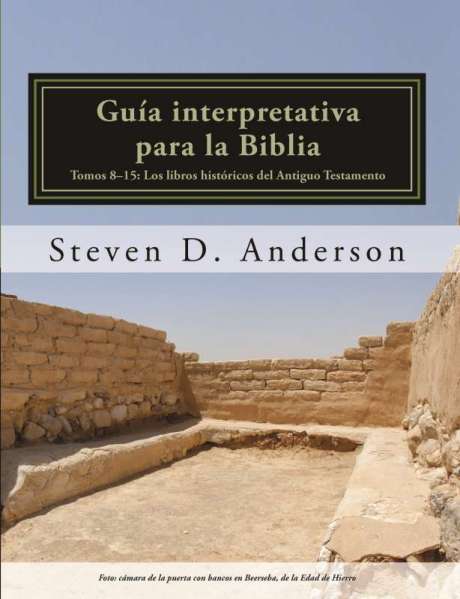
First, I have written an eight-volume guide to understanding each book of the Bible, Dr. Anderson’s Interpretive Guide to the Bible. These books are available for free download from my website, or for purchase on Amazon. The first two volumes of this series are newly revised and translated into Spanish as Guía interpretativa para la Biblia. The Spanish volumes are available for free download on my website; print volumes are available for purchase on Amazon.

GenesisSecond, I have made playlists on SoundCloud of free recordings of the entire Old Testament read in the original Hebrew and Aramaic by Omer Frenkel and produced by the 929 Project, an Israeli Jewish (non-Christian) organization (there are 929 chapters in the Hebrew Bible). Omer Frenkel is a native speaker of Hebrew and a well known Israeli narrator. While I am not affiliated with the 929 Project, any SoundCloud user can make playlists of their recordings, which are not easily accessible otherwise.

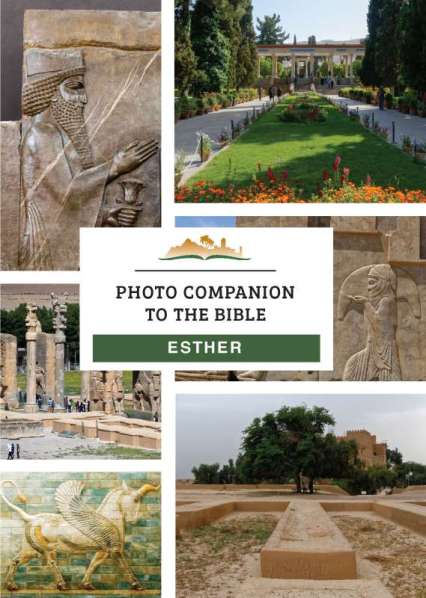
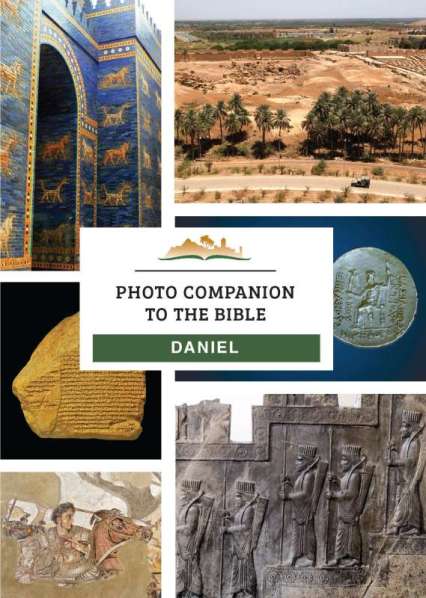
DVD Cover ESTHER-800DVD Cover DANIEL 800

Third, new volumes of the Photo Companion to the Bible continue to be released. I began this project with Todd Bolen in November 2014 in order to find the best photographs to illustrate the Bible by chapter and verse. The project has since grown significantly, with more than half a dozen other scholars contributing, although I have done most of the first drafts. My favorites among the new releases are the Daniel and Esther volumes, for which I was the primary creator. Since these volumes do not just include photographs but also extensive explanations, anyone who is interested in the relationship of historical and archaeological background information to the Bible will find the Photo Companion to the Bible profitable.

NT banner 2

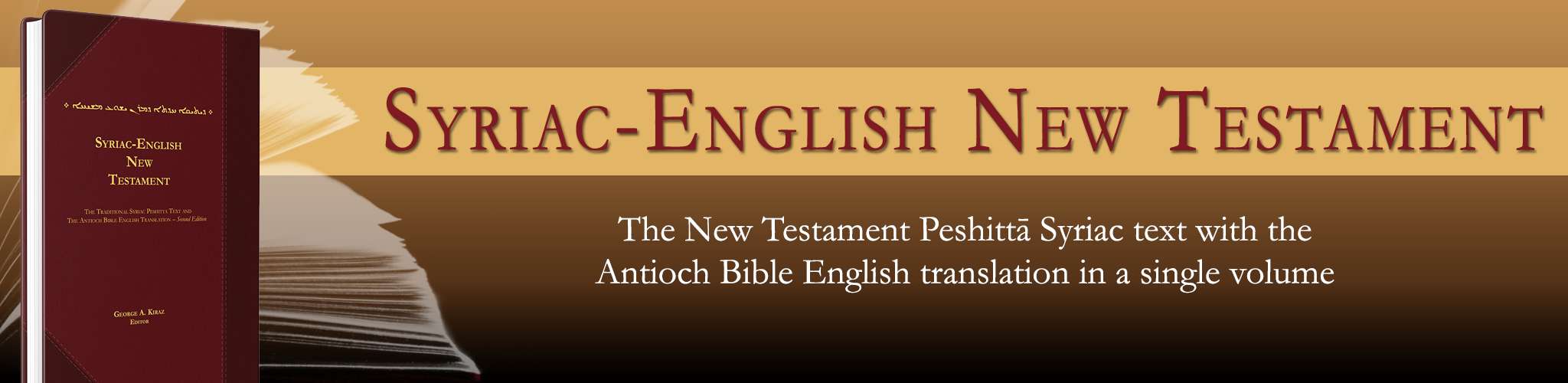
Fourth, I am happy to promote the new single-volume edition of the Syriac-English New Testament published by Gorgias Press. (This is a sponsored mention.) The Syriac New Testament is important for New Testament textual criticism, and also for the certain parts of historic Eastern Christianity. The English translation provides access to readings of the Syriac Peshitta for those who cannot read Syriac. For students of Syriac, the English translation will provide a handy way to check one’s understanding of the Syriac text as it is read. This is a high-quality academic edition with features that attempt to reproduce the look and feel of historic Syriac Bibles.

There are some other projects I am working on that, Lord willing, will be released one by one over the coming months and years. These include: (1) A commentary on Revelation that I have been writing for the past few years (I am currently on chapter 14). (2) Spanish translations of more volumes of my Interpretive Guide to the Bible. (3) Spanish translations of some of my blog posts, each one linked to an updated English version.

Enjoy this content? Buy me a coffee, or support this blog via a PayPal donation.

Share this:

  • Click to share on X (Opens in new window) X
  • Click to share on Facebook (Opens in new window) Facebook
  • Click to share on LinkedIn (Opens in new window) LinkedIn
  • Click to share on WhatsApp (Opens in new window) WhatsApp
  • Click to email a link to a friend (Opens in new window) Email
  • Click to print (Opens in new window) Print
Like Loading...

Psalm 23: A Photo Commentary

19 Tuesday Jun 2018

Posted by Steven Anderson in Bible, Books

≈ Leave a comment

Tags

Psalm 23 photos

Psalm 23 is the most familiar and best loved of all the psalms. It is a source of comfort and encouragement for Christians throughout the vicissitudes of life, and its reassuring words are often read at funeral services. There is truly a spiritual bond between the writer of this psalm—King David of Israel—and modern Christians. Yet there is also a profound gap of time and culture that forms a barrier to our understanding of the psalm’s meaning. David lived 3,000 years ago in a cultural world that was vastly different from the United States of America. Many helpful studies on Psalm 23 have been written, often focused on the theme of shepherding. But there has never been a study published which uses photographs to elucidate the historical and cultural setting of this ancient psalm. This gap is now filled with a new book I have coauthored with my friend and fellow Bible scholar, Todd Bolen. Psalm 23: A Photo Commentary illustrates Psalm 23 with more than 60 high-quality photographs. The photographs include traditional cultural scenes, modern landscapes, and museum artifacts. The accompanying text explains the visual information in the photographs and relates it to Psalm 23 through a verse-by-verse commentary. The book is available from Amazon in both print and Kindle editions. The Kindle (Matchbook) price will be lowered to $0.00 after purchase of the print book. The photographs are also available in PowerPoint format from BiblePlaces.com.

As would be expected, many of the photographs in our book show shepherds and sheep. We have taken care to use photos from the land of Israel that match the cultural and historical setting of Psalm 23 as closely as possible. For example, the “still waters” where sheep found refreshment (Psalm 23:2) are illustrated by photos of pools and streams in the areas of Judah where David may have traveled with his flock of sheep, like this one:

Ein Perat, tb020804282

Still waters of Ein Farah in the Judean wilderness

The book also includes many historic photographs from the late 19th century through the first half of the 20th century in order to show Palestinian shepherds in traditional garb, like the scene we chose for the front cover:

Psalm_23_A_Photo_Co_Cover_for_Kindle

The valley of the shadow of death (Psalm 23:4) is a concept that may seem foreign to modern readers. The Judean wilderness, which is largely barren, contains many deep valleys with seasonal streams and vegetation that would be needed to sustain a flock of sheep. However, the steep walls of these valleys cast dark shadows throughout the day, and predatory animals often lurked behind the rocks and thickets. Our book provides a number of examples of these valleys, such as this one:

Nahal Zin, tb010512847

Dark shadow in Nahal Zin

The shepherd-sheep metaphor ends after verse 4, and in the last two verses of Psalm 23 David speaks of his relationship with the Lord under the metaphor of a host and guest. One of the things David affirms in this section is that the Lord prepares a table before him in the presence of his enemies (Psalm 23:5). Our photos give visual proof that the territory of Israel’s enemy Moab can be seen from either Jerusalem or Bethlehem on a clear day. The Lord literally built up David’s kingdom in full view of his enemies.

Bethlehem Shepherds Fields and Mts of Moab, db6601060303

View of the mountains of Moab across the Dead Sea from Bethlehem

As these examples demonstrate, our goal is connect modern readers with the historical and cultural world of King David in order to better understand Psalm 23. A picture is truly worth a thousand words; photos can communicate concepts that would be difficult to understand through a written description. Our personal understanding of Psalm 23 was deepened through the research we did to write this book, and our hope is that our readers also will literally see this beloved psalm more clearly through this unique photo commentary.

Enjoy this content? Buy me a coffee, or support this blog via a PayPal donation.

Share this:

  • Click to share on X (Opens in new window) X
  • Click to share on Facebook (Opens in new window) Facebook
  • Click to share on LinkedIn (Opens in new window) LinkedIn
  • Click to share on WhatsApp (Opens in new window) WhatsApp
  • Click to email a link to a friend (Opens in new window) Email
  • Click to print (Opens in new window) Print
Like Loading...

An Interpretive Guide to the Bible

27 Saturday Feb 2016

Posted by Steven Anderson in Bible, Books

≈ 1 Comment

Tags

free books

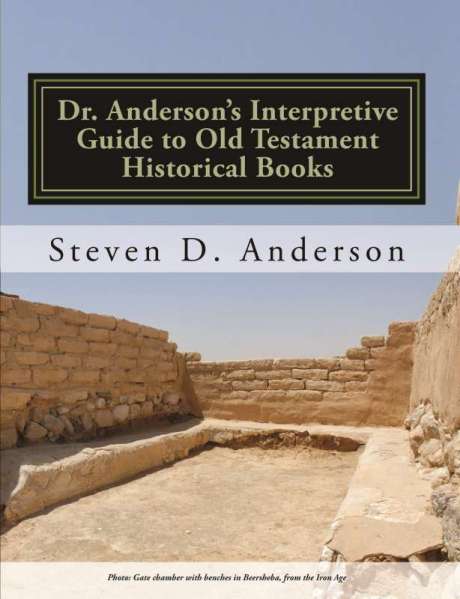
I am pleased to announce that I am now making PDF copies of my eight-volume book series, Dr. Anderson’s Interpretive Guide to the Bible, available for free on my website.

With so many commentaries and study Bibles available, what makes Dr. Anderson’s Interpretive Guide to the Bible unique?

  1. These interpretive guides fill a gap in the literature by providing a synthetic overview of every book of the Bible in a way that commentaries and introductions do not.
  2. These interpretive guides are original scholarship, unlike much of what is produced today. They are the product of my own careful study of the Scriptures, and are not simply a slightly revised repetition of what you can read in other resources. I am an independent thinker, and you will find many original insights and ideas throughout these interpretive guides.
  3. My method of biblical interpretation emphasizes the primacy of the biblical text, and seeks to find its literal meaning. Most contemporary literature seeks to read the Bible through the grid of preformed theological ideas or background studies.
  4. Although I use and often recommend recent commentaries and other scholarly literature, I am writing from a traditional point of view that you will not read in other contemporary literature. Contemporary publishers only publish contemporary viewpoints. Those who enjoy reading classic commentaries, such as the ones by Keil & Delitzch or Albert Barnes, might like these interpretive guides.

These interpretive guides are similar enough to a Bible commentary so that some people would classify them as commentaries. However, they do not deal much with issues of translation or textual criticism, and do not deal extensively with interpretive details. This series is intended partly as an aid to reading, and partly as a starting point for more detailed exegesis. It is, essentially, a general guide to biblical interpretation, from which more specific interpretations may be developed.

These interpretive guides are intended for anyone who wants to study the Bible. There are some more advanced or technical discussions in them that only scholars are likely to follow, but there are also many things that virtually any Christian reader of the Bible can understand. These interpretive guides are designed to help but also challenge adult readers at all academic levels.

It is my hope that making these books available for free in PDF form will greatly increase their reach and their usefulness to the church. Please use these books, recommend them to others if you find them helpful, and check back occasionally for updated editions.

Enjoy this content? Buy me a coffee, or support this blog via a PayPal donation.
Share this:

  • Click to share on X (Opens in new window) X
  • Click to share on Facebook (Opens in new window) Facebook
  • Click to share on LinkedIn (Opens in new window) LinkedIn
  • Click to share on WhatsApp (Opens in new window) WhatsApp
  • Click to email a link to a friend (Opens in new window) Email
  • Click to print (Opens in new window) Print
Like Loading...
Follow TruthOnlyBible on WordPress.com

Enter your email address to follow this blog and receive notifications of new posts by email.

Join 309 other subscribers

Categories

  • Apologetics
  • Archaeology
  • Bible
  • Bible prophecy
  • Bible scholarship
  • Biblical languages
  • Books
  • Christmas
  • Church history
  • Creation
  • Current events
  • Easter
  • Ecclesiology
  • Evangelism
  • History
  • Missions
  • Practical theology
  • Theology

RSS links

  • RSS - Posts
  • RSS - Comments

Blog at WordPress.com.

  • Subscribe Subscribed
    • TruthOnlyBible
    • Join 309 other subscribers
    • Already have a WordPress.com account? Log in now.
    • TruthOnlyBible
    • Subscribe Subscribed
    • Sign up
    • Log in
    • Report this content
    • View site in Reader
    • Manage subscriptions
    • Collapse this bar
 

Loading Comments...
 

    Privacy & Cookies: This site uses cookies. By continuing to use this website, you agree to their use.
    To find out more, including how to control cookies, see here: Cookie Policy
    %d