• About Dr. Steven Anderson

TruthOnlyBible

~ About the Bible, Christianity, and current events

TruthOnlyBible

Category Archives: Theology

“This is My body”: The symbolism of communion

31 Thursday Aug 2023

Posted by Steven Anderson in Bible, Theology

≈ 5 Comments

Tags

consubstantiation, transubstantiation

[Leer en español]

During the Last Supper, Jesus took a loaf of bread and broke it, saying to the disciples, “Take, eat; this is My body.” This story is told multiple times in the New Testament, such as in Matthew 26:26: “While they were eating, Jesus took [a loaf of] bread and blessed [it] and broke [it]; and giving [it] to the disciples, He said, ‘Take, eat; this is My body’ ” (cf. Mark 14:22; Luke 22:19; 1 Cor 11:24). This article will examine the symbolism of communion (a.k.a. “the Lord’s Supper” or “the Eucharist”), with a special focus on the meaning of the phrase “this is My body.” But before explaining how communion is to be correctly understood, this article will examine a common but incorrect interpretation of communion, and will explain why it is erroneous.

The Catholic understanding of communion (Eucharist) is centered on a doctrine called “transubstantiation.” There is also a similar Lutheran doctrine called “consubstantiation.” According to the doctrine of transubstantiation, when the priest consecrates the bread and wine during the Mass, the bread and wine are transformed into the actual body and blood of Christ, changing their substance, while maintaining the appearance and taste of bread and wine. This doctrine claims to interpret literally the phrase “this is My body.”

There is, however, a linguistic problem with the argument that the only literal interpretation of the phrase “this is My body” is that the communion bread is literally transformed into the body of Jesus. The problem is that the semantic domain of the verb “to be” in English is not exactly the same as the semantic domain of the verb εἰμί in Greek. Ancient Greek did not have a verb equivalent to the English verb “to represent.” Because of this, the verb “to be” (εἰμί) is often used in Greek where in English we would use the verb “to represent.” In other words, the verb εἰμί in Greek includes the semantic function of the English verbs “to be” and “to represent.”

There are many examples of this use of the verb “to be” (εἰμί) in the New Testament. Galatians 4:25 is a clear example. In the NASB, that verse contains the phrase, “this Hagar is Mount Sinai in Arabia.” Obviously Hagar is not literally Mount Sinai in Arabia—Hagar is a woman! For this reason, the CSB translates the phrase this way: “Hagar represents Mount Sinai in Arabia.”

The book of Revelation frequently uses the verb “to be” (εἰμί) in the sense of “represent.” For example, Revelation 19:8 says in the NASB, “the fine linen is the righteous acts of the saints.” Obviously fine linen cannot literally be the righteous acts of the saints. Thus, the CSB translates this phrase, “the fine linen represents the righteous acts of the saints.”

Another example is Revelation 17:12, which says in the NASB, “The ten horns which you saw are ten kings.” A king cannot literally be a horn, so the NABRE translates this phrase, “The ten horns that you saw represent ten kings.”

To cite only one more example from the book of Revelation, Revelation 17:15 says in the NASB, “The waters which you saw where the harlot sits, are peoples and multitudes and nations and tongues.” Once again, it is not possible to interpret the metaphor literally, which is why the NABRE translates the verse this way: “The waters that you saw where the harlot lives represent large numbers of peoples, nations, and tongues.” See also Revelation 1:20; 17:9-10, 18.

Jesus also frequently used the verb “to be” (εἰμί) to make a metaphorical comparison, especially when interpreting His parables. An example is Mark 4:15-20, which says in the NASB, “These are the ones who are beside the road where the word is sown; and when they hear, immediately Satan comes and takes away the word which has been sown in them. In a similar way these are the ones on whom seed was sown on the rocky places, who, when they hear the word, immediately receive it with joy; and they have no firm root in themselves, but are only temporary; then, when affliction or persecution arises because of the word, immediately they fall away. And others are the ones on whom seed was sown among the thorns; these are the ones who have heard the word, but the worries of the world, and the deceitfulness of riches, and the desires for other things enter in and choke the word, and it becomes unfruitful. And those are the ones on whom seed was sown on the good soil; and they hear the word and accept it and bear fruit, thirty, sixty, and a hundredfold.” The NLT changes the verbs to “represent”: “The seed that fell on the footpath represents those who hear the message, only to have Satan come at once and take it away. The seed on the rocky soil represents those who hear the message and immediately receive it with joy. But since they don’t have deep roots, they don’t last long. They fall away as soon as they have problems or are persecuted for believing God’s word. The seed that fell among the thorns represents others who hear God’s word, but all too quickly the message is crowded out by the worries of this life, the lure of wealth, and the desire for other things, so no fruit is produced. And the seed that fell on good soil represents those who hear and accept God’s word and produce a harvest of thirty, sixty, or even a hundred times as much as had been planted!” See also Matthew 13:19-23, 37-39.

Thus, the use of the verb “to be” (εἰμί) in Greek with the meaning of “represent” is well documented. “This is My body” means “This represents My body,” since Christ distributed to the disciples pieces of a loaf of bread; the disciples did not cut off pieces of Christ’s body. It is also clear that the bread and wine in the Catholic Mass never loses the physical properties of bread and wine, which means it does not change its substance and become flesh and blood. Nevertheless, all English Bible translations have “this is My body” so as not to contradict the doctrines of transubstantiation and consubstantiation. In the same way, when Jesus said regarding the cup, “This is My blood of the covenant, which is poured out for many” (Mark 14:24), the meaning is, “This represents My blood of the covenant.”

The doctrine of transubstantiation is based on a simple linguistic error. The theologians of the Roman Catholic Church did not recognize the linguistic phenomenon whereby the Greek verb “to be” (εἰμί) is used to signify a metaphorical connection, and they also lacked the common sense to see that the literal interpretation of this metaphor does not make sense. Thus, the Catholic Church finally declared in the Council of Trent that “this is My body” must mean that the bread in the Eucharist is literally changed into the body of Jesus. Nevertheless, a basic understanding of language use and of the Greek language is sufficient to refute the supposed exegetical basis of the doctrine of transubstantiation.

Transubstantiation is not merely a theoretical error—it has significant practical implications, implications that have to do with salvation. A logical implication of transubstantiation would be that Christ is resacrificed every time that Christians celebrate communion. (This is why the bread and wine are placed on an altar in the Catholic Mass.) Moreover, if Christ is resacrificed in the communion service, this would imply that participation in communion is necessary in order to receive the benefits of Christ’s sacrifice, i.e., the forgiveness of sins. A person would have to physically eat the body of Jesus and drink His blood in order to receive God’s saving grace. These theological implications are clearly contradicted by many verses in the New Testament. Nevertheless, many people think that their participation in communion (or the Eucharist) gives them forgiveness of sins, and this is exactly what is said in the liturgy of some churches.

The Bible teaches clearly that we receive the forgiveness of all of our sins at the moment of our conversion, including all of our past, present, and future sins. Acts 10:43 says, “To Him all the prophets bear witness, that everyone who believes on Him receives forgiveness of sins through His name.” Acts 13:38-39 says, “Therefore let it be known to you, brethren, that through Him forgiveness of sins is proclaimed to you, and through Him everyone who believes is freed from all things, from which you could not be freed through the Law of Moses.” Romans 8:1 says, “Therefore there is now no condemnation for those who are in Christ Jesus.” Romans 10:9 says, “if you confess with your mouth Jesus as Lord, and believe in your heart that God raised Him from the dead, you will be saved.” There is no verse anywhere in the New Testament that says that forgiveness of sins is received through participation in communion.

The Bible teaches that God’s saving grace is received through faith, not through communion. Ephesians 2:8-9 says, “For by grace you have been saved through faith; and that not of yourselves, it is the gift of God; not by works, so that no one may boast.” Romans 5:1-2 says, “Being therefore justified by faith, we have peace with God through our Lord Jesus Christ; through whom also we have had our access by faith into this grace wherein we stand; and we rejoice in hope of the glory of God.”

The Bible also teaches that Christ was sacrificed once for all time, which means it is not possible to resacrifice Christ in a communion service. Hebrews 10:12-14 says, “but He, having offered one sacrifice for sins for all time, sat down at the right hand of God, waiting from that time onward until His enemies be made a footstool for His feet. For by one offering He has perfected for all time those who are sanctified.” First Peter 3:18 says, “For Christ also died for sins once for all, the righteous for the unrighteous, so that He might bring us to God.” Romans 6:9 says, “knowing that Christ, having been raised from the dead, is never to die again; death no longer has dominion over Him.”

So the bread and the cup in the communion service are symbols, and the Bible explains the symbolism. When Christians eat the communion bread, they are portraying their spiritual union with the body of Christ. First Corinthians 10:17 says, “Since there is one bread, we who are many are one body; for we all partake of the one bread.” (In the first century, communion was celebrated with a single loaf of bread, which was broken apart, and a piece distributed to each believer.) When Christians drink from the communion cup, they are portraying their participation in the benefits of Christ’s death, especially the forgiveness of sins. Matthew 26:27-28 says, “And when He had taken a cup and given thanks, He gave it to them, saying, “Drink from it, all of you; for this is My blood of the covenant, which is poured out for many for forgiveness of sins.” (In the first century, communion was celebrated with a single cup, from which each believer drank a little.)

Thus, we do not participate in communion in order to receive God’s saving grace or the forgiveness of sins. Communion is a ritual for believers, that we do in order to show that we already are part of the body of Christ, and we already have full forgiveness of sins through the death of Christ. Communion is also something that we do in order to proclaim visually to the world the theological truths of the gospel. First Corinthians 11:26 says, “For as often as you eat this bread and drink the cup, you proclaim the Lord’s death until He comes.”

In conclusion: the bread and the cup are representations of the body and blood of Jesus; they are not the actual flesh and the actual blood of Jesus. Communion is a commemoration of the earthly life and death of Christ; it is not a resacrifice of Christ. Christ said, “Do this in remembrance of Me” (1 Cor 11:24-25), not “do this to resacrifice Me” or “do this to obtain forgiveness of sins.” We learn better when we can learn visually and physically, so it is a great blessing that Christ has given us a visual, tangible, and simple way to portray and proclaim the profound theological truths of the gospel. When we participate in communion, we are proclaiming that Christ delivered up His body and shed His blood in our behalf, we are saying that we have received complete forgiveness of sins through His death, and we are showing that we are part of the body of Christ—that is, the church.

Enjoy this content? Buy me a coffee, or support this blog via a PayPal donation.

Share this:

  • Click to share on X (Opens in new window) X
  • Click to share on Facebook (Opens in new window) Facebook
  • Click to share on LinkedIn (Opens in new window) LinkedIn
  • Click to share on WhatsApp (Opens in new window) WhatsApp
  • Click to email a link to a friend (Opens in new window) Email
  • Click to print (Opens in new window) Print
Like Loading...

“Esto es Mi cuerpo”: El simbolismo de la santa cena

31 Thursday Aug 2023

Posted by Steven Anderson in Bible, Theology

≈ Leave a comment

Tags

consubstanciación, consustanciación, transubstanciación, transustanciación

[Read in English]

En la Última Cena, Jesús tomó una hogaza de pan y la partió, diciendo a los discípulos, “Tomad, esto es Mi cuerpo”. Esta historia se relata varias veces en el Nuevo Testamento, como en Marcos 14:22: “Y mientras comían, Jesús tomó pan y bendijo, y lo partió y les dio, diciendo: Tomad, esto es mi cuerpo” (cf. Mt. 26:26; Lc. 22:19; 1 Co. 11:24). Este artículo examinará el simbolismo de la santa cena, con un enfoque en el significado de la frase “esto es Mi cuerpo”. Pero antes de explicar la visión correcta de la santa cena, el artículo examinará una visión equivocada de la santa cena, y explicará por qué es equivocada.

La visión católica de la santa cena se centra en una doctrina que se llama “transustanciación” (transubstanciación); también, hay una doctrina luterana similar que se llama “consustanciación” (consubstanciación). Según la doctrina de la transustanciación, cuando el sacerdote consagra el pan y el vino en la misa “cambian milagrosamente su substancia para transformarse realmente en el cuerpo y la sangre de Jesús”,[1] aunque mantienen la apariencia y el sabor de pan y vino. Esta doctrina fue desarrollada a partir de una interpretación supuestamente literal de la frase “esto es Mi cuerpo”.

Sin embargo, hay un problema lingüístico con el argumento que dice que la única interpretación literal de la frase “esto es Mi cuerpo” es que el pan en la santa cena literalmente se convierte en el cuerpo de Jesús. El problema es que el campo semántico del verbo “ser” en español no es exactamente igual al campo semántico del verbo εἰμί en griego. El griego antiguo no tuvo un verbo equivalente al verbo “representar”, por eso el verbo “ser” (εἰμί) en griego es frecuentemente usado donde en español usamos el verbo “representar”. En otras palabras, el verbo εἰμί en griego abarca la función semántica de los verbos “ser” y “representar”.

Hay muchos ejemplos de este uso del verbo “ser” (εἰμί) en el Nuevo Testamento. Gálatas 4:25 es un ejemplo claro. Ese versículo dice en la Reina Valera: “Agar es el monte Sinaí en Arabia”. Obviamente Agar no es literalmente el monte Sinaí en Arabia, Agar es una mujer. Por eso, La Palabra de Dios para Todos traduce el versículo así: “Agar representa el monte Sinaí en Arabia”.

El libro de Apocalipsis usa frecuentemente el verbo “ser” (εἰμί) en el sentido de “representar”. Por ejemplo, Apocalipsis 1:20 dice en la Reina Valera: “las siete estrellas son los ángeles de las siete iglesias, y los siete candeleros que has visto, son las siete iglesias”. Sin embargo, las siete estrellas que Juan vio en su visión no eran literalmente siete ángeles; representaban siete ángeles. Asimismo, los siete candeleros (candelabros) que Juan vio no eran literalmente siete iglesias; representaban siete iglesias. Entonces, la Traducción en Lenguaje Actual traduce el versículo así: “Las siete estrellas representan a los ángeles de las siete iglesias, y los siete candelabros representan a las siete iglesias”.

Otro ejemplo: Apocalipsis 19:8 dice en la Reina Valera: “Y a ella se le ha concedido que se vista de lino fino, limpio y resplandeciente; porque el lino fino es las acciones justas de los santos”. Obviamente el lino fino no puede ser literalmente las acciones justas de los santos. Por eso, la Nueva Versión Internacional traduce el final de este versículo así: “El lino fino representa las acciones justas de los santos”.

Otro ejemplo es Apocalipsis 17:12, que dice en la Reina Valera: “Y los diez cuernos que has visto, son diez reyes”. Un rey no puede ser literalmente un cuerno, por eso La Palabra traduce el versículo así: “Has visto también diez cuernos. Representan a diez reyes”.

Asimismo, Apocalipsis 17:15 dice en la Reina Valera: “Las aguas que has visto donde la ramera se sienta, son pueblos, muchedumbres, naciones y lenguas”. Otra vez, no es posible interpretar la metáfora de manera literal, por eso la Traducción en Lenguaje Actual dice: “Los ríos que has visto, y sobre los cuales está sentada la prostituta, representan a pueblos y gente de diferentes idiomas y países”. Ver también Apocalipsis 17:9-10, 18.

Jesús también usó frecuentemente el verbo “ser” (εἰμί) para hacer una comparación metafórica, especialmente cuando interpretaba Sus parábolas. Un ejemplo es Mateo 13:37-39, que dice en la Reina Valera: “El que siembra la buena semilla es el Hijo del Hombre. El campo es el mundo; la buena semilla son los hijos del reino, y la cizaña son los hijos del malo. El enemigo que la sembró es el diablo; la siega es el fin del siglo; y los segadores son los ángeles”. La versión La Palabra cambia el verbo en algunas ocasiones. Dice: “El labrador que siembra la buena semilla es el Hijo del hombre, y el campo es el mundo. La buena semilla representa a los que pertenecen al Reino, y la cizaña representa a los que pertenecen al diablo. El enemigo del dueño, aquel que sembró la cizaña, es el diablo; la siega representa el fin del mundo, y los segadores son los ángeles”. Realmente, cada ocurrencia del verbo “es” o “son” en estos versículos puede ser traducida “representa” o “representan”. Ver también Mateo 13:19-23; Marcos 4:15-20.

Entonces, el uso del verbo “ser” (εἰμί) en griego en el sentido de “representar” está bien documentado. “Esto es Mi cuerpo” debe significar “esto representa Mi cuerpo”, dado que lo que Jesús dio a los discípulos era piezas de una hogaza de pan, los discípulos no cortaron piezas del cuerpo de Jesús. También, es claro que el pan y el vino que son consagrados en la misa católica nunca pierden las propiedades físicas de pan y vino, no se convierten en carne y sangre. Sin embargo, todas las traducciones de la Biblia en español dicen “esto es Mi cuerpo” para no contradecir la doctrina de la transustanciación. De la misma manera, cuando Jesús dijo sobre la copa “Esto es mi sangre del nuevo pacto, que por muchos es derramada” (Mr. 14:24, RVR60), significa “Esto representa Mi sangre del nuevo pacto”.

La doctrina de la transustanciación está basada en un error lingüístico simple. Los teólogos de la Iglesia católica no reconocieron el fenómeno lingüístico por el cual el verbo “ser” (εἰμί) en griego es usado con el significado de una conexión metafórica, tampoco tuvieron el sentido común para ver que la interpretación literal de esta metáfora no tiene sentido. Por eso, la Iglesia católica finalmente declaró en el Concilio de Trento que “esto es Mi cuerpo” debe significar que el pan de la santa cena literalmente se convierte en el cuerpo de Jesús. Sin embargo, un conocimiento básico del uso del lenguaje y de la lengua griega es suficiente para refutar la supuesta base exegética de la doctrina de la transustanciación.

La transustanciación no es solo un error teórico, sino que tiene implicaciones prácticas grandes, implicaciones que tienen que ver con la salvación. Una implicación lógica de la transustanciación sería que Cristo es resacrificado cada vez que los cristianos celebran la santa cena. Esta es la razón por la que los elementos de la misa se ponen sobre un altar. Además, si Cristo es resacrificado en la santa cena, eso implicaría que la participación en la santa cena es necesaria para recibir los beneficios del sacrificio de Cristo, es decir, la remisión de pecados. Alguien necesitaría comer el cuerpo de Jesús y beber Su sangre físicamente para recibir la gracia salvadora de Dios. Estas implicaciones teológicas de la transustanciación son contradichas claramente por muchos versículos en el Nuevo Testamento. Sin embargo, muchas personas piensan que su participación en la santa cena o la eucaristía les da la remisión de pecados, también la liturgia de algunas iglesias dice eso.

La Biblia enseña claramente que recibimos la remisión de todos nuestros pecados en el momento de nuestra conversión, incluyendo nuestros pecados pasados, presentes y futuros. Hechos 10:43 dice: “De éste dan testimonio todos los profetas, que todos los que en él creyeren, recibirán perdón de pecados por su nombre”. Hechos 13:38-39 dice: “por medio de él se os anuncia perdón de pecados, y que de todo aquello de que por la ley de Moisés no pudisteis ser justificados, en él es justificado todo aquel que cree”. Romanos 8:1 dice: “Ahora, pues, ninguna condenación hay para los que están en Cristo Jesús” (la segunda mitad de este versículo en la RVR60 no se encuentra en los mejores manuscritos). Romanos 10:9 dice: “si confesares con tu boca que Jesús es el Señor, y creyeres en tu corazón que Dios le levantó de los muertos, serás salvo”. No hay ningún versículo en el Nuevo Testamento que diga que la remisión de pecados se recibe a través de la participación en la santa cena.

La Biblia enseña que la gracia salvadora de Dios es recibida por medio de la fe, no por medio de la santa cena. Efesios 2:8-9 dice: “Porque por gracia sois salvos por medio de la fe; y esto no de vosotros, pues es don de Dios; no por obras, para que nadie se gloríe”. Romanos 5:1-2 dice: “Justificados, pues, por la fe, tenemos paz para con Dios por medio de nuestro Señor Jesucristo; por quien también tenemos entrada por la fe a esta gracia en la cual estamos firmes, y nos gloriamos en la esperanza de la gloria de Dios”.

La Biblia también enseña que Cristo fue sacrificado una vez para siempre, por eso no es posible resacrificar a Cristo en la santa cena. Hebreos 10:12-14 dice: “pero Cristo, habiendo ofrecido una vez para siempre un solo sacrificio por los pecados, se ha sentado a la diestra de Dios, de ahí en adelante esperando hasta que sus enemigos sean puestos por estrado de sus pies; porque con una sola ofrenda hizo perfectos para siempre a los santificados”. Primera de Pedro 3:18 dice: “Porque también Cristo padeció una sola vez por los pecados, el justo por los injustos, para llevarnos a Dios”. Romanos 6:9 dice: “sabiendo que Cristo, habiendo resucitado de entre los muertos, no volverá a morir; ya la muerte no tiene dominio sobre El” (LBLA).

Entonces el pan y la copa de la santa cena son símbolos, y la Biblia explica el simbolismo. Al comer el pan en la santa cena estamos representando nuestra unión espiritual con el cuerpo de Cristo. Primera de Corintios 10:17 dice: “Siendo uno solo el pan [lit., “la hogaza”], nosotros, con ser muchos, somos un cuerpo; pues todos participamos de aquel mismo pan”. (En el siglo primero, la santa cena fue celebrada con una sola hogaza, la cual se partía y los trozos eran distribuidos a cada creyente.) Al beber de la copa en la santa cena estamos representando nuestra participación en los beneficios de la muerte de Cristo, especialmente la remisión de pecados. Mateo 26:27-28 dice: “Y tomando la copa, y habiendo dado gracias, les dio, diciendo: Bebed de ella todos; porque esto es mi sangre del nuevo pacto, que por muchos es derramada para remisión de los pecados”. (En el siglo primero, la santa cena se celebraba con una sola copa, de la cual cada creyente bebía un poco.)

Entonces no participamos en la santa cena para recibir la gracia salvadora de Dios o la remisión de pecados. La santa cena es un rito para los creyentes, que hacemos para mostrar que ya somos parte del cuerpo de Cristo y ya tenemos la remisión completa de pecados a través de la muerte de Cristo. La santa cena también es algo que hacemos para proclamar al mundo visualmente las verdades teológicas del evangelio. Primera de Corintios 11:26 dice: “Así, pues, todas las veces que comiereis este pan, y bebiereis esta copa, la muerte del Señor anunciáis hasta que él venga”.

En conclusión: el pan y la copa son representaciones del cuerpo y de la sangre de Jesús, no son el verdadero cuerpo y la verdadera sangre de Jesús. La santa cena es una conmemoración de la vida terrenal y la muerte de Cristo, no es un resacrificio de Cristo. Cristo dijo “haced esto en memoria de mi” (1 Co. 11:24-25), no “haced esto para resacrificarme” o “haced esto para obtener la remisión de pecados”. Aprendemos mejor cuando podemos aprender visual y físicamente, por eso es una gran bendición que Cristo nos haya dado una manera visual, tangible y sencilla para representar y proclamar las profundas verdades teológicas del evangelio. Cuando participamos de la santa cena, estamos proclamando que Cristo entregó Su cuerpo y derramó Su sangre para nosotros, estamos diciendo que hemos recibido la remisión completa de pecados a través de Su muerte y estamos mostrando que somos parte del cuerpo de Cristo, es decir, la iglesia.

¿Disfrutaste este contenido? Invítame a un café o apoya este blog haciendo una donación a través de Paypal.


[1] Pablo Alberto Deiros, “Transubstanciación”, en Diccionario Hispano-Americano de La Misión, nueva edición (Bellingham, WA: Logos Research Systems, 2006).

Share this:

  • Click to share on X (Opens in new window) X
  • Click to share on Facebook (Opens in new window) Facebook
  • Click to share on LinkedIn (Opens in new window) LinkedIn
  • Click to share on WhatsApp (Opens in new window) WhatsApp
  • Click to email a link to a friend (Opens in new window) Email
  • Click to print (Opens in new window) Print
Like Loading...

The second dispensation: theocracy, not conscience

12 Sunday Jun 2022

Posted by Steven Anderson in Bible, Theology

≈ 3 Comments

Tags

Age of Innocence, early dispensations

“Dispensation” is a term give by theologians to the eras of redemptive history described in the Bible. A clear example of a dispensation is the period during which the Law was in effect, from the covenant God made with Israel on Mount Sinai until the death of Christ and the beginning of the church. Within each dispensation, God prescribes different means by which believers are to demonstrate their faith in Him; however, dispensations are not different methods of salvation, which has always been by grace through faith.

While the New Testament clearly distinguishes between the Age of the Law and the Church Age, the most popular modern list of dispensations comes from the Scofield Reference Bible, which was published in the early twentieth century. In this study Bible, C. I. Scofield, building on the work of earlier dispensational theologians, lists seven dispensations. He calls the first dispensation “Innocence.” This was the time from the creation of man until the fall of man. The second dispensation, extending from the fall of man until the flood of Noah, is labeled “Conscience” by Scofield. The idea behind this name is that man had little or no direct revelation from God, and therefore could only be guided by his conscience in moral and spiritual matters. Proponents of this idea hypothesized that people who lived during this period had a much stronger (more reliable) conscience than people do today, which made it possible to live merely by conscience. Somehow human souls were gradually weakened during that early period, so that people gradually lost the sensitivity of their consciences.

However, when we examine the biblical description of the period between the Fall and the Flood, it does not match the theory that this was the Age of Conscience. For one thing, Cain murdered his brother Abel in cold blood and showed no remorse afterward (Gen 4:8-9)—hardly the behavior of someone who had an extremely sensitive conscience. More importantly, the antediluvians did have clear and direct revelation from God. Before the Fall, God conversed directly with Adam and Eve every evening in the garden of Eden (Gen 3:8; cf. Ezek 28:13), and it is very likely that God revealed to them the story of creation that is recorded in Genesis 1:1–2:3, among other things. Adam and Eve, in turn, must have spoken of these things to their children. There were also prophets in the antediluvian world. Jude 14 mentions that Enoch was a prophet, and Genesis 6:13-22 describes revelation that Noah received directly from God. Dreams and visions were another possible source of revelation; Job 33:14-18 indicates that God commonly revealed things to people in dreams during the most ancient periods of human history.

However, there was another revelation of God in the antediluvian world that many Christians have never heard of, although it is described in Genesis 3–4. To understand what this was, let us look first at Genesis 3:24, which says, So He drove the man out; and at the east of the garden of Eden He placed the cherubim and the flame of a sword that turned every direction to guard the way to the tree of life. Evidently the garden of Eden had an entrance on its east side. After Adam and Eve were expelled from the garden, the cherubim were stationed at its entrance in order to prevent man from eating the fruit of the tree of life. The cherubim were openly manifested in their awesome glory, in order to dissuade men from trying to enter the garden.

The cherubim are very interesting creatures. Technically, they are not angels, but are a different order of celestial beings. In the book of Revelation, the cherubim are called “living creatures.” In Isaiah 6:2 they are called “seraphim,” which means “flaming ones.” Each time that the cherubim are described in the Bible, there are four of them, and they are situated around the throne of God, one on each side, with the throne of God above them in the center. The cherubim support the throne from underneath and from the sides, and function as guardians to protect the holiness of God’s throne from intruders. Given the fact that the cherubim have the responsibility to protect the throne of God, they must be the most powerful created beings, with Michael the archangel likely the only angel who is equal to them in power.

Interestingly, the function of cherubim as guardians of the throne of God is reflected in the material culture of the ancient Near East. Many royal thrones in the ancient Near East included winged guardian figures supporting the throne from its sides (examples). In Assyria, massive human-headed winged bulls called kāribu or lamassu were carved beside royal gates to represent guardian spirits. Since Noah and his sons actually saw the cherubim before the flood, they must have described their appearance and function to their descendants and helped them make depictions of cherubim. Cherubim were also depicted in the tabernacle and temple and above the ark of the covenant because these beings accompanied God’s presence (Exod 25:18-22; 26:1; 1 Kgs 6:23-29). An ivory carving from Samaria apparently depicts a cherub, and may reflect the way these creatures were carved in Solomon’s temple.

Ezekiel 28:13-14, which describes the origins of Satan, says he was originally created as “the anointed cherub who covers.” This indicates that God originally created five cherubim—four around the throne, supporting it from below, while hovering above the throne was a special cherub who occupied the most privileged position in all of creation. It is most unfortunate that this specially anointed cherub became filled with pride because of his exalted position and his great power and glory, and craved to take the throne of God for himself, in order to govern the universe himself and receive the worship of all creation (Isa 14:12-14). This cherub became Satan, the great opponent of God. When he decided to rebel against God, he left his station above God’s throne and persuaded large numbers of other angels to follow him instead of God (Rev 12:4). Satan then organized his forces and attempted to overwhelm the angels and cherubim who had remained loyal in order to break through to God’s throne and take it for himself. He lost the battle and was cast out of heaven to the earth for a time, where he proceeded to tempt Eve to sin, leading to the fall of the human race. The spiritual war on earth, fierce as it is, really is only a proxy war in the main conflict between Satan and God (Gen 3:15). At the end of history, when the antichrist is seizing power on earth, Satan will make one final attempt to storm heaven with his angels and drive God off His throne, and when he loses that battle, he and his angels will be cast out of heaven for all time (Rev 12:7-9).

There are many Bible verses which say that God is enthroned above the cherubim (e.g., 2 Sam 6:2; 2 Kgs 19:15; 1 Chr 13:6; Pss 18:10; 80:1; 99:1; Isa 37:16). Particularly clear is Ezekiel 1, in which Ezekiel gives a detailed report of a vision of cherubim that he saw (cf. Ezek 10:20). In Ezekiel 1:26, he describes seeing God the Father on His throne above the cherubim. When John describes the living creatures (cherubim) in Revelation 4:6-8, they are likewise stationed permanently around the throne of God.

If the principal function of the cherubim is to protect the throne of God, this implies that when the cherubim were placed at the entrance to the garden of Eden after the fall of man, the throne of God must also have been there, with the presence of God manifested in some way above the cherubim. Before the Fall, God spoke openly with Adam and Eve every evening (Gen 3:8; cf. Ezek 28:13), so it makes sense that they would be able to communicate directly with God afterward as well. It is significant that the entrance to the garden was on its east side, since the tabernacle and the temple were also oriented toward the east (cf. Num 3:23, 38; Ezek 10:19), and the glory of God will enter the millennial temple through its east gate (Ezek 43:1-5). The place in front of the entrance to the garden of Eden was therefore a holy place, in which people could reverentially approach God in order to speak to Him, to worship Him, and to offer sacrifices.

The narrative of Genesis 4 assumes that the reader understands this, although it does not directly say that the divine presence was manifested above the cherubim, and that this was a place where people offered sacrifices to God and spoke with Him. Genesis 4:3-7 reads, Now it came to pass at the end of certain years, that Cain brought some of the produce of the land as an offering to Yahweh. And Abel, on his part, brought some of the firstlings of his flock and of their fat portions. And Yahweh had regard for Abel and for his offering; but He did not show regard for Cain or for his offering. Then Cain became very angry, and his countenance fell. And Yahweh said to Cain, “Why are you angry? And why has your countenance fallen? If you do well, will it not be lifted up? And if you do not do well, sin lies at the door; and its desire is for you, but you must rule over it.” Presumably Adam, Eve, and their children worshiped God at the entrance to Eden every Sabbath (when they were not working), or perhaps every day, with Adam offering sacrifices on behalf of the entire family. When Cain and Abel reached the age of adulthood, God asked them for the first time to bring their own sacrifices to Him as an expression of their personal faith. God asked them to sacrifice a specific kind of animal, but Cain was too proud to purchase an animal from his brother, so he took some his own vegetables instead and offered them to God. When the text says that “Cain brought . . . an offering to Yahweh,” this means that Cain brought his offering to the place where God was manifested. This was the same place where Abel “brought” his offering. Cain and Abel could not offer their sacrifices in the place of their choosing, but rather had to bring their offerings to a specific place, literally in front of the throne of God. God indicated in some way that He accepted Abel’s offering—possibly by consuming it with fire—but He rejected Cain’s offering. God then spoke directly to Cain, rebuking him and instructing him. God also gave Cain specific directions for how he ought to behave himself and worship; Cain was not dependent on his conscience to form his own ideas about was constitutes correct morality and worship.

Cain was extremely irritated by the fact that God accepted his brother’s sacrifice but not his own, and he was very envious of his brother. Cain killed Abel in the field while he was working (Gen 4:8), and apparently buried his body to conceal the murder. Afterward, Cain returned to the presence of God, thinking that God did not see what he had done because the murder was committed out of sight of the divine presence (cf. Gen 3:8). When Cain spoke with God in Genesis 4:9-15, we know that he had gone to the place of the divine presence, because Genesis 4:16 says that Cain went out from the presence of Yahweh. Genesis 4:9-15 says, And Yahweh said to Cain, “Where is Abel your brother?” And he said, “I do not know. Am I my brother’s keeper?” And He said, “What have you done? The voice of your brother’s blood is crying to Me from the ground. And now you are cursed from the ground, which has opened its mouth to receive your brother’s blood from your hand. When you work the ground, it will no longer yield its strength to you; you will be a vagrant and a wanderer on the earth.” And Cain said to Yahweh, “My punishment is greater than I can bear. Behold, You have driven me out today from the face of the ground, and I will be hidden from Your face. I will be a fugitive and a wanderer in the earth; and it will come to pass, that whoever finds me will kill me.” So Yahweh said to him, “Therefore whoever kills Cain, vengeance will be taken on him sevenfold.” And Yahweh put a mark on Cain, so that no one who found him would kill him.

These verses reveal that the place of the divine presence in front of the garden was not only a place to sacrifice and worship God and speak with Him—it was also a place where God pronounced judgment on people for their sins. God declared Cain’s guilt and punished him, then promised to punish seven times more severely anyone who would kill Cain. When Cain’s descendant Lamech killed a man in self-defense, he also appealed to God to vindicate and protect him, rather than appealing to a human judge (Gen 4:23-24). In the absence of human government, God took responsibility to judge murderers, which was possible to do before the Flood because the cherubim and the divine presence were openly visible. It is interesting that Cain was worried about the nature of his punishment because it implied that he would have to live far from the divine presence. Given that everyone now knew that Cain had murdered Abel, someone might kill Cain in retribution, thinking that God could not see or judge the murder if it occurred far from the place where His presence was manifested.

Genesis 6:3 is also significant in this regard. In the King James Version, that verse reads, And the Lord said, My spirit shall not always strive with man, for that he also is flesh: yet his days shall be an hundred and twenty years. The Hebrew text of this verse is difficult, and there are various interpretations of it. According to one interpretation, “My spirit” (lowercase) is not the Holy Spirit, but is rather the human soul, which God has put in the bodies of men. God is saying that He will not continue to fight against human beings indefinitely, because they have mortal bodies, and He will kill them all in 120 years.

Another interpretation retains the wording of the KJV, but capitalizes the word “Spirit.” In accord with the idea that the second dispensation was the Age of Conscience, the Holy Spirit was using men’s consciences to fight against their desires, by bringing conviction of sin. However, we have already seen that men were not guided merely by their consciences during the second dispensation, but were given much specific instruction by God. A more basic problem with this interpretation of Genesis 6:3 is that the Hebrew verb used in this verse means “judge,” not “contend.” (The root דון is an earlier or variant form of דין.)

The best translation of Genesis 6:3 is, And Yahweh said, “My Spirit will not judge among men forever, since he is flesh; yet his days will be a hundred and twenty years.” The meaning of the verse is that God was acting as Judge of the human race during this period, in the absence of human governments. As the wickedness of the antediluvian world grew worse and worse, God issued a judicial decree that the antediluvian race would only remain for 120 more years. After the Flood, God delegated the responsibility to punish crime to human governments. The Flood destroyed the garden of Eden, and the tree of life was taken to heaven, where it is today according to the book of Revelation (2:7; 22:2, 14, 19). There was therefore no need for the cherubim to remain stationed on the earth, and both the cherubim and the throne of God ascended to heaven. After the Flood, in Genesis 9:1-7, God gave a commission to Noah and his sons, and to their descendants after them. This commission included the command to kill murderers, which meant that God was delegating the responsibility to execute justice to human government. Genesis 9:6 says, Whoever sheds man’s blood, by man shall his blood be shed; for in the image of God He made man. With this command a new dispensation begins, one in which man will have the responsibility to execute justice and worship God without a visible manifestation of God. Since man was created in God’s image, he is capable of acting as a judge on God’s behalf.

Taking into account all the passages considered above, the second dispensation should be called “Theocracy,” not “Conscience.” The period of world history between the Fall and the Flood was an era during which God governed the world directly, and men saw God openly and conversed with Him directly. Angelic activity in the world was also much more open and visible (Gen 6:1-4). It is certain that the antediluvians did not have knowledge of certain theological subjects which were revealed later (e.g., the church, the rapture, etc.), but neither were they primitive people who had virtually no direct revelation and depended on their consciences to form their own ideas about morality and worship. They needed instruction about God, just as we do, and they received such instruction, although by different means.

What happened when the population of the earth expanded and began to spread out, so that many people lived in places that were geographically distant from the place where God’s presence was manifested? Genesis 4:25-26 gives the answer: Then Adam knew his wife again, and she bore a son. And she called his name Seth, for [she said], God has appointed me another offspring instead of Abel; for Cain killed him. And to Seth also was born a son; and he called his name Enosh. Then men began to call on the name of Yahweh. The meaning of the last part of verse 26 is that when the population of the earth expanded in the process of time, people began to pray to Yahweh. They recognized that God could hear them cry out to Him, even though they were too far from the entrance of Eden to be able to physically approach the place where the divine presence was manifested. It can be assumed that God responded to people’s prayers in dreams or visions (cf. Job 4:12-13; 33:14-18), or by prophets or angels. It can also be assumed that God punished crimes that occurred far from the entrance to Eden. However, the human race must have multiplied dramatically in the 1,656 years between Creation and the Flood, and perhaps the physical distance of most people from the divine presence was a factor in the general rebellion of the human race that developed throughout that period of history (Gen 6:5, 11-12).

One might assume that the Bible is our only source of information for the antediluvian era, but, surprisingly, it is not. The most ancient written records and oral traditions from other cultures also have stories of creation, a global flood, an ark, and the dispersion of peoples after God/the gods changed human language. While the details of these traditions are unreliable and mixed with paganism, there is a true history behind the legends. Some of these early traditions contain descriptions of the period before the Flood. Of particular interest is the Egyptian Book of the Heavenly Cow, which describes how the sun god, Re, once ruled the world directly as king of both man and the gods during an age in which all was orderly and perfect, and death did not yet exist. Then man rebelled against Re, and Re ordered the goddess Hathor to annihilate the human race; however, Re saved a remnant, keeping Hathor from killing every human being. Re also created the netherworld at the time when Hathor annihilated most of the human race, and Re populated the netherworld with serpents. After the reordering of the world, Re withdrew to heaven and delegated governance of the world to lesser deities and to Pharaoh, who was considered the son and successor of Re, his representative ruler on the earth. (See Erik Hornung, The Ancient Egyptian Books of the Afterlife, trans. David Lorton [London: Cornell University Press, 1999], 149-151.) This story sounds like a reflection of Genesis 1–9, as it parallels the introduction of human government after the Flood in the biblical account. The Sumerian creation myth, Eridu Genesis, also describes a time when the gods ruled mankind, before the scepter of kingship descended from heaven and human kings were allowed to govern the world on behalf of the gods. This also seems to reflect the fact that during the period of world history between the Fall and the Flood, God, rather than human rulers, judged and punished crimes committed by men in the world.

Enjoy this content? Buy me a coffee, or support this blog via a PayPal donation.

Share this:

  • Click to share on X (Opens in new window) X
  • Click to share on Facebook (Opens in new window) Facebook
  • Click to share on LinkedIn (Opens in new window) LinkedIn
  • Click to share on WhatsApp (Opens in new window) WhatsApp
  • Click to email a link to a friend (Opens in new window) Email
  • Click to print (Opens in new window) Print
Like Loading...

Why I believe in the pretribulational rapture

29 Tuesday Mar 2022

Posted by Steven Anderson in Bible prophecy, Theology

≈ 9 Comments

The rapture is one of the most important, most controversial, and most poorly understood eschatological doctrines. In this post, I would like to explain from the Bible the reasons why I believe in the pretribulational rapture of the church.

The word “rapture” refers to a “carrying away” or a “snatching away.” The English word “rapture” comes from the Latin noun raptura, which is etymologically related to the Greek verb ἁρπάζω that is used in 1 Thessalonians 4:17. The rapture is an event in which Christ will descend from heaven to the sky above the earth, accompanied by a trumpet blast and the shout of the archangel Michael (1 Cor 15:52; 1 Thess 4:16). Both living and deceased Christians will instantaneously be given glorified resurrection bodies and will be caught up into the clouds, where Christ will lead them back to heaven. Only Christians will see Christ at that time, though the entire world may hear the trumpet blast.

As its name suggests, pretribulationism teaches that the rapture of the church will occur just before the start of the tribulation. The tribulation is a seven-year period corresponding to Daniel’s seventieth week that occurs immediately prior to the second coming of Christ. Before establishing the timing of the rapture, it is imperative to first establish that the coming of Christ for the rapture of the church is an event that is distinct from the second advent, and therefore the rapture is not posttribulational. There are three passages in the New Testament that teach about a return of Christ that is different from the second coming. These three passages are John 14:1-3, 1 Corinthians 15:51-52, and 1 Thessalonians 4:13-18 (see also Rev 4:1).

John 14:1-3

In the Upper Room discourse, which begins in John 13:31, Jesus is preparing the eleven disciples for His departure. At the end of John 13, Jesus mentions that He is going away, which prompted a confused reaction from Peter, who did not understand why he could not go with Jesus. Jesus proceeds to explain in John 14:1-4 that He is not going on an earthly journey, but on a journey to the Father, where He will prepare a place for them, and where they will be reunited forever. In John 14:2-3, Jesus says, In my Father’s house are many dwelling places. If it were not so, I would have told you, for I go to prepare a place for you. And if I go and prepare a place for you, I am coming again, and will take you to Myself; that where I am, there you may be also. Jesus says He will take the disciples (who are Church Age believers) to Himself and will take them to the place where He is, to His Father’s house. The Father’s house is the place where God the Father dwells, which is heaven. In other words, Jesus will come to earth, will resurrect the disciples and (by extension) all those who are part of the church (He is not just coming for the Eleven—cf. John 12:26), and will take them to heaven. In contrast, at the second coming, Jesus will come to the earth and stay on the earth. He will establish an earthly kingdom, and therefore will not take the saints back to heaven with Him, but will instead give them an earthly inheritance. These contrasts demonstrate that it is impossible that John 14 is speaking of a resurrection at the second advent.

1 Corinthians 15:51-52

The second of the three major rapture passages is 1 Corinthians 15:51-52. That passage reads as follows: Behold, I tell you a mystery: we will not all sleep, but we will all be changed, in a moment, in the twinkling of an eye, at the last trumpet. For the trumpet will sound, and the dead will be raised incorruptible, and we will be changed. In verse 51, Paul says that the resurrection of believers he describes in these verses is a “mystery,” meaning that it is something that was not previously revealed. It cannot therefore occur in conjunction with the second advent, which is spoken of throughout both the Old and New Testaments. The rapture was not revealed in the Old Testament, even if it could be deduced by implication, because it is something that is specifically for the church, and not for Israel. Thus, the translation of living saints to heaven is never revealed in the Old Testament, either. These verses also add the important detail that both dead and living believers will be raised, which creates a serious problem for posttribulationism—there would be no one left to enter the millennium in a mortal body if all believers are given glorified bodies and all unbelievers are killed. More will be said about this problem later on, as it is one of the chief difficulties in the posttribulational system. Thus, there are three reasons why 1 Corinthians 15:51-52 must be speaking of the rapture: it is presented as a mystery; it includes the resurrection of Church Age saints (“we”); and it includes the resurrection both of the living and the dead. Note that the “last trumpet” is not the seventh trumpet, which is sounded at the midpoint of the tribulation (Rev 11:15), nor is it the trumpet that is sounded at Christ’s second coming (Matt 24:31)—it is rather the last trumpet for Christians, or the trumpet blast which signals the end of the Church Age.

1 Thessalonians 4:13-18

The last of the three major rapture passages is 1 Thessalonians 4:13-18. Verse 13 reads, But we do not want you to be uninformed, brothers, about those who are asleep, so that you may not grieve as do the rest, who have no hope. The Thessalonians, like the Corinthians (1 Cor 15:12, 18), did not know that dead believers would be resurrected. This is interesting in light of 1 Thessalonians 1:10 and 5:1-2, which state that the Thessalonians were fully aware of apostolic teaching concerning the second coming of Christ, and they were in fact waiting for His coming. Thus, they correctly understood that living believers would be saved alive at the second coming, but they did not know what would happen to those who died beforehand. Paul teaches them about the rapture because that is when all Church Age believers will be raised.

Verse 14 continues: For if we believe that Jesus died and rose again, even so God will bring with Him those who have fallen asleep in Jesus. The term “in Jesus” refers only to the church, not to OT saints. Thus, this passage is describing a resurrection of Church Age believers only. This is different from the second coming, since Daniel 12:1-3 asserts that OT saints are raised at the end of the tribulation period. Verse 15: For we say to you by the word of the Lord, that we who are alive, who remain until the coming of the Lord, will not precede those who have fallen asleep. Again, this is a resurrection in which both living and dead believers are raised, so if it was posttribulational there would be no one left to populate the millennial kingdom with mortal bodies. Verses 16-17: For the Lord Himself will descend from heaven with a shout, with the voice of the archangel, and with the trumpet of God, and the dead in Christ will rise first. Then we who are alive, who remain, will be caught up together with them in the clouds to meet the Lord in the air; and so we will always be with the Lord. Notice that in the coming of Christ that Paul describes, believers will meet the Lord in the air. This is in contrast to descriptions of the second coming, in which the saints are portrayed emerging from heaven to return to the earth with Christ (Rom 8:19; Col 3:4; 1 Thess 3:13; Jude 14-15; Rev 19:14). How could the saints come from heaven with Christ if they are not raptured until He comes? First Thessalonians 4:16-17 says we will meet the Lord in the air after He has already descended from heaven. The rapture therefore must happen at a different time than the second advent, before the second advent.

Finally, in v. 18, Paul writes, Therefore comfort one another with these words. In both the Old Testament and the New Testament, the nation of Israel is warned about the sufferings they will endure during the tribulation period. The church is not. When Paul tells the Christians in Thessalonica that the coming of the Lord will be a great comfort to them, he does not say anything about it being preceded by the tribulation period, which would not be so comforting. He does not warn them to be on the alert for Christ’s coming lest they be judged, or to watch for the signs Christ is just about to return, or to prepare to endure the turmoil of the tribulation period—which is completely unlike the Olivet Discourse and other second coming passages.

It is also interesting that Paul says the Thessalonians were ignorant about Christ’s coming for His church, yet he says in the very next paragraph that they were not ignorant about the second coming. He says in 5:1-3, But concerning the times and the seasons, brothers, you have no need for anything to be written to you. For you yourselves know perfectly well that the day of the Lord comes like a thief in the night. When they are saying, “There is peace and security,” then sudden destruction comes on them, as labor pains on a pregnant woman; and they will not escape. Paul also referenced the second coming twice before in this letter, in 1:10 and 3:13, and he speaks as though the Thessalonians knew about it. This demonstrates that the rapture is an event that is distinct from the second coming.

None of the rapture passages contains any description whatsoever of the judgment of the wicked, or indicates that there is a judgment of the world at the time of the rapture. There is no indication that Christ is coming to set up His kingdom at that time. There is no judgment of Satan, Israel, the nations, the antichrist, or the false prophet. The world and the universe are not destroyed. All that happens is the resurrection of Church Age saints. On the other hand, every passage that describes the second coming describes the cataclysmic judgment associated with it, while none of the second coming passages describes a resurrection of living believers or even a resurrection of Church Age saints. All of the major second coming passages are set in the context of the end of the tribulation period, while none of the rapture passages says a word about the tribulation period. The rapture and the second coming are therefore two distinct events, and the rapture is not posttribulational. Other distinct characteristics of the rapture include its description as a mystery and the return of Jesus Christ to heaven afterwards.

The distinction between Israel and the church

Having established, then, that the rapture is an event that is distinct from the second advent, and that precedes the second advent, let us now consider the evidence that the rapture occurs before the tribulation period, i.e., immediately prior to the start of Daniel’s seventieth week. One of the strongest arguments for this is the distinction between Israel and the church. Israel is still God’s chosen people (Gen 17:7-8, 19; Isa 49:14-15; 54:10; Jer 31:35-37; 33:23-26; Rom 11:1, 28-29). He has not abandoned them—in fact, He has brought them back to their land and protected them there. But during the Church Age—the time from Pentecost until the rapture—Christ is building His church primarily through Gentiles (Acts 13:45-48; 28:28; Rom 10:20-21). The church is never called “Israel” in the Bible, and Israel is never called “the church,” since these are two distinct entities, although of course some Jews are also part of the church.

Daniel 9:24-27 outlines God’s program for the people of Israel and the city of Jerusalem from the issuing of the decree to rebuild Jerusalem until the coming of the messianic kingdom. The length of His program is seventy weeks of years, or 490 years: “Seventy weeks are determined for your people and for your holy city. . . ” (Dan 9:24). Sixty-nine weeks, or 483 years, completed the time from the issuing of the decree until the crucifixion of Jesus by the Jewish people and their leaders (cf. Zech 12:10; Matt 27:24; Acts 2:36; 4:10). After Israel rejected the Messiah, God temporarily switched the primary dispensational focus of His program to the Gentiles, who form the bulk of the church. Since Daniel 9:24-27 is a prophecy of God’s program for Israel, the Church Age is not included in the seventy weeks; there is only an indefinite gap. According to Daniel 9:27, God’s program for Israel is finished in one week, the seventieth week, which is the tribulation period. Hence, God will resume His program for Israel seven years before the second advent, or at the beginning of the period we call the tribulation. The resumption of God’s program for Israel implies the removal of the church, for God has made the church the focus of His salvific program in this age. Pretribulationism is the only view of the rapture that maintains the unity of Daniel’s seventieth week as a time when the dispensational focus of God’s program returns to Israel.

According to Romans 11:25-26, Israel has experienced a partial hardening “until the fulness of the Gentiles has come in.” After that, their hearts will no longer be hardened, and “all Israel will be saved.” The fulness of the Gentiles comes in when the church is taken to heaven at the rapture. Hence, God will resume His program for Israel immediately after the rapture. That this is immediate is proved by the use of the word “until” (ἄχρι) in Romans 11:25: if Israel’s partial hardening occurs only until the rapture, then it is taken away immediately afterward (“. . . and so all Israel will be saved”—v. 26).

That God will resume his program for Israel immediately after the rapture can be deduced logically, even apart from Romans 11:25-26. God would not remove the church unless there were some people of God to replace it with, for He will not cease to work His program. There is only one candidate for the replacement of the church, and that is Israel (Rom 11:23-24). Hence, when the church is removed, its role is restored to Israel. Again, Daniel 9:27 shows that God’s program for Israel is finished in one week, or seven years.

All the biblical descriptions of the tribulation period show that it is focused on Israel, not on the church, and therefore the church must be removed at the start of the tribulation. The first three chapters of the book of Revelation mention the church some 19 times, yet the church is not mentioned one time in Revelation 4–19, which describes the tribulation period. However, 144,000 evangelists from the twelve tribes of Israel are given a prominent place in Revelation 7 and 14, and Revelation 11 describes ministry of the two witnesses in the city of Jerusalem. Satan singles out Israel for special persecution in Revelation 12, and Israel is specially protected by God. The main battle at the end of the tribulation period is centered in the land of Israel (Rev 16:16). Zechariah 12–14 speaks of ethnic Jews living in Jerusalem at the time of the final battle, with Christ returning to rescue His people and destroy their enemies (cf. Dan 12:1). Passages in Revelation 4–19 contain many references to “saints” and “the elect,” but not to “the church” or those who are “in Christ.” Revelation 19 refers to the bride of Christ, but this is a reference to saints who are in heaven, not on earth. The indication, then, is that the focus of God’s program will return to Israel in the tribulation period. This is confirmed by the Olivet Discourse (Matthew 24–25; Mark 13; Luke 21) and numerous passages in the Old Testament that describe the tribulation as a time of great persecution for Israel. Not one of the many passages in the Bible which describes the tribulation even mentions the church. Zechariah 12–13 describes how many Jews will die in the tribulation, but a remnant will repent and be saved. Daniel 9:24-27 presents the tribulation as the final seven years of God’s program for Israel in this age. Jeremiah 30:7 calls the tribulation “the time of Jacob’s trouble.” How can the tribulation be called “the time of Jacob’s trouble” if it is really the time of the church’s trouble? Both the OT and the NT warn the nation of Israel time and again of the things it will suffer during the tribulation period, yet the church is not warned one time.

Because of these problems, most posttribulationists are not dispensational, and those who are have to hold that there is a gradual transition between the Church Age and a return to the time of God’s primary dispensational focus on Israel. Only pretribulationism makes a clear distinction between dispensations and allows for a Jewish millennium.

Posttribulationism

The major alternative to pretribulationism is posttribulationism. The ideas of a midtribulational rapture, a partial rapture, and a pre-wrath rapture have not enjoyed the widespread support accorded to both pretribulationism and posttribulationism because there is no hint anywhere in Scripture of a coming of Christ during the tribulation period. A coming that ends the tribulation period is clearly taught, but posttribulationism denies that this is a separate event from the rapture. One reason why posttribulationism has been so popular over the centuries is that it is required by the amillennial and postmillennial systems of theology. If the church is defined as believers of all ages, then those who have “fallen asleep in Jesus” (1 Thess 4:14) includes Old Testament saints. Thus, there can be no special rapture for those saved after the day of Pentecost in Acts 2. There is no separate rapture in eschatological systems other premillennialism. On the other hand, the dispensational understanding of Scripture requires some point at which the Church Age ends and God’s program reverts back to Israel.

The arguments given above for pretribulationism are implicitly arguments against posttribulationism. However, a few problems specific to the posttribulational scheme may be noted.

Probably the largest problem with posttribulationism is that it does not allow for unresurrected people to enter the millennial kingdom, because all believers are raised at the rapture and all unbelievers are killed at the second advent. There are a great number of passages which assert that only believers will enter the kingdom, e.g., Ezek 20:33-38; Matt 5:20; 25:31-46; John 3:3; 1 Cor 6:9-10; Gal 5:19-21; 1 Thess 5:3. Possibly the clearest passages are Matthew 13:40-43 and Matthew 25:31-46. The rapture passages assert that both dead and living believers are raised and glorified (1 Cor 15:51-52; 1 Thess 4:16-17). Hence, if the rapture occurs at the end of the tribulation, everyone who enters the millennium does so in an immortal resurrection body.

This is a problem because there are many passages that indicate the presence of people in unresurrected bodies in the millennium. Isaiah 65:20 speaks of people dying in the millennium. Isaiah 65:23 and Ezekiel 47:22 speak of people in the millennial kingdom begetting children, and this is implied in various other verses (Isa 11:6-8; 61:9; Jer 30:19-20; 31:8, 13, 27, 34; Ezekiel 46:16-18; Zech 2:4). Ezekiel 44:22 describes men taking wives in the kingdom. According to Matthew 22:30, marrying and begetting offspring cannot be done in the resurrection body. Various verses describe sacrifices for sin in the millennium (Ezek 40:39; 43:18-27; 44:29; 45:13-25), and acts of sin the millennium (Zech 5:1-4; 14:17-19), showing that there are people in the kingdom who have not yet experienced the perfect sanctification that comes with glorification. Revelation 20:7-9 describes a great rebellion at the end of the millennium in which an innumerable number of people will turn against Christ and assault Jerusalem, resulting in the deaths of all those who have rebelled. This rebellion shows not just that there are mortal men in the millennium, but also that there are unsaved mortal men. The only way the unbelievers could have gotten into the kingdom is by procreation, since only the saved will enter the millennium.

Besides these problems, there are passages that directly state that some people will survive the tribulation period and the second coming. Zechariah 14:5 describes believers fleeing on foot after Christ has returned at the second advent. Daniel 12:1, Zechariah 14:16, and Micah 4:2-3 also refer to survivors of the tribulation period.

Posttribulationists have never been able to resolve the problem of how mortal men enter the millennium, nor can they, for their scheme simply falls apart at this point. The suggestion that some Jews repent as Christ is descending contradicts various verses which teach that there can be no repentance after the midpoint of the tribulation is reached or a person receives the mark of the beast (2 Thess 2:9-12; Rev 14:9-12). When the second coming begins, it is too late to repent; men’s fates are sealed (Matt 7:21-23; 25:10-12, 41-46; Rev 6:12-17).

The major biblical argument for posttribulationism is the claim that the Bible only presents one return of Christ. However, the passages analyzed above describe a return of Christ that is not visible to the entire world, in which Christ does not return all the way to the earth and does not judge the earth. Another argument for posttribulationism that is that pretribulationism is a recent invention, and the church has always believed in posttribulationism. Walvoord notes that “in offering this argument, posttribulationists generally ignore the fact that modern forms of posttribulationism differ greatly from that of the early church or of the Protestant Reformers and are actually just as new or perhaps newer than pretribulationism” (John Walvoord, The Blessed Hope and the Tribulation, 145). Specifically, the strain of posttribulationism that holds that the tribulation is a future seven-year period of time differs from the historic view of most theologians in church history, who spiritualized the tribulation and held that the entire Church Age is the tribulation period. Also, while John Nelson Darby claimed to have developed his teaching on the pretribulational rapture directly from the Bible, it is clear that there were other pretribulationists before Darby, such as a Baptist preacher named Morgan Edwards. Farther back in time, in the early Middle Ages, a document called Pseudo-Ephraim expresses a belief in the pretribulational rapture. Beatus of Liebana, who published the final edition of his Commentarius in Apocalypsin in 786, mentions the “rapture” as if it were common knowledge. See also Francis Gumerlock’s 2002 article and 2013 article, and William Watson’s book Dispensationalism before Darby. On the other hand, prophecy tends to become clearer as the time of fulfillment nears, so the increased popularity of pretribulationism in our day should not be surprising.

Posttribulationists claim that the doctrine of a pretribulational rapture rests on very shaky grounds because it is based largely on inference. However, inferences are different than assumptions, and posttribulationism rests on many unsupported assumptions or assertions. Posttribulationists assume that the church will go through the tribulation period, even though none of the terms that are typically used to refer to the church is used with reference to the saints who are alive during the tribulation period. Posttribulationists have never been able to explain why New Testament writers such as Paul do not warn the church to prepare for the tribulation period, with all of its perils. It seems that the passages in which Paul describes the rapture ought to include a description of the terrible tribulation that will precede it, if indeed the rapture is posttribulational. Another assumption made by posttribulationism is that saints will rise from the dead to meet Christ as He is coming down from heaven. This is never explicitly stated, and in fact Revelation 20:4-6 proves that dead tribulation saints will not be raised until the judgment which follows the second coming. If the rapture is posttribulational, then there is no reference whatever to it in the book of Revelation, in spite of the lengthy, detailed, and sequential presentation of end time events in that book.

Another problem with posttribulationism is that it cannot explain the differences between descriptions of the second coming and descriptions of the rapture. These differences have already been noted. The differences between the coming of Christ for the church and the second advent are very significant, and posttribulationists have not given an adequate explanation for how they can be considered identical.

A final problem with posttribulationism is that it contradicts the premillennial dispensational understanding of Scripture, which is based on a literal understanding of Scripture. If the rapture is posttribulational, it is impossible for there to be people with mortal physical bodies in the millennium, and therefore it is impossible for there to be a literal, physical thousand-year reign of Christ on the earth. No one who believes in a literal millennium can accept a posttribulational rapture without a serious contradiction. Denying the millennium is a major problem, because both the Old and New Testaments are filled with descriptions of a lengthy, literal, earthly kingdom, and Revelation 20 says no less than six times that it will last one thousand years. A denial of the millennium also has much more serious consequences in terms of one’s view of God’s fulfillment of His covenants with Israel, and the completion of Christ’s redemptive work.

Posttribulationism also contradicts dispensationalism in that there is no clear break between the end of the Church Age and the renewal of Israel as the focus of God’s dispensational program. No posttribulationist theologian makes a clear distinction between Israel and the church, which is the sine qua non of dispensationalism. In no way can a dispensationalist accept a posttribulational rapture without seriously contradicting himself.

Posttribulationism also has major practical implications. Should we start digging bunkers and building up a seven-year supply of food to survive the tribulation? Should we try to figure out if the tribulation has already started and whether we should be looking for signs that the second coming is about to happen? Posttribulationism also leads logically to a denial of premillennialism and dispensationalism, thereby undermining a literal approach to interpreting Bible prophecy. I will close with a quote from John Walvoord: “The evident trend among scholars who have forsaken pretribulationism for posttribulationism is that in many cases they also abandon premillennialism. . . . It becomes evident that pretribulationism is more than a dispute between those who place the rapture before and after the tribulation. It is actually the key to an eschatological system. It plays a determinative role in establishing principles of interpretation which, if carried through consistently, lead to the pretribulational and premillennial interpretation” (Walvoord, The Blessed Hope and the Tribulation, 166).

Enjoy this content? Buy me a coffee, or support this blog via a PayPal donation.

Share this:

  • Click to share on X (Opens in new window) X
  • Click to share on Facebook (Opens in new window) Facebook
  • Click to share on LinkedIn (Opens in new window) LinkedIn
  • Click to share on WhatsApp (Opens in new window) WhatsApp
  • Click to email a link to a friend (Opens in new window) Email
  • Click to print (Opens in new window) Print
Like Loading...

The church’s new trinitarian crisis

04 Tuesday Dec 2018

Posted by Steven Anderson in Theology

≈ 1 Comment

Tags

heresy, Trinity

The greatest theological battles in the early church were fought over the nature of the Holy Trinity. There were a great many heterodox views of the Trinity propounded in the first Christian centuries, most of them stemming from Greek philosophy. Many heresies denied the perfect union of God and man in the person of Christ; some denied Christ’s divinity, while others denied His humanity. Some heresies denied that the Father, the Son, and the Holy Spirit are three distinct Persons; others denied that the three Persons of the Trinity are united in a single, shared divine essence. The orthodox Christian understanding of the Trinity was formally codified at the Councils of Nicea (325), Constantinople (381), and Chalcedon (451). Those who disagreed with the orthodox position were declared to be heretics (unbelievers) and were excommunicated from the church.

History has a tendency to repeat itself, and today the evangelical church is being overrun by heterodox views of the Trinity. However, this theological development has largely happened under the radar because it has occurred in the amorphous realm of popular theology, and not (largely) as a formal denial of orthodox trinitarianism by prominent church leaders, pastors, or theologians. Popular theology holds that the Father = Jesus = the Holy Spirit. This view is known theologically as “modalism” or “Sabellianism,” and was condemned as heretical by the early church. In conversations with my friends from seminary, as well as in my own experience, we find that people in churches all over the United States commonly say in their prayers that the Father died on the cross for their sins and rose from the dead. Some will even say “Father Jesus” in their prayers and pray to the Father “in your name.” Others will pray something like “Lord, thank you for dying on the cross for us, in Jesus’ name, Amen”—a very confusing prayer which seems to imply that “Lord” is the Father and that He, not Jesus, died on the cross. Prayers like these are seldom, if ever, corrected by pastors, even if prayed in front of the congregation—an indication that pastors think this sort of doctrinal error is a big deal. Many pastors likely do not even view this as a doctrinal error, as they also equate Jesus with the Father.

The evidence for evangelical confusion about the Trinity is not merely anecdotal: a 2016 survey found that fifty-six percent of American evangelicals believe that the Holy Spirit is a force, not a person. While that is a modalistic view, seventy percent of evangelical respondents actually affirmed that Jesus is a created being, which is the Arian heresy (not modalism). See also this 2018 survey. It is easy to see how these views arise among people who have virtually no theological or Scriptural grounding and give little or no thought to the doctrine of the Trinity. If you ask evangelical Christians “Is Jesus God?” most would say “Yes.” Then if you ask them “Is Jesus a created being?” most would say “Yes” again, because they know Jesus was born to Mary. If you ask evangelicals “Is Jesus the Father?” most would say “Yes,” because they think Jesus = God = the Father. Many think of the Holy Spirit as a force rather than as a personal being, even if they pray to the Holy Spirit, because they never see the Holy Spirit pictured in human form. Jesus, the One pictured in human form and sung about in church, is “God” to most people, while the Father is just another word for “God,” and the Holy Spirit is God’s power or force, or is simply another manifestation of Jesus.

Very basic teaching on the Bible and theology is all that is needed to understand that God is three Persons in one essence. (For an excellent detailed exposition of the Trinity, see this book by Dr. Imad Shehadeh.) Yet many evangelical laymen appear to have a modalistic understanding of the Trinity. Their lead pastors may be orthodox trinitarians, but do not stress this or correct false ideas. There are several reasons for the development of heterodox views of the Trinity in evangelical churches.

  1. Many pastors think theology is impractical, and prefer to preach on topics that their congregants will see as relevant to their day-to-day lives. Sermons and small groups at most evangelical churches are primarily applicational in their orientation, not didactic. However, since the Christian faith is defined by theological formulations of doctrine, theology is actually at the core of what the church is and of what it means to be a Christian. Most people will never learn basic Christian theology if it is not taught in church services. Some pastors openly propound the view that theology is boring and largely irrelevant. But when pastors emphasize the importance of theology and exalt knowledge of the Scriptures, their congregations also become interested in theology and begin to see its importance. Some evangelicals have gravitated toward Reformed churches in recent years because traditional Reformed churches actually teach theology (even if their theology tends to get separated from exegesis).
  2. Many pastors are poorly trained in theology and the Bible. Many evangelical churches do not require a seminary or Bible college degree for their pastors, nor do many ordination councils. The seminaries themselves are increasingly emphasizing counseling and “practical ministry,” with ever-decreasing requirements in theology, Bible, and biblical languages. Preaching is taught as an exercise in application. Many new pastors are primarily interested in relationships, outreach, and counseling, and do not like to read theology books, church history books, Bible commentaries, or Greek and Hebrew grammars. While there was a time when most evangelical pastors and many laymen had a keen interest in theological study, few do today.
  3. Some pastors teach that the Trinity is a mystery which defies description or understanding. Some pastors simply teach that the Trinity cannot be understood or described, without ever giving the orthodox formulation of trinitarian doctrine. Some even avoid calling Jesus the Son of God, simply calling Him “God” instead, because they think it will confuse people to call Jesus “the Son of God” or to say that God sent His Son into the world, or to say that Jesus is seated at God’s right hand. While there are some things about the nature of God and the holy Trinity that are beyond our understanding, God is knowable, and it is possible to communicate from Scripture the orthodox doctrine of the Trinity in a clear and understandable manner. Failure to do this will result in many people developing false ideas about God.
  4. Strong cultural forces are opposed to a trinitarian view of God. It is well known that politically correct chaplains and pastors refuse to pray in Jesus’ name in ecumenical settings, since Jews, Muslims, and others are offended by the assertion that Jesus is the divine Son of God. Politicians are careful to mention “God” but not “Jesus” so as to avoid offending those who do not believe in the trinitarian God revealed in Scripture. Within the church are anti-trinitarian influences from Oneness Pentecostalism, which comes partly through popular preachers associated with the Word of Faith movement. These and other cultural pressures have made many Christians hesitant to make strong statements about the Trinity. However, the points where the Christian faith is being attacked most strongly are the points which ought to be emphasized most strongly in order to prevent heresies from growing.
  5. Formal liturgy has been removed from most evangelical churches. There was a time when people recited and affirmed a formulation of orthodox Christian theology every time they went to church. Usually this was the Apostles’ Creed or the Nicene Creed, although some denominational creeds have also been used. In every service, prayers were read which clearly expressed a trinitarian view of God. The strongly trinitarian Doxology or Gloria Patri was sung in every service. Trinity Sunday was celebrated once a year on the church calendar, giving the pastor an opportunity for focused teaching on the nature of the Holy Trinity. These are traditions which date back to the early centuries of church history, and they reflect the stress which the early church placed on correct understanding of the Trinity as absolutely essential to the Christian faith. The wholesale removal of these traditions has resulted in many churchgoers neither knowing nor believing fundamental doctrines of the Christian faith. While modern evangelical churches may wish to make small adjustments to traditional creeds in response to problems that theologians have long pointed out (such as the statement that Christ descended into hell), it is important for theology to be taught in weekly church services, and it is important to give people in the church the opportunity to make a verbal affirmation of their faith. If prayers are made spontaneously instead of read, then those who lead in prayer must be instructed in how to pray (pray to the Father in Jesus’ name), and should be encouraged to include a correctly-formulated trinitarian doxology in their prayers.
  6. God the Father has been neglected. For decades, evangelical churches have increasingly neglected God the Father. Songs and preaching alike are mainly about Jesus, with a secondary focus on the Holy Spirit in worship. The Father has been forgotten. Thus, most Christians have no concept of who the Father is or what His relationship is to Jesus and the Holy Spirit. They have the idea that because Jesus is God and God is One, the Father is somehow the same as Jesus. The terms “Father,” “God,” “Lord,” and “Jesus” are used interchangeably in their prayers. This is not just due to a failure to teach basic theology but also to a failure to teach the Bible, since the Bible cannot be understood without distinguishing the Father from Jesus and the Holy Spirit. Many contemporary Christians would be shocked to learn that Jesus was not the primary focus of the early church’s worship and prayers—God the Father was. They would be surprised to know that many or most uses of “God” in the New Testament refer specifically to God the Father. And they might become angry and argumentative if told that the Person on the throne in the book of Revelation is not Jesus, but the Father.
  7. Popular church music is not robustly trinitarian. Lester Ruth has noted that neither the most popular traditional hymns nor the most popular modern worship songs are robustly trinitarian. There are in fact many old hymns which clearly teach trinitarianism, in which God is worshipped as triune. However, a list of the 70 most commonly published hymns in evangelical hymnals, as well as the 99 most popular songs on top-25 lists from CCLI shows that the most popular hymns and songs are lacking in the area of trinitarian theology. These popular hymns and songs are overwhelmingly about Jesus, with few or no references to God as triune, or to worship of God as triune. They seldom mention more than one Person of the Godhead, and usually use generic references such as “God,” “Lord,” and “King,” which could be interpreted in non-trinitarian ways. Often the emphasis is on Jesus = God, an equation which is often misunderstood when there is no balance. Some modern songs even seem to express a sort of unitarianism, identifying Jesus as completely indistinct from the Father/God.

If many or most American evangelicals today hold a modalistic view of the Trinity, this gives rise to a troubling question: can someone believe in modalism and still be saved? The early church was unequivocal in affirming that modalists were not Christians. When Paul was combating anti-resurrection teaching in the Corinthian church, he wrote that “some have no knowledge of God” (1 Cor 15:34). When John was combating a teaching that denied the divine-human nature of Jesus Christ, he called those who hold this view deceivers and antichrists (2 John 7), and warned the church that to hold a false view of Jesus is to worship an idol (1 John 5:21). Today’s popular theology is amorphous and not formally defined; sometimes it is hard to tell exactly what people believe. Perhaps some people are just confused about terminology, but the reality is that many have a false view of God. The main reason why we see so many people walking away from the church in our day is that they were never saved to begin with. The preaching of the gospel must start with right theology, including and especially a right view of who God is.

Trinity

Enjoy this content? Buy me a coffee, or support this blog via a PayPal donation.
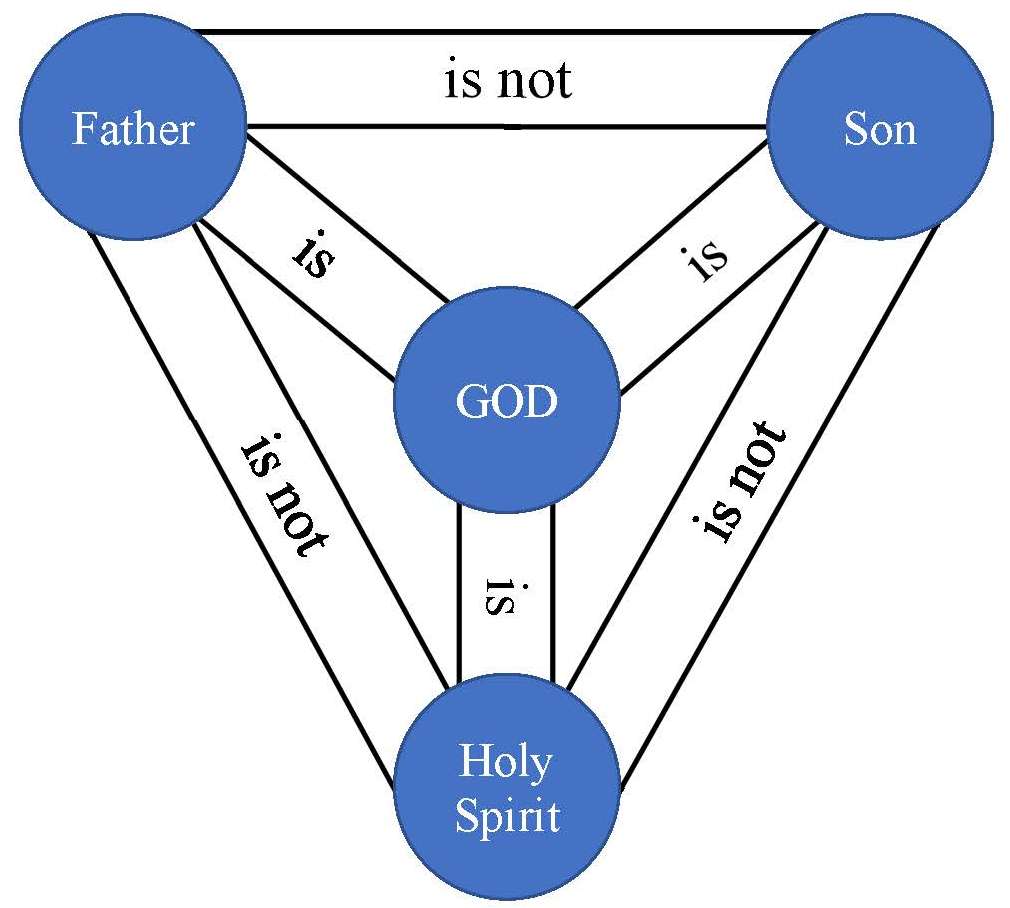
Share this:

  • Click to share on X (Opens in new window) X
  • Click to share on Facebook (Opens in new window) Facebook
  • Click to share on LinkedIn (Opens in new window) LinkedIn
  • Click to share on WhatsApp (Opens in new window) WhatsApp
  • Click to email a link to a friend (Opens in new window) Email
  • Click to print (Opens in new window) Print
Like Loading...

The importance of corporate confession of sin

13 Tuesday Sep 2016

Posted by Steven Anderson in Ecclesiology, Practical theology

≈ Leave a comment

Tags

confession, Kyrie eleison

It has now been well over 100 years since a large number of Bible-believing American churches separated from mainline denominations because those denominations had abandoned belief in the Bible and in certain fundamental doctrines of the Christian faith. When these churches left their denominations, they stopped using the denominational liturgy as well. While there are certain advantages to having a “free” service, there are also some serious disadvantages. One problem that has arisen in the evangelical church as a consequence of the removal of liturgy is an erroneous view of the Trinity. Many evangelical Christians believe that there is no distinction between the Father and Jesus, and I often hear people thanking the Father for dying on the cross for their sins—an appalling heresy which would be obvious if some affirmation of faith were read each week by the congregation.

Another standard component of high church liturgy that is missing in most evangelical church services is corporate confession of sin. The hymn or prayer “Lord, have mercy upon us” (Kyrie Eleison) was consistently a part of Christian liturgies since the early church. Historic liturgies usually also contained a separate prayer of confession (e.g., “Merciful God, we have sinned against you in thought, word, and deed”) and a prayer for forgiveness. Sometimes these prayers are read by a minister; sometimes they are read responsively by the congregation. Admittedly, these prayers and hymns often have theological faults; they may sound like a plea to be saved anew every week, and the minister may wrongly pronounce the congregation’s sins forgiven on the basis that they have read the right words or are part of the right church. Many people wrongly believe that performing the liturgy will get them into heaven. But there is also a biblical model for corporate confession; the most notable example is the Old Testament Day of Atonement, in which the high priest first made atonement for his own sins, and then for the sins of the people assembled before him. Many Psalms also include confession of sin (e.g., Pss 79:8-9; 130; compare Ezra 9; Neh 1; Dan 9). In the New Testament, the Lord taught His disciples to pray, “Forgive us our sins, for we ourselves forgive everyone who is indebted to us” (Luke 11:4). In a non-liturgical church service, corporate confession of sin could be as simple as a sentence in a pastoral prayer, or it could be an entire prayer where the congregation is asked to kneel. The pastor confesses that “I and my people have sinned greatly” and prays for God to have mercy upon His people.

In most evangelical churches I have attended, prayers offered during the service are about the worship service, needs in the congregation, missionaries, the sermon, the congregation’s response to the sermon, and so forth. I do often hear calls in churches for individuals to repent of specific sins. I rarely hear a pastor call the whole congregation to join with him in confessing their sinfulness and asking God to have mercy upon them. Whatever the reason for this may be, it certainly breeds spiritual arrogance. There does not seem to be a sense that the pastor and the whole congregation are in dire need of God’s mercy and grace on a daily basis. In some instances pastors may be too proud to confess that they are sinful. More commonly, there are people in evangelical congregations would be offended if the pastor confessed that they are very sinful people. Many people in churches believe that they are basically good, and only sin occasionally. But perhaps this is as much a product of failing to practice corporate confession of sin as it is a reason for not practicing it. If a congregation is told every week that they and their pastor(s) are offending God by many of the things they do and say and think, they will not think as highly of themselves (cf. Rom 12:3). They will recognize their neediness before God, and will understand that they must recognize and battle the sin that is in their life. They will not be so offended when a pastor asks God to have mercy on “us” for “our” sins and to bless us even though we do not deserve it (cf. Psalm 103:10).

Corporate confession of sin is not necessary to be saved, since salvation is an individual and personal matter. But corporate confession is an act of humility and a prayer for needed grace (unmerited favor). It also communicates to people that the sin nature has affected every aspect of their being, and that they are very far from perfection. Verbalizing the fact of one’s sinfulness on a weekly basis will not only result in obtaining grace and mercy from God, but will also guard against the rise of Pharisaical attitudes in the church in which some people view themselves in a perfectionistic manner and have difficulty either acknowledging their own faults or forgiving those of others—attitudes which have unfortunately been all too common in churches that do not practice corporate confession of sin.

Enjoy this content? Buy me a coffee, or support this blog via a PayPal donation.

Share this:

  • Click to share on X (Opens in new window) X
  • Click to share on Facebook (Opens in new window) Facebook
  • Click to share on LinkedIn (Opens in new window) LinkedIn
  • Click to share on WhatsApp (Opens in new window) WhatsApp
  • Click to email a link to a friend (Opens in new window) Email
  • Click to print (Opens in new window) Print
Like Loading...

Could Donald Trump be a successful pastor?

11 Wednesday May 2016

Posted by Steven Anderson in Current events, Ecclesiology

≈ 1 Comment

Tags

make church great again, Pastor Trump, Reverend Trump, Trump Church

I do not desire to wade deeply into the politics of this year’s election season in the United States. I don’t see political action as something that will truly help people or solve the world’s problems. But the thought occurred to me the other day: what if Donald Trump had decided to start a church instead of running for president? Could the Trumpster succeed in the pastorate, as he has in politics? Trump is a businessman with a pragmatic, “do-whatever-it-takes-to-win” mentality. If he had decided to become a pastor, he might buy a beautiful building for his church, or, more likely, build a grand new one himself. He would hire experts who would tell him how to set up a church, get it running, and attract the initial congregation. He would find a way to get ordained. He would hire musicians to play whatever kind of music seemed most suitable. Every church service would be an impressive show, maybe with a steak dinner following. Experts on homiletics would write Trump’s sermons, which he would deliver with gusto. Sunday evenings might feature a concert in an outdoor amphitheater and fireworks afterward. Trump’s controversial comments on Muslims and politicians would make the news and lead people to believe that he is standing up for what is right. He would belittle pastors and churches who oppose him in order to get people to leave those churches and come to his church, which would be so much better.

With a high divorce rate among evangelicals and so much tolerance of sin, it is unlikely that most people would be bothered by Trump’s divorces, beauty pageants, casinos, and so forth. The standard of morality espoused by Trump would basically match what most people already believe and would give church members considerable freedom to live as they please. Trump’s theology would be somewhat erratic, novel, and idiosyncratic, but would likely be tolerated by many. In any case, Trump could not be voted out by the congregation, since he would own the church building. Perhaps he would offer perks for faithful members, such as free vacations at one of his resorts. Maybe he would give away raffle tickets every Sunday before the worship service, with a drawing held afterward. If the number of congregants started to decrease, he would immediately find out why and would shift course to bring them back. Big names would frequent Trump’s church to offer seminars and lead retreats. The church would have classes on financial responsibility and wealth creation, seminars on marriage and parenting, addiction recovery groups, a food pantry, and even Bible studies. Some of the teaching would seem very sound. The church would have a large counseling staff to help people work through their problems, and all of the counselors would be fully credentialed and experienced. Everything would be done first class. The youth group would take fun trips and compete for college scholarships; adults would go on cruises and take tours of the holy land. Trump’s staff would ghost-write books for him, which would make the bestseller lists. All things considered, I think if Donald Trump had decided to become a pastor instead of running for president, he would be widely regarded as a very successful pastor with a well-run church and a large following. Trump’s church might look very much like other prominent churches in the country, but with everything done bigger and better.

Many popular pastors of megachurches (and their wannabes in smaller churches) do in fact have the same pragmatic mentality as Donald Trump. I would suggest that these pastors and their followers have lost sight of what really makes a church successful. First and foremost, the church belongs to Jesus Christ, not to pastors or congregations, which means that things must be done His way, not our way. The church’s aim is to please Jesus Christ, not to build a personal empire or garner a huge following. The ends do not justify the means when it comes to church growth, if numerical growth is not the true goal of the church.

Decisions about how to do things in churches and Christian schools have now for decades been driven by pragmatic considerations about expansion and money. If starting a Saturday night service will bring in more people, then let’s do it, and let’s say that it doesn’t matter what day of the week you come to church. If having a rock band and a dance team attracts more people than having an organ and a choir, then let’s have the rock band and dance team. If most people now approve of women preaching, then let’s allow women to preach. If hosting a $100/plate dinner will raise funds for the building, then let’s have the dinner. Many other examples could be cited. The problem is that the church is not making its decisions by asking such questions as “What does God want us to do?” or “What does the Bible say we should do?” The questions driving the church’s decisions are ones such as “What will make the church grow?” and “What will bring in money?” It is time for the church to start making decisions again based solely on the Bible, and not on what people think is right or what will make a church “grow.”

There is no doubt that applying pragmatic strategies to achieve growth in a church can produce results. One reason why the Mormons have survived and expanded in spite of their patently absurd theology is because they require members go on evangelistic mission trips (two years full-time after high school) and to give ten percent of their income to the church. The Jehovah’s Witnesses require their members to do door-to-door evangelism. It is, of course, a good thing when Bible-believing Christians go on mission trips, give tithes to the church, and evangelize. However, the Bible requires that such things be done voluntarily; making them compulsory is a pragmatic shortcut to achieve church growth. Growth produced by shortcuts is always shallow and superficial, since it is not rooted in an overarching commitment to faithfulness to God and to His Word.

I may well end up voting for Donald Trump for president this fall, in spite of not agreeing with him about many things. But I would never vote for Donald Trump (or any of the other major candidates, for that matter) to be my pastor. It may be okay to vote for the least worst candidate for president (if your conscience allows you to do so), but the Bible sets forth qualifications for the pastorate that every pastor must meet. Donald Trump does not meet the biblical requirements to be a pastor, as stated in 1 Timothy 3:1-7 and Titus 1:7-9. Of course, Trump is not a pastor and has not said that he wants to be one. But I think if he had tried to become a prominent pastor, he could have gained wide acceptance. There already are many talented, pragmatic people who have made a name for themselves in the pastorate and are widely considered to be successful pastors, who nevertheless do not even meet the basic biblical qualifications for becoming a pastor.

We need to stop measuring success by numbers and fame, and start measuring success the way God measures it—by faithfulness to His Word.

Enjoy this content? Buy me a coffee, or support this blog via a PayPal donation.

Share this:

  • Click to share on X (Opens in new window) X
  • Click to share on Facebook (Opens in new window) Facebook
  • Click to share on LinkedIn (Opens in new window) LinkedIn
  • Click to share on WhatsApp (Opens in new window) WhatsApp
  • Click to email a link to a friend (Opens in new window) Email
  • Click to print (Opens in new window) Print
Like Loading...

Why did Jesus go to the cross?

09 Saturday Apr 2016

Posted by Steven Anderson in Theology

≈ Leave a comment

Tags

Gethsemane, music

This article is a response to some Christian hymns and songs that say something like, “The only reason Jesus went to the cross was for me. It was all because of His love for me!” This viewpoint leads to a serious theological problem when we read Mark 14:35, which describes what Jesus did in the Garden of Gethsemane: “And he went forward a little, and fell on the ground, and prayed that, if it were possible, the hour might pass away from him.” We might think, “Oh, no! Jesus, how could You even consider the thought of not dying for my sins in order to save me? Don’t You care about me?” But as we read further in Mark’s account, we find that this was not what Jesus was thinking about at all. Jesus says nothing at Gethsemane about the salvation of His followers. If Jesus was waffling at Gethsemane over the question of whether to redeem His followers, He would have been discussing the issue with His disciples (who certainly would have urged Jesus not to go to the cross). Instead, Jesus prayed to God the Father about the possibility of avoiding the suffering which lay ahead of Him, but concluded by saying, “Not what I want, but what You want” (Mark 14:36). In fact, Jesus was going to the cross for the same basic reason that He originally came to earth as God incarnate: it was the Father’s will, and Jesus was absolutely committed to doing the Father’s will.

We tend to think of the cross as all about us. We think the whole reason why Jesus went to the cross was to save us. But from Jesus’ perspective, the cross was all about God. Jesus went to the cross in order to please His Father. Yes, He knew that He was the Good Shepherd, laying down His life for His sheep (John 10:11; 15:13; 1 John 3:16), but this was not His primary thought at Gethsemane. His primary thought was about doing the will of God. Even as He hung on the cross, Jesus’ thoughts remained consumed with God: He said, “My God, My God, why have You forsaken Me?”—not, “Oh you wicked people of the world, why did you do so much sin to make me have to suffer like this in order to redeem you?”

To be clear: Jesus never “waffled” or considered not going to the cross—Jesus was asking the Father if there was any other way, all the while maintaining His determination to follow the way the Father had determined for Him. Jesus’ prayer to be spared from the agony of the cross was not made without concern for the salvation of His followers. He had repeatedly assured His followers of His love for them and the certainty that He would save them. But when facing the most intense pain and suffering that anyone ever could face—the payment of an immeasurably great penalty for all the sins of the whole human race—Jesus felt intense stress and emotional pressure. He prayed that if there was some other way, the Father’s will might be accomplished without enduring the unimaginable agony of the cross. Yet when all others would have backed out, Jesus did in fact walk boldly to the cross and die, in submission to the will of His Father

Thus, from a theological point of view, it is most accurate to say that Jesus went to the cross to do the Father’s will, and that the Father sent Jesus to the cross in order to save the world. John 3:16 does not say “Jesus loved the world so much that He went to the cross to die for everyone’s sins.” It says, “For God so loved the world that He gave His only Son, that whoever believes on Him would not perish but have eternal life.” The reason why the Father sent Jesus to the cross was because of the greatness of the Father’s love for the people of this world (cf. Rom 5:8). While popular evangelical theology sees little or no difference between the Father and Jesus, the cross can only truly be understood in light of Jesus’ relationship to the Father.

As a point of application, it is wrong and self-centered for us to think of things as if they are all about ourselves. Jesus was not totally consumed with us when He went to the cross—He was totally consumed with God (the Father). We, too, need to be totally consumed about doing the will of God. If we are, it will result in doing what is best for our fellow man, since God loves mankind more than any of us ever could.

Enjoy this content? Buy me a coffee, or support this blog via a PayPal donation.

Share this:

  • Click to share on X (Opens in new window) X
  • Click to share on Facebook (Opens in new window) Facebook
  • Click to share on LinkedIn (Opens in new window) LinkedIn
  • Click to share on WhatsApp (Opens in new window) WhatsApp
  • Click to email a link to a friend (Opens in new window) Email
  • Click to print (Opens in new window) Print
Like Loading...

3 John 2 and the Prosperity Gospel

10 Monday Aug 2015

Posted by Steven Anderson in Bible, Theology

≈ 2 Comments

Tags

Oral Roberts, prosperity theology

Most contemporary Christians have heard of the prosperity gospel (a.k.a. the “health and wealth” gospel. Many popular “televangelists” are proponents of the prosperity gospel, which claims that if you give your life to Jesus, God has promised to make you financially wealthy and physically healthy. This is a message that people want to hear, so the popularity of prosperity theology is not surprising. Prosperity preachers strongly emphasize that Christians must give their money to that preacher’s ministry in order to experience God’s financial blessing. Most proponents of the prosperity gospel are associated with the Charismatic, Pentecostal, and/or Word of Faith movements.

Baptistic Christians, including myself, widely agree that the prosperity gospel turns the true gospel on its head, since the New Testament promises persecution and suffering for Christ in this life, with no promise of physical prosperity until after this life is over (Acts 14:22; Rom 8:18; Phil 3:10-11; 2 Tim 3:12; 1 Pet 4:13; 5:1). But rather than analyzing verses which contravene prosperity theology, in this article I would like to analyze the verse which was originally claimed as the exegetical basis for prosperity theology. This verse is one that is under the radar of most Christians, since it occurs in the shortest book of the New Testament, 3 John.

Beloved, I pray that in all things thou mayest prosper and be in health, even as thy soul prospereth. – 3 John 2

Back in 1947, Oral Roberts was a poor thirty-year-old pastor of a church in Enid, Oklahoma who was dissatisfied with his salary, and discontent with his poverty and namelessness. If we are to believe Oral and his wife Evelyn, it was reading this verse at random one day, and seeing it in an entirely new light from the midst of spiritual and emotional trauma, that marked the turning point in Oral Roberts’ ministry. (See David Edwin Harrel Jr., Oral Roberts: An American Life [Bloomington, Indiana: Indiana University Press, 1985], 65-66.) From here on out, Oral would preach that God wanted all Christians—himself included—to be financially prosperous and physically healthy. As Oral developed the prosperity gospel, it quickly displaced the genuine gospel message in his preaching and writing, to the point where the real gospel was completely silenced (if, indeed, Oral ever did preach the real gospel). Rather than preaching the message that genuine disciples of Jesus must renounce the things of this world and endure persecution, Oral preached that genuine Christians would be healthy and wealthy, and that people should come to Jesus in order to become physically prosperous. As Oral and his preaching became famous, many other preachers followed in Oral’s footsteps, and created the various forms of prosperity theology that exist today. The original claimed biblical basis for the prosperity gospel was 3 John 2. (For more on how this verse has been used in the charismatic movement, see Heather L. Landrus, “Hearing 3 John 2 in the Voices of History,” Journal of Pentecostal Theology 11.1 [2002]: 70-88; Mark E. Roberts, “A Hermeneutic of Charity: Response to Heather Landrus,” Journal of Pentecostal Theology 11.1 [2002]: 89-97.)

Third John 2 is seemingly as ordinary a verse as any in the Bible. Commentators widely recognize it as a stereotypical greeting for a letter of the period, though surely the greeting was a heartfelt prayer when uttered by the apostle John. John, who was facing great opposition from false teachers, wished peace and prosperity for faithful Gaius, to whom he addressed this letter. There is one specifically Christian element to the greeting, which is the address “Beloved.” But a standard feature of letters from the Koine period is the writer’s inclusion of a wish of good health for the addressee in the greeting (see Raymond E. Brown, The Epistles of John: Translated with Introduction, Notes, and Commentary, Anchor Bible, vol. 30 [New York: Doubleday, 1982], 788-90).

The most important exegetical feature of 3 John 2 to note with regard to the prosperity gospel is that John’s prayer for Gaius’ good health is just that—a prayer by a man, not a promise from God. The Bible repeatedly promises temporal suffering and persecution for following Jesus, with physical prosperity only promised in the life to come. We do not pray that persecution would befall us or other believers—in fact, we pray to be delivered from troubles—but we do expect that problems will come.

It is ironic, though not atypical, that such a common, ordinary verse as this one was misused to create a whole heterodox theological system which contravenes so much of the clear teaching of the New Testament. This single verse, lifted from its historical and biblical context, was assigned a novel and foreign meaning through the imagination of a young preacher who coveted fame and fortune. It is a lesson for all of us to handle the Word of God with great care, and to resist the common temptation to spiritualize a biblical text in order to give it the meaning that we desire to preach.

Enjoy this content? Buy me a coffee, or support this blog via a PayPal donation.

Share this:

  • Click to share on X (Opens in new window) X
  • Click to share on Facebook (Opens in new window) Facebook
  • Click to share on LinkedIn (Opens in new window) LinkedIn
  • Click to share on WhatsApp (Opens in new window) WhatsApp
  • Click to email a link to a friend (Opens in new window) Email
  • Click to print (Opens in new window) Print
Like Loading...

The Rationality of Faith

19 Sunday Jul 2015

Posted by Steven Anderson in Theology

≈ 2 Comments

Tags

biblical faith, empiricism, faith and reason, rationalism

The relationship between faith and reason has long been the subject of both philosophical debate and popular misunderstanding. When people today say “I believe it on faith,” what they often mean is that they do not have any reason to believe something. Society conditions us to think of faith as irrational or as having no basis. But not only is biblical faith rational, to not have faith is to be completely irrational. It is rational to trust someone who is competent and honest, and it is irrational to reject the testimony of a witness of high character.

The skeptic’s motto, “Question everything,” is self-contradictory and impossible to live by. It denies the certainty of all knowledge, but is itself a propositional statement, and therefore is self-contradictory and illogical. If one really believes the statement “Question everything,” his response will be to ask “Why should I?” Either he will come to the conclusion that he should not, and therefore that the motto is wrong, or else he will descend into a downward spiral of contradictions, doubts, and confusion. There must be some things, called properly basic beliefs, that we do not and should not question. These beliefs form the basis of other beliefs that we develop through experience and sensory evidence. The scientific method, for example, cannot be used to prove itself, and so acceptance of it must precede the discovery of anything that it is used to prove. One can compare basic beliefs to the definitions given in a dictionary. Each word in the dictionary is defined by means of other words, so that one must have a vocabulary of basic words before he can understand anything. There is nothing irrational or incorrect about our understanding of these words, but they are in fact something that can only be learned by some innate process. Not all basic beliefs are specifically religious in nature, but belief/trust in God, which is faith, is properly basic.

Having faith in God entails having faith in God’s Word, and therefore the Bible is the basis for all Christian belief and practice. Although the Bible does not make specific statements about every issue, it provides a solid foundation on which other beliefs can be based and by which other beliefs can be measured. A great many commonly held beliefs can easily be disproved by showing that they are in some way contradictory to the Bible. The Bible may not say anything in particular about the subject or premises of a particular theory, but very often the conclusions or implications of scholarly research are at odds with a biblical Christian worldview.

There is no conflict between faith and reason. Everything taught in the Bible is coherent and rational, and there are no contradictions. If someone says he holds some extrabiblical belief “by faith,” and this belief is incoherent or contradictory in some way, then it is not truly by faith that that person holds that belief—it is just irrationality.

People who come out of an Enlightenment or modern scientific background tend to struggle with the concept of faith. They are trained to exalt human reason above all else, and to seek verification through the scientific method as a prerequisite for belief. These things are so ingrained in their way of thinking that it never occurs to them to step back and consider that the scientific method cannot be used to verify itself, nor can it give absolute certainty. In fact, postmodern culture and academia have taken rationalism to its logical conclusion, and as a result have become relativists. Reason itself becomes circular without a foundation—namely, a foundation of faith in God and in His Word—and one is left with no ultimate standard for adjudicating among competing truth-claims. Faced with these competing truth-claims, the postmodernist becomes confused and frustrated, and simply follows the herd or believes what seems pragmatic, without being able to sort anything out in a satisfactory manner. Without any ultimate standard or basis for what they believe, postmodernists say that there is no absolute truth, although in fact they contradict themselves by stating this and many other things absolutely. Thus, relativism is really an expression of frustration with the unbeliever’s inability to make sense of the world apart from faith in God and His Word; it is anything but a reasoned conclusion which results from careful study. A relativist is, properly speaking, an irrationalist. Someone who knowingly accepts logical contradictions is irrational. Thus, the attempt to live by reason alone without faith is unreasonable.

The Bible is very clear that faith is a requirement for salvation (Eph 2:8; Heb 11:6). But because the modern scientific worldview says reason demands that everything must be proved, rather than trusted, there are many well-meaning apologists who seek to prove the Christian faith through science and reason. In some cases apologetic ministries supply helpful means for Christians to defend what they believe against critics. But some models of apologetics seek to do away with the need for faith by claiming that all Christian belief can be proved by rational argument. The problem with evidential arguments, such as Richard Swinburne’s, is that they deal only with probabilities. They can show that Christian doctrine is very likely to be true, but they cannot prove it indubitably. Faith is needed for absolute assurance because we cannot yet see everything we believe in (Heb 11:1). While Christian faith is reasonable, reason cannot by itself arrive at its tenants, for any process of human reasoning must begin with foundational, a priori, truths which are arrived at by faith. Both human reasoning and the scientific method are too limited to produce the bedrock truths of which saving faith consists. Of course, since Christianity is true, its truths can be demonstrated by scientific analysis of the evidence and by logical argumentation. However, if one only believes Christian truth because of his ability to argue for it and to verify evidence, he will be quickly shaken if someone presents only one minor piece of evidence which appears to be out of place, or one minor argument which seems like a valid criticism. He will always be wondering if there is some piece of evidence out there that he has missed that will disprove his beliefs. In contrast, the man who has faith (belief + trust) in God is like Mount Zion, which cannot be moved, but stands forever (so Ps 125:1).

One final point about faith: faith is by its very nature simple, and the attempt to mix it with other things will weaken it. Second Corinthians 11:3 speaks of “the simplicity and purity which is toward Christ,” and warns Christian believers of being tricked, like Eve, by Satan’s craftiness. Christianity is, to be sure, philosophically sound and hermeneutically sound, and the critics are fighting against the evidence. But if your “faith” rests in what is “out there,” it will be quickly shaken by every new argument, by each new archeological discovery; if your faith rests in the Word of God, it will stand firm against all assaults. Keep going back to the plain and simple truths of Scripture, and do not let others lead you down rabbit trails. Beware of being drawn into philosophical debates about the Christian faith. There are spiritual issues involved in philosophical discussions, for which reason critics will raise endless objections and produce endless excuses for not believing, all of which are smokescreens to cover for a wicked, rebellious, prideful heart. Beware of becoming too sophisticated. The truth is always, clear, simple, and straightforward.

To summarize some key points from this blog post and the previous one: (1) Faith is a virtue which can be defined as a mean between gullibility and skepticism. (2) Faith always takes an object. (3) Our faith is no better than the object in which we place it. (4) The Christian’s faith (= belief + trust) is in God and in His Word. (5) We, as Christians, do not take a leap into the dark, but a step into the light. (6) According to Romans 1:17, there is a difference between initial faith and continuing faith. (7) Unlike rationalism and empiricism, faith gives total, permanent assurance (Heb 11:1).

Enjoy this content? Buy me a coffee, or support this blog via a PayPal donation.

Share this:

  • Click to share on X (Opens in new window) X
  • Click to share on Facebook (Opens in new window) Facebook
  • Click to share on LinkedIn (Opens in new window) LinkedIn
  • Click to share on WhatsApp (Opens in new window) WhatsApp
  • Click to email a link to a friend (Opens in new window) Email
  • Click to print (Opens in new window) Print
Like Loading...
← Older posts
Follow TruthOnlyBible on WordPress.com

Enter your email address to follow this blog and receive notifications of new posts by email.

Join 309 other subscribers

Categories

  • Apologetics
  • Archaeology
  • Bible
  • Bible prophecy
  • Bible scholarship
  • Biblical languages
  • Books
  • Christmas
  • Church history
  • Creation
  • Current events
  • Easter
  • Ecclesiology
  • Evangelism
  • History
  • Missions
  • Practical theology
  • Theology

RSS links

  • RSS - Posts
  • RSS - Comments

Blog at WordPress.com.

  • Subscribe Subscribed
    • TruthOnlyBible
    • Join 309 other subscribers
    • Already have a WordPress.com account? Log in now.
    • TruthOnlyBible
    • Subscribe Subscribed
    • Sign up
    • Log in
    • Report this content
    • View site in Reader
    • Manage subscriptions
    • Collapse this bar
 

Loading Comments...
 

    Privacy & Cookies: This site uses cookies. By continuing to use this website, you agree to their use.
    To find out more, including how to control cookies, see here: Cookie Policy
    %d